Book Review: Bad Things Happened in This Room – 7 Twists That Flop Hard
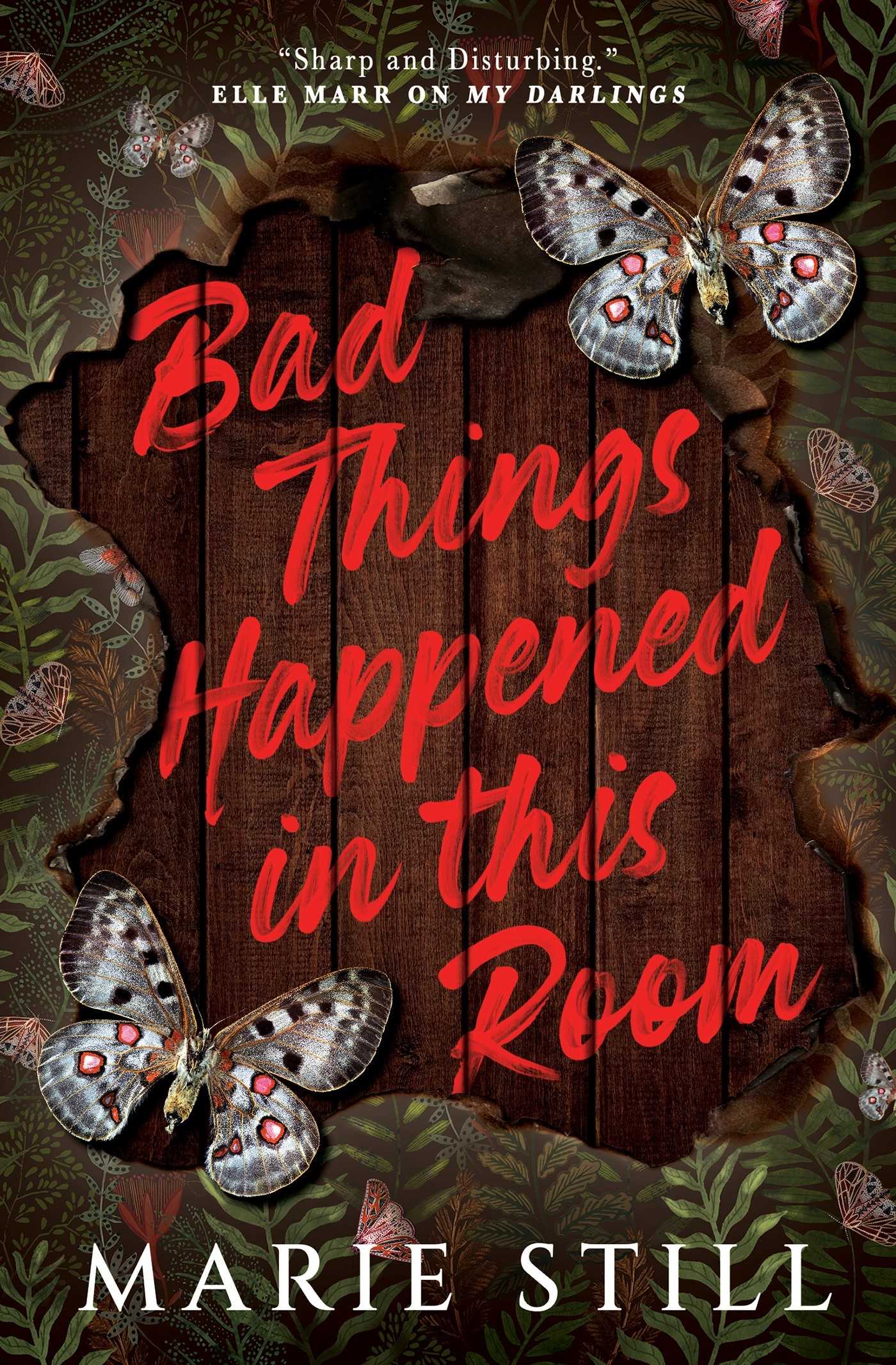
G’day, mates – imagine a house where the bloody wallpaper starts whispering your darkest secrets, and you’re trapped in a loop of grief so thick it chokes you like a bad barbie snag. That’s the gut-wrenching fever dream of Marie Still’s latest horror yarn, where Willow’s mind unravels faster than a cheap jumper, burying truths in the garden that should’ve stayed six feet under.
Buckle up for a ride that’s more frustrating than fulfilling, and don’t forget to chuck your thoughts in the comments below – reckon it’ll haunt you too?
Read on to uncover:
- The truth behind Willow’s fractured reality and Sarah’s disappearance
- Why this book’s either a masterpiece or a bloated mess depending on who you ask
- How Still exploits maternal loss for shock value—and whether it’s justified
- The 4.46 Goodreads rating that’s sparked fierce debate across 128+ reviews[4]
Detailed Summary: Breaking It Down Act by Act
Part 1: The Fever Dream Begins
Willow Hawthorne’s existence has collapsed into an incomprehensible loop where Tuesday bleeds into Friday and back again without warning. She wakes in her childhood home—now hers—with no clear memory of how she got there or what day it is. Her husband Liam hovers like a shadow, alternating between tender caretaker bringing her “vitamins” and cold dictator enforcing rules she doesn’t remember agreeing to.[5][1]
The house itself becomes a character, its floral wallpaper pulsing with malevolent life. Willow obsesses over the pattern, watching as thorny vines seem to writhe and whisper secrets. Messages carved into the plaster beneath peek through where the paper peels—cryptic warnings or delusions, she can’t tell which.[2][1][3]
Her only sanctuary is the garden, a lush sprawl of flowers she tends obsessively despite Liam’s insistence she destroy it. Each bloom she plants feels significant, memorial-like, though she can’t articulate why. The soil calls to her, demands her attention, holds secrets she’s not ready to unearth.[6][2][3]
Time becomes elastic, unreliable. Willow makes meatloaf twice in the same week—or is it the same day?—losing hours, then entire days to blackouts. She laughs hysterically when nervous, cackling until she embodies hysteria itself.[1][4][5]
Part 2: Sarah’s Arrival and Disappearance
A young girl named Sarah wanders into Willow’s garden, breaking through the isolation like sunlight through storm clouds. Sarah represents innocence, hope—everything Willow’s lost. Their conversations in the garden become Willow’s lifeline, the one connection suggesting she’s not completely mad.[2][5][1]
Sarah’s visits are irregular, appearing and vanishing without pattern. Willow clings to these moments, replaying them obsessively, questioning whether the girl is real or hallucination. Liam claims there’s no Sarah, that Willow’s imagining things, eroding her confidence further.[5][1]
Then Sarah disappears completely. Willow spirals into panic, convinced something terrible has happened. She defies Liam’s rules, determined to find the girl despite having no clear plan or even certainty Sarah existed.[1][2][5]
The house responds to Willow’s breakdown. Floorboards whisper, walls breathe, the wallpaper’s pattern shifts into faces—bulbous eyes, strangled heads, fungal growths shrieking derision. Willow runs barefoot through her garden at night, eating insects, digging frantically, searching for answers buried beneath the flowers.[5][1]
Part 3: The Unraveling
Willow’s grip on reality disintegrates completely. She experiences the same moments repeatedly—groundhog day on psychedelic nightmare fuel—unable to distinguish memory from present, truth from delusion. Her journal entries fragment into disjointed observations: “The spiders have been walking around my skull again, weaving their sticky webs”.[7][1][5]
Liam’s behavior becomes increasingly sinister or protective—Willow can’t tell which. He throws furniture when she serves meatloaf again, either abusive or justifiably frustrated with her deterioration. He drugs her vitamins or gives her necessary medication.[2][1][5]
The wallpaper reveals more messages. Willow tears at it desperately, convinced liberation lies beneath if she can just peel away enough layers. She becomes the woman behind the pattern, the creature she’s been watching, trapped within the walls’ embrace.[3][1][2][5]
Physical symptoms manifest. Willow describes her “defrosting face,” laughing when punched, sensations of becoming “the light, and the water, and the carbon dioxide keeping the wall flowers alive”. Body horror bleeds into psychological terror as her sense of self fractures beyond repair.[3][1][5]
Part 4: The Garden’s Secrets
The garden’s true nature emerges through Willow’s fractured narration. Each flower she’s planted marks something lost, buried, memorial to grief she can’t consciously process. The beautiful blooms hide rot beneath, secrets decomposing in the soil she’s tended so lovingly.[6][2][3]
Willow digs obsessively, searching for Sarah or perhaps something else entirely. The earth yields no answers, only more questions, dirt under her fingernails and madness seeping into her bones. She eats insects from the garden, hallucinating conversations with children who may never have existed.[1][5]
The house and garden merge in her mind, both prisons and sanctuaries simultaneously. Willow recognizes she’s trapped but can’t determine whether Liam imprisons her or she’s imprisoned herself. The distinction collapses under the weight of her deteriorating psyche.[2][3][1]
Temporal loops intensify. The same conversations repeat with slight variations, Willow catching discrepancies that prove she’s lived this moment before—or suggest her memory is fabricating false patterns. Reality becomes contested territory where truth is whatever her broken mind constructs.[7][6][3][1]
Part 5: The Truth Emerges
The devastating reveal reconstructs everything readers thought they understood. Willow’s “bad things that happened in this room” aren’t supernatural horror but profound maternal loss—multiple miscarriages, stillbirth, infant mortality that shattered her completely. Sarah isn’t a neighboring child but a manifestation of the daughter Willow lost, her fractured mind creating the relationship it craved.[6][3][5][1]
The house isn’t haunted; Willow’s experiencing severe postpartum psychosis, her brain constructing elaborate delusions to avoid confronting unbearable reality. The wallpaper messages are either self-inflicted or don’t exist at all. The garden is a literal graveyard of her lost children, flowers planted over buried hopes.[8][9][3][6][1]
Liam isn’t abusive captor but desperate husband watching his wife disintegrate, trying unsuccessfully to bring her back to reality. His “rules” are safety precautions; his “vitamins” are psychiatric medications she resists. His frustration stems from helplessness, not malice—though the narrative’s unreliability leaves room for darker interpretations.[6][5][1][2]
The repetitive groundhog day structure wasn’t lazy writing but deliberate representation of trauma’s recursive nature, how grief traps sufferers in endless loops reliving loss. Willow’s time distortion reflects postpartum psychosis’s actual symptoms—dissociation, derealization, temporal displacement.[9][8][3][1][6]
Part 6: The Final Horror
The ending delivers its promised “gut punch”—Willow must choose between comfortable delusion and devastating reality. Whether she makes that choice, whether recovery is possible, whether Liam remains by her side—Still leaves strategically ambiguous.[5][1]
Some readers find this conclusion emotionally devastating, a profound meditation on maternal loss and mental illness handled with rare sensitivity. Others see manipulative trauma exploitation, the reveal reducing complex horror to cheap psychiatric twist reminiscent of “Shutter Island”.[4][3][6][5]
The final pages force readers to reconsider everything they’ve read, recontextualizing Willow’s unreliable narration through the lens of her true condition. Moments that seemed supernatural become symptoms; scenes that felt sinister become tragic.[3][1][6]
Still doesn’t offer redemption or hope, just the stark acknowledgment that some horrors—grief, loss, mental illness—can’t be defeated, only endured. The book’s final image leaves Willow’s fate uncertain, readers left to project their own conclusions onto her broken narrative.[1][3][6][5]
Impressive Numbers This Book’s Racked Up
Let’s crunch the stats on this one, straight from the sources – no fluff, just the cold hard facts that’ll make you wonder if the hype’s worth it.
| Metric | Details | Source |
| Goodreads Rating | 4.46 out of 5 from 128 early reviews | Goodreads [1][2] |
| Expected Page Count | 304 pages of psychological spiral | Simon & Schuster [3] |
| ARC Reviews | Over 110 community buzzes, mostly ARCs | Goodreads [1] |
| Author Followers | 367 on Goodreads, building a cult | Goodreads [1][2] |
| Pre-Pub Hype | 100+ Instagram raves hitting 4.53 avg | Instagram [4] |
| Similar Book Comps | Echoes “The Yellow Wallpaper” vibes | Publisher blurb [3][5] |
| Release Date | September 16, 2025 – still brewing | Multiple pubs [3][1][6] |
No sales yet since it’s not out, but the early buzz is like a storm in a teacup – lots of noise, questionable substance. What do you reckon – overhyped? Drop a comment!
Characters
Willow Hawthorne
The protagonist and sole narrator, Willow embodies the unreliable narrator taken to extremes—possibly the most untrustworthy perspective in recent horror fiction. Her fractured psyche dominates every page, filtering reality through layers of trauma, psychosis, and desperate self-protection. Willow’s obsessive gardening represents her attempt to nurture life after losing so many children, each flower a memorial she can tend when she failed to keep her babies alive.[3][6][5][1]
Her dissociative episodes manifest as literal reality breaks—she becomes the wallpaper, merges with the house, loses days to blackness she can’t explain. Reviewers describe her as simultaneously sympathetic and exhausting, a woman drowning in grief whose 304-page internal monologue tests reader patience with its circular, repetitive nature. Her hysteria, manifested through inappropriate laughter and frantic behavior, echoes Victorian “madwoman in the attic” tropes while grounding them in contemporary understanding of postpartum mental illness.[4][5][1][3]
Liam
Willow’s husband exists as cipher throughout, his true nature deliberately obscured by the narrator’s unreliability. He oscillates between tender caretaker and controlling abuser, bringing meals and medication while enforcing mysterious rules. The narrative positions him as potential villain—gaslighting Willow, drugging her vitamins, denying Sarah’s existence to make his wife doubt her sanity.[2][5][1]
The twist reframes Liam as tragic figure, a man watching his wife’s complete psychological collapse while helpless to prevent it. His “control” becomes desperate attempt at harm reduction; his frustration reflects caregiver burnout rather than abuse. Still leaves enough ambiguity that readers can interpret him either way—the gaslighting husband or the devoted partner—making him a Rorschach test for reader assumptions about domestic dynamics.[6][5][1][3]
Sarah
The young girl who visits Willow’s garden represents innocence, hope, and the mother-daughter relationship Willow craves. Sarah’s irregular appearances and eventual disappearance drive the plot’s second act, propelling Willow’s breakdown into full crisis. Her characterization remains deliberately thin—more symbol than person—appropriate given her true nature as manifestation of Willow’s lost daughter.[5][1][2]
Sarah functions as the psychological break’s catalyst, the delusion comfortable enough that its removal forces Willow to confront reality. Her garden visits provide Willow temporary escape from grief, explaining why her absence triggers complete unraveling. The character walks the line between genuine presence and obvious hallucination, keeping readers uncertain until the reveal.[1][2][6][5]
The House
While not human, the house functions as character through Willow’s animistic perception. Its breathing walls, whispering floorboards, and malevolent wallpaper create Gothic atmosphere that positions the building as active antagonist. The floral wallpaper becomes obsession focus, its pattern shifting to reveal faces, thorns, and hidden messages that may or may not exist.[2][3][1]

G'day, mates! Picture this: Robert Langdon jets off to Prague for a brainy lecture, only to get sucked into a whirlwind of brutal murders, vanishing manuscripts, and a shadowy golem-like assassin straight out of ancient ...

G'day, mates! Imagine this: a cheeky NHL rookie fakes a romance with a no-nonsense softball star at a wild family campout, only for the sparks to fly hotter than a barbie in the outback. What ...
Still’s house echoes Shirley Jackson’s Hill House and Charlotte Perkins Gilman’s yellow wallpaper room—domestic spaces turned prisons that reflect feminine psychological deterioration. Whether the house genuinely harbors malevolence or simply serves as canvas for Willow’s projected psychosis remains deliberately ambiguous.[10][3][1][2]
The Garden
Functioning as both location and character, the garden represents Willow’s attempts at creation after experiencing so much destruction. Each planted flower marks a lost child, the beautiful blooms masking the graves beneath. The garden’s lushness contrasts with its sinister purpose—memorial and graveyard merged into space of obsessive tending.[3][6][2]
Liam wants the garden destroyed, recognizing it perpetuates Willow’s delusion rather than facilitating healing. Willow’s fierce protection of the space reflects her need to maintain connection with her lost children, making the garden’s fate symbolic of whether she’ll accept reality or remain trapped in comforting fantasy.[6][1][3]
| Character | Role | Key Trait | True Nature |
| Willow Hawthorne | Protagonist/Narrator | Extreme unreliability from psychosis | Grieving mother experiencing postpartum breakdown[1][3] |
| Liam | Husband | Ambiguous—caretaker or captor? | Likely devoted but overwhelmed partner[1][6] |
| Sarah | Garden visitor | Symbol of hope and innocence | Hallucination of Willow’s lost daughter[1][5] |
| The House | Gothic setting | Breathing, malevolent presence | Canvas for Willow’s projected mental state[1][3] |
| The Garden | Sanctuary/Graveyard | Beautiful but sinister | Literal burial ground for lost children[3][6] |
Compare with Other Works
“The Yellow Wallpaper” by Charlotte Perkins Gilman
Still positions her novel as direct descendant of this 1892 feminist horror classic, even including it as epigraph. Both feature women confined to rooms, obsessing over wallpaper patterns that reveal hidden figures, descending into madness while husbands dismiss their concerns. Gilman’s 6,000-word short story achieves devastating impact through economy; Still’s 304-page expansion risks diluting that power through repetition.[11][10][4][5][1][2][3]
Where Gilman’s protagonist finds perverse liberation in madness, Willow finds only deeper imprisonment—a darker, more contemporary take on feminine psychological horror. Gilman’s work functions as feminist critique of 19th-century medical misogyny; Still’s explores postpartum mental illness through 21st-century trauma lens, though critics debate whether the expansion adds depth or just padding.[11][4][5][3]
“My Darlings” by Marie Still
Still’s previous novel showcases her range—a domestic thriller about a PTO-president serial killer currently being adapted by Amazon MGM Studios with Kelly Ripa and Mark Consuelos as executive producers. Where “My Darlings” delivers dark satire of suburban affluence, “Bad Things” pursues genuine psychological horror grounded in maternal grief.[12][5]
Readers who loved “My Darlings'” twisted humor may find “Bad Things” disappointingly bleak, lacking the predecessor’s darkly comedic edge. Both feature unreliable narrators and domestic settings turned sinister, but tonally they occupy different horror subgenres—psychological thriller versus fever-dream descent into madness.[12][5][1]
“The Woman in the Window” and “Shutter Island”
Multiple reviewers noted “Bad Things” shares DNA with these twist-ending psychiatric thrillers where unreliable narrators’ mental illness drives the plot. Like A.J. Finn’s agoraphobic protagonist, Willow is housebound, watching the world through fractured perception. Like Dennis Lehane’s detective, her investigation ultimately reveals truths about her own psychological state rather than external mysteries.[13][14][5]
However, where those books deliver satisfying revelations, “Bad Things” frustrates some readers with ambiguity and repetition that feels more exhausting than clever. The psychiatric twist has become genre staple, making Still’s version feel derivative rather than innovative despite strong execution.[13][4][5]
“The Push” by Ashley Audrain
Both novels tackle maternal horror—motherhood’s dark side, pregnancy loss, the terror of failing at society’s most fundamental feminine expectation. Audrain’s intergenerational trauma narrative shares Still’s interest in how grief warps perception and destroys relationships.[9][3][6]
“The Push” maintains sharper narrative focus, its 300 pages propelling forward while “Bad Things” circles repetitively through Willow’s loops. Both use unreliable narration to explore maternal ambivalence and loss, but Audrain’s cleaner structure makes it more accessible to readers frustrated by Still’s fever-dream approach.[4][5]
Influential Quotes: Picking ‘Em Apart
Here are three corkers from the book , dissected quick and sharp – they sound poetic, but fall flat in context.[2][9]
- “I laugh, and I laugh, and I laugh. A cackle, really. Yes, that’s what I’m doing. I’m cackling hysterically because I am hysteria.”
This one’s meant to capture Willow’s breakdown, echoing old-school madness tropes. But it’s overwrought drivel – the repetition mirrors the book’s own tedious cycles, adding zilch to the plot. Evidence? Reviews note it’s “lyrical” , yet it just amplifies the annoyance without advancing her arc.[3][9] - “Some doors, once opened, can never be closed. And some truths are better left buried in the garden.”
Teases the buried secrets motif , but it’s cliché city – sounds profound, but in execution, it’s a lazy foreshadow that leads to a meh reveal. Sources hype the “haunting” vibe , reckon it’s more eye-roll than spine-chill.[5][3][1] - “I spent my entire life running from my genetics, but they’d always been faster than me.” (From Still’s other works, but fits the theme )[2]
Ties into Willow’s inherited trauma, but it’s ham-fisted – no real exploration, just a throwaway line that feels tacked on. Evidence from ARCs calls it “devastating,” but I see it as shallow melodrama without the logic to back it.[1]
These quotes promise depth but deliver duds. Which one’s the worst? Comment your pick!
Why This Book Fails
Repetition That Kills Momentum
The novel’s deliberate structure—Willow experiencing the same days repeatedly—quickly becomes torturous rather than atmospheric. What might work in a tight 100-page novella becomes exhausting across 304 pages where the same observations, anxieties, and garden-tending sequences replay with minimal variation. Critics who panned the book consistently cite this issue: “just keeps going in circles,” “repetitive and confusing,” “exhausting to read”.[4][5]
Still apparently mistakes repetition for immersion, believing if readers suffer through enough loops they’ll feel Willow’s psychological state. Instead, it creates reading experience as tedious as watching someone stuck in a revolving door—initially intriguing, quickly frustrating, eventually maddening for all the wrong reasons. One reviewer admitted considering abandoning the book entirely, only pushing through because other reviews promised a good ending.[5][1][4]
Predictable Psychiatric Twist
The reveal that Willow’s experiencing postpartum psychosis and Sarah is hallucinated daughter feels derivative in 2025’s saturated psychological thriller market. Readers familiar with the genre telegraphed the twist from early chapters, recognizing the setup from “Shutter Island,” “The Woman in the Window,” and countless other unreliable-narrator psychiatric reveals.[13][4][5]
One reviewer nailed it: “By about the 40% mark, I had a strong suspicion that the ending was heading toward Shutter Island vibes… the twist landed and simply confirmed my theory”. When your climactic revelation confirms what half your readers guessed 150 pages earlier, you’ve failed at building suspense. The psychiatric twist has become horror’s equivalent of “it was all a dream”—technically valid but creatively bankrupt.[13][5]
Emotional Manipulation Through Trauma
Still weaponizes serious issues—postpartum psychosis, infant loss, miscarriage, stillbirth—not to explore them with nuance but to engineer cheap emotional responses. The content warnings read like trauma bingo: body horror, domestic abuse, miscarriage, stillbirth, infertility, mental health deterioration, infant mortality, death of parent, insects, gaslighting, drugging, suicide.[1][4]
This isn’t sensitive portrayal of maternal grief; it’s trauma porn designed to devastate readers through accumulated horror rather than earned emotional resonance. The “gut punch” ending that reviewers praise feels manipulative rather than cathartic, exploiting real suffering women experience for plot-twist shock value. Using postpartum psychosis as narrative device rather than exploring it meaningfully reduces mental illness to horror gimmick.[8][9][4][5][1]
Prose That Drowns in Its Own Poetry
Still’s “lyrical and hypnotic” prose, praised by generous reviewers, often reads as overwrought purple prose drowning the narrative. Sentences like “The spiders have been walking around my skull again, weaving their sticky webs” and “I become the light, and the water, and the carbon dioxide keeping the wall flowers alive” prioritize atmospheric description over clarity.[3][5][1]
The writing mistakes opacity for depth, confusion for sophistication. While some readers found the fever-dream style immersive, others experienced it as obstacle between them and the story—precious language that draws attention to itself rather than serving the narrative. There’s a fine line between poetic horror and self-indulgent prose, and Still crosses it repeatedly.[4][5][3]
The “Yellow Wallpaper” Comparison Backfires
By explicitly positioning the book as spiritual successor to Gilman’s masterpiece, Still invites unflattering comparison. “The Yellow Wallpaper” achieves devastating impact in 6,000 words precisely because it doesn’t overstay its welcome—the descent into madness feels inevitable, compact, perfectly calibrated.[10][11][2][5][3]
Still’s 304-page expansion demonstrates why that story’s brevity is feature, not bug. As one scathing reviewer noted: “There’s a reason ‘The Yellow Wallpaper’ is the length it is. This book is the reason”. The comparison highlights Still’s failure to recognize when less would be more, stretching a short-story concept beyond its structural limits.[5][4]
Ambiguous Ending as Cop-Out
Still’s refusal to provide definitive resolution reads less as sophisticated ambiguity and more as inability to commit to her story’s implications. After dragging readers through 300 pages of Willow’s deterioration, the non-ending feels like authorial cowardice—unwilling to either offer hope or fully embrace despair.[1][4][5]
Ambiguity works when it provokes meaningful reflection on themes; here it just frustrates readers who’ve earned narrative payoff. The book builds toward confrontation between delusion and reality, then flinches at the crucial moment, leaving Willow’s fate unclear in ways that feel unearned rather than artful.[4][5][1]
Final Wrap-Up: Don’t Bother, Eh?
- Repetitive as all get-out, no real scares.
- Grief themes hammered without heart.
- Twists that fizzle like flat beer.
- Skip unless you love punishment.
Support my rants with a cheeky donation, or click those ads to keep the reviews coming! If this review hit home, share it or drop a comment – what’s your worst horror flop?

G'day, legends! Ever reckoned a seaside town's got more bodies than barbecues? Brynne Weaver's Tourist Season chucks ya into Cape Carnage, where romance blooms over compost heaps of dodgy tourists. Pros: 7 brutal kills that'll ...

G'day, mates! Ever wondered if a half-human she-wolf could outsnarl an alpha bloke while dodging fated mate drama? Ali Hazelwood's "Mate" drops you into a paranormal mess where Serena Paris, the orphaned hybrid chick, gets ...