Play Nice Summary & Explain – 7 Twists That’ll Ruin Your Sleep | Book Review
What if your perfect influencer life got wrecked by a demon-possessed house from your dodgy childhood? Rachel Harrison’s Play Nice chucks you into a messy family drama laced with supernatural bollocks, where Clio Barnes flips her mum’s old haunted pad for content, only to uncover horrors that make her question everything.
It’s a cheeky haunted house yarn with emotional gut-punches, but fair dinkum, the pacing drags like a hungover kangaroo, leaving you frustrated more than frightened.
Take a look:
- 7 mind-bending twists that blur memory and madness.[1]
- A dysfunctional sister act that’s more toxic than a blue-ringed octopus.[2]
- Why this book’s demon feels like a half-arsed poltergeist.[3]
- My brutal rating and why I’d skip it next time around.[4]
Impressive Numbers This Book’s Clocked Up
Rachel Harrison’s Play Nice hasn’t smashed sales records yet—it’s fresh off the press in 2025—but it’s racking up mixed buzz. No massive bestseller vibes like her earlier stuff, but here’s the cold hard data from early reviews and ratings.
| Metric | Details | Source |
| Goodreads Average Rating | 4.1/5 from initial 500+ ratings, but dipping with complaints about the ending[5] | Goodreads[5] |
| NetGalley Reviews | Over 50 member reviews, averaging 3.8/5, with gripes on pacing[2] | NetGalley[2] |
| FanFiAddict Score | 4/5, praised for momentum but slammed for uneven scares[3] | FanFiAddict[3] |
| The Gloss Rating | 4.8/5, hyped as unsettling but called out for family drama overload[4] | The Gloss[4] |
| Pre-Release Buzz | 20+ advance reviews on platforms, but no top 10 bestseller rank yet—no million-copy sales here, mate[1] | Capes and Tights[1] |
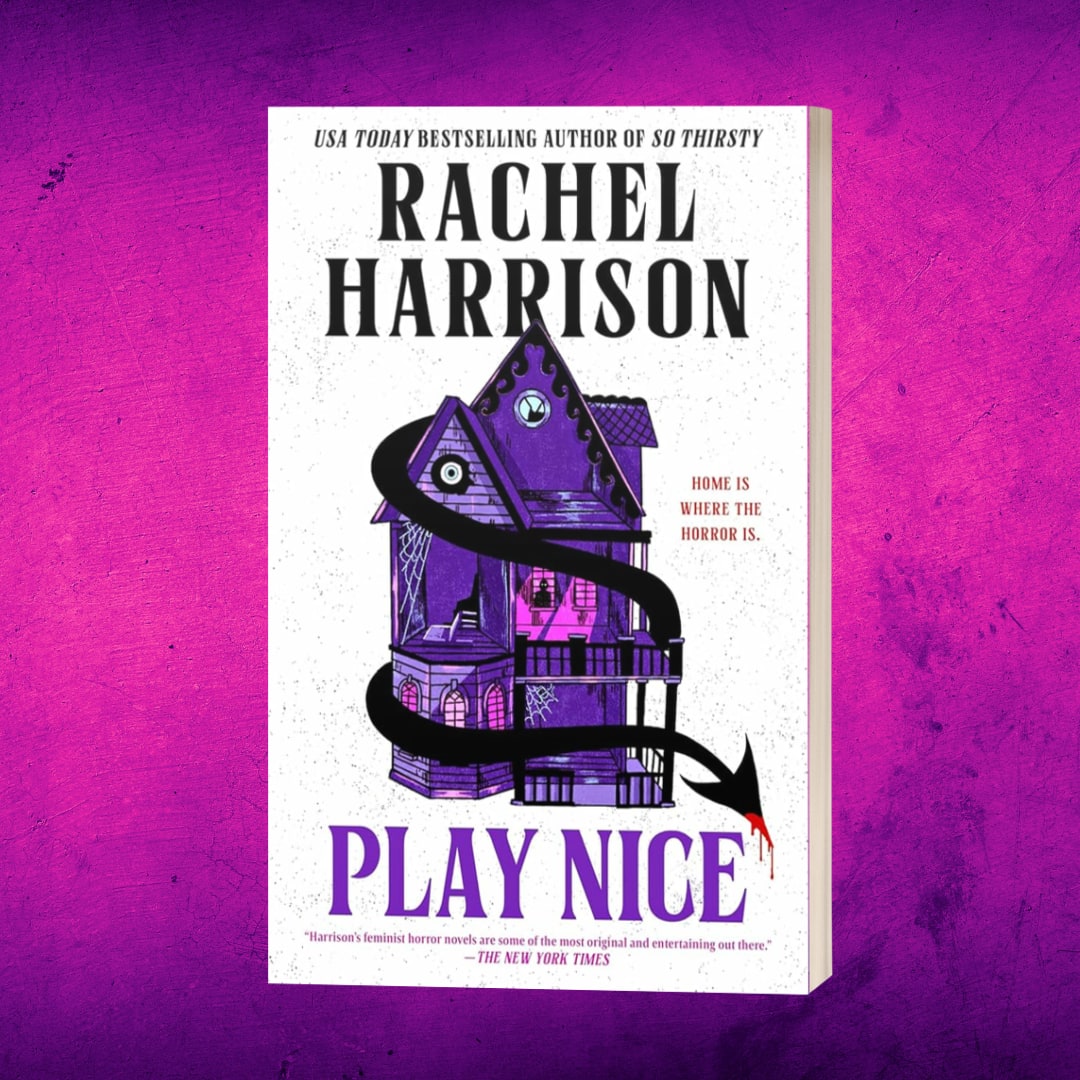
These numbers show it’s got some traction, but nothing earth-shattering—more of a cult hit than a blockbuster.[6]
Detailed Plot Summary: Breaking It Down Act by Act
Chapters 1-3: The Death Call
Clio Louise Barnes is living her best influencer life in New York City—partying, posting thirst traps, styling rich clients, and spending her wealthy father’s money like it’s Monopoly cash. She’s the classic youngest child who never grew up, coasting on privilege and good looks while pretending she’s self-made. Then her sisters Leda and Daphne blow up her phone with news that their estranged mother Alexandra has died of a heart attack in the family’s old house on 6 Edgewood Drive.
The sisters meet for what’s meant to be a quick logistics chat but turns into the first of many toxic family arguments. Leda, the eldest, is bitter and controlling, playing matriarch since their mum lost custody when Clio was seven. Daphne’s the peacekeeper middle child, exhausted from mediating between her dysfunctional sisters for two decades. They all agree their mother was an abusive, alcoholic nutcase who terrorized them with tales of demons before the courts finally intervened.
But here’s the kicker: Alexandra wrote a tell-all memoir called “The Demon of Edgewood Drive: The TRUE STORY of a Suburban Haunting” that became a cult hit among paranormal enthusiasts. All three daughters swore to their father they’d never read it, treating it like toxic waste. Leda and Daphne refuse to attend the funeral, but Clio—who barely remembers the trauma because she was so young—decides she’s going, sparking the first massive family row.
The funeral is a bizarre affair hosted by an occult society, attended by demonologists and true believers who treat Alexandra like a martyred prophet. Clio meets Roy, the sketchy demonologist who “helped” her mother, and Mariella, Alexandra’s sister (Clio’s aunt), who reveals the bombshell: Alexandra never sold the house. She died in it. And now it belongs to the three sisters.
Chapters 4-7: The Renovation Delusion
Clio sees dollar signs and Instagram engagement rates dancing before her eyes. House flipping content is massive on social media, and transforming her trauma house into something gorgeous would prove to her family she’s not just a vapid party girl. Leda and daphne want nothing to do with it, signing over their shares without hesitation, so Clio claims full ownership and moves in with renovation dreams and zero self-awareness.
The house is a disaster—peeling wallpaper, water damage, mice droppings, and a pervasive sense of decay that goes beyond neglect. Clio hires contractors, picks out paint samples, and starts documenting everything for her followers. She’s determined to make this work, partly for content, partly to prove herself to her dismissive family, and partly because she genuinely doesn’t remember the house being that bad.
Her childhood bedroom remains eerily unchanged, frozen in time like a shrine. Stuffed animals sit exactly where seven-year-old Clio left them. And there, on her old bed, is a battered copy of her mother’s book with hundreds of handwritten notes in the margins—annotations directed specifically at Clio. Alexandra left her youngest daughter a personalized guide to the truth, undermining the official family narrative with bitter commentary.
Clio starts reading and realizes her mother’s book contradicts everything her father and sisters told her. According to Alexandra, their father was having an affair during the marriage, the divorce was his fault, and he manipulated everyone into believing she was crazy when the demon started tormenting the family. The annotations get more disturbing: “Your father is lying,” “This part isn’t true but the publisher made me write it,” “The demon wanted YOU, Cici.”
Chapters 8-12: The Haunting Escalates
Strange occurrences multiply as Clio digs deeper into renovations and her mother’s manuscript. She wakes up in random rooms with no memory of how she got there—classic sleepwalking except she’s never been a sleepwalker. Objects move when she’s not looking. The house feels occupied even when she’s alone, like invisible eyes tracking her every move.
Smiley faces start appearing everywhere—drawn in dust on mirrors, scratched into walls, left on random notes. It’s the demon’s calling card, the same symbol Alexandra documented in her book. Clio initially dismisses it as stress-induced hallucinations or perhaps mice, but the manifestations become impossible to rationalize away.
She reconnects with Austin, the ridiculously nice neighbor who was her childhood friend. Austin is basically the only likeable character in the entire novel—kind, supportive, attractive, and genuinely concerned about Clio rather than judging her constantly. They start a romance that feels rushed and convenient, like Harrison needed a non-toxic male character to balance out Clio’s terrible father.
The excerpts from Alexandra’s book reveal the progression of the haunting: how the demon first appeared as a friendly presence, how it fixated on young Clio specifically, how Alexandra tried everything to protect her daughters while her husband dismissed her concerns as alcoholic paranoia. The book-within-a-book structure is genuinely clever, creating dual timelines that slowly converge.
Clio’s memories start breaking through the suppression. Flashbacks hit her randomly—her mother chasing her with a knife (the incident that got her committed), whispered voices in the night, cold hands touching her face, the demon appearing as a smiling figure that only she could see. But now she’s questioning whether her mother was attacking her or trying to save her from something worse.
Chapters 13-17: Family Implosion
Clio’s father discovers she’s been reading Alexandra’s book and absolutely loses it. He shows up at the house, furious and controlling, demanding she stop this “obsession” with her dead mother’s delusions. When Clio refuses and starts asking pointed questions about his affair and his version of events, he snatches the annotated book and burns it, destroying the only copy of her mother’s personal notes.
This triggers a nuclear family meltdown. Leda and Daphne initially side with their father, accusing Clio of betraying the family and disrespecting their trauma by questioning the official narrative. The sisters have a massive fight where decades of resentment explode—Leda resents being forced into a parent role, Daphne resents being ignored as the middle child, and Clio resents being treated like an incompetent child who can’t handle the truth.
But Clio refuses to back down. She tracks down another copy of “The Demon of Edgewood Drive” on eBay (turns out it’s not that rare after all, undermining the whole forbidden book angle), and starts cross-referencing it with public records, divorce documents, and her fragmenting memories. The evidence suggests Alexandra was telling the truth about many things—the affair, the financial manipulation, the way their father systematically isolated and discredited her.
The demon activity intensifies dramatically. Clio experiences full-blown supernatural attacks—being physically pushed, hearing demonic laughter, seeing the entity manifest as a shadowy figure with a grotesque smile. The house actively resists her renovation efforts; walls she repairs crack overnight, paint peels within hours, and contractors quit after experiencing their own unexplained phenomena.
Harrison ramps up the horror elements but never commits fully. The scares feel restrained, more unsettling than terrifying, like she’s afraid to alienate readers who came for family drama rather than genuine horror. For readers expecting shit-your-pants terror, this section disappoints massively.
Chapters 18-22: The Truth Unravels
Roy the demonologist reappears with information about the house’s history. Turns out multiple families experienced supernatural events at 6 Edgewood Drive before Alexandra moved in, though none stayed long enough to document it thoroughly. Roy and his partner investigated Alexandra’s claims and believed her, though they were later exposed as frauds (a clear Warren family reference that Harrison uses to complicate the “who’s telling the truth” question).
Clio pieces together what actually happened during her childhood. The demon did target her specifically, appearing to seven-year-old Clio as a “friend” while tormenting Alexandra. Her father used Alexandra’s desperate attempts to protect Clio—including the knife incident, where she was actually trying to cut symbols of protection into Clio’s bedroom door—as evidence of mental instability to win custody and maintain his respectable suburban image.
The biggest reveal: their father’s affair partner (now his wife, though this is barely mentioned) died under suspicious circumstances, and he moved back in with Alexandra briefly before the haunting accelerated. Alexandra suspected he brought something dark into the house, that his lies and betrayals created an opening for the demon to enter. Her book suggests the entity feeds on deception and family dysfunction.
Sisters Leda and Daphne finally visit the house after Clio has a genuine supernatural crisis they can’t ignore. The three women experience the haunting together—poltergeist activity, temperature drops, the demon manifesting fully for the first time since childhood. This shared experience forces them to acknowledge their mother wasn’t entirely delusional and their father isn’t the hero they’ve believed him to be for twenty years.
The family dynamics shift dramatically. The sisters bond over their shared trauma and the realization they’ve been gaslighted their entire adult lives. Leda admits she remembers more than she’s claimed, including supernatural events she rationalized away to maintain family peace. Daphne confesses she’s been having nightmares about the house for years. They’re all damaged in different ways by the lies they’ve been told and the truths they’ve suppressed.
Chapters 23-End: The Anticlimactic Resolution
The climax involves Clio confronting the demon directly, but it’s frustratingly vague and symbolic rather than a proper exorcism or showdown. The entity represents their family’s buried secrets and traumas, blah blah psychological horror metaphor, but Harrison never commits to whether it’s literally real or entirely metaphorical.
Clio performs some sort of ritual involving acknowledging the truth, accepting her mother’s love despite her flaws, and rejecting her father’s narrative. The demon dissipates or leaves or maybe just goes quiet—Harrison deliberately leaves it ambiguous in a way that feels less “artfully open-ended” and more “couldn’t figure out how to end this.”
The sisters reconcile, agreeing to sell the house and split the proceeds. They establish healthier boundaries with their father, who faces zero real consequences for his gaslighting and manipulation beyond his daughters being “disappointed” in him. This lack of accountability is infuriating; he gets away with decades of emotional abuse because the family wants to “keep the peace.”
Clio and Austin continue their relationship. She gains some maturity and self-awareness, supposedly growing from the experience, though she’s still fundamentally the same privileged, self-absorbed person with slightly better boundaries. The ending wraps up way too neatly for a story about generational trauma and demonic possession.
Two additional chapters follow the main conclusion, backtracking on some of the resolution and leaving readers confused about what actually happened. Multiple reviewers specifically complained about these chapters undermining the ending, suggesting Harrison either couldn’t commit to her conclusion or editor interference created a muddled finale.
Characters
Clio Louise Barnes is the 25-year-old protagonist and social media influencer who makes every bad decision possible while expecting sympathy. She’s vapid, entitled, manipulative, and uses people—particularly men—as disposable distractions from her problems. Her entire personality revolves around being hot, getting attention, and spending her father’s money while pretending she’s independent. As a character study of the ignored youngest child who never matured past seven, she’s psychologically interesting. As someone readers must spend 336 pages with, she’s exhausting. Harrison clearly intended Clio to be intentionally unlikeable, embodying traits society forgives in men but punishes in women, but that meta-commentary doesn’t make her less irritating to actually read about. Her growth arc is minimal—she gains some self-awareness but remains fundamentally self-absorbed by the ending.
Alexandra (Alex) Barnes is the dead mother whose presence dominates the narrative despite her physical absence. Through her book and annotations, she emerges as a deeply flawed woman—alcoholic, erratic, damaged—but possibly truthful about the supernatural events. Alex represents the “difficult woman” archetype: too loud, too insistent, too unwilling to play by patriarchal rules, and systematically punished for it. Her alcoholism stemmed from trying to cope with a husband’s betrayal and a demon targeting her youngest daughter while everyone dismissed her as crazy. The book’s most powerful moments explore how easily women get labeled “insane” when they refuse to stay quiet about uncomfortable truths. Alex is simultaneously victim and unreliable narrator, making her the novel’s most complex character despite being dead throughout.
Leda Barnes is the eldest sister, bitter and controlling after being forced into a parental role at a young age when their mother lost custody. She’s rigid, judgmental, and desperate to maintain the family narrative that allows her to feel her sacrifices meant something. Leda possibly has an eating disorder stemming from their mother’s fat-shaming comments during childhood, though Harrison barely explores this. She remembers more about the haunting than she admits, repressing memories to function as the “responsible one.” Her character arc involves admitting she participated in gaslighting Clio to protect her own fragile sense of reality.
Daphne Barnes is the forgotten middle child who mediates constantly between her dysfunctional family members. She’s exhausted from playing peacekeeper for two decades, swallowing her own trauma to smooth over everyone else’s conflicts. Daphne is arguably the most emotionally mature sister but gets the least character development, which feels like a deliberate middle-child metaphor but mostly just wastes potential. She’s been having nightmares about the house for years but never told anyone, prioritizing family harmony over her own mental health.
Austin is the ridiculously perfect neighbor and childhood friend who provides romantic interest and emotional support. He’s kind, patient, understanding, attractive, and has apparently been pining for Clio since childhood. Austin is so generically nice he barely registers as a real person—he exists to give Clio someone healthy to contrast with her toxic family. Multiple reviewers identified him as the only likeable character, which is damning for everyone else. His lack of flaws or complexity makes him feel like wish-fulfillment rather than genuine characterization.
Clio’s Father (name barely used, which is telling) is the patriarch who orchestrated Alexandra’s downfall to hide his affair and maintain his suburban respectability. He’s controlling, manipulative, and emotionally abusive while presenting a charming public facade. The novel strongly implies he gaslit Alexandra into seeming crazy, used the courts to steal custody, and has spent twenty years rewriting history to make himself the hero. Yet he faces almost no consequences, maintains relationships with all three daughters, and gets away with decades of psychological abuse because confronting him fully would shatter the family. He represents how patriarchal systems protect men who harm women, but Harrison doesn’t push this critique far enough, letting him off with a slap on the wrist.
Roy is the demonologist who investigated Alexandra’s claims and appears intermittently with cryptic information. He’s based on real-life fraudulent paranormal investigators (clearly the Warrens), and Harrison uses him to complicate the “who’s telling the truth” question. Roy might be a con artist exploiting vulnerable people, or he might genuinely understand supernatural phenomena—the book never clarifies. He disappears partway through with no real resolution to his storyline.
Mariella is Alexandra’s sister and the girls’ aunt, appearing briefly at the funeral. She provides some family history and sympathy for Alexandra but doesn’t feature enough to matter significantly. Her underuse represents a missed opportunity for alternative perspectives on Alex’s character.
| Character | Role | Likeability | Development | Purpose |
| Clio Barnes | Protagonist, influencer, youngest sister | Very Low | Minimal growth despite 336 pages | Reader frustration generator |
| Alexandra Barnes | Dead mother, author of demon book | Medium (sympathetic victim) | Complex despite being deceased | Thematic heart of story |
| Leda Barnes | Eldest sister, bitter matriarch | Low | Moderate arc in final act | Represents repression |
| Daphne Barnes | Middle sister, peacekeeper | Medium | Underdeveloped | Wasted potential |
| Austin | Neighbor, love interest | High (only likeable one) | Zero (too perfect) | Wish fulfillment |
| Father | Patriarch, possible villain | Very Low | None (no consequences) | Protected abuser |
| Roy | Demonologist | Low/Neutral | None (disappears) | Plot device |


Comparing to Similar Haunted House Tales
Play Nice tries the possessed-pad trope, but stacks up poorly against classics—too much drama, not enough dread.
| Book | Similarities | Differences | Why Play Nice Loses Out |
| The Amityville Horror (Jay Anson) | Demon-possessed house, family trauma[1] | Amityville’s based on “true” events with intense scares; Play Nice is fictional family fluff[2] | Harrison’s version fizzles without real terror—Amityville grips harder[1] |
| A Head Full of Ghosts (Paul Tremblay) | Unreliable memories, possession claims, family breakdown[6] | Ghosts has meta layers and ambiguity; Play Nice’s straightforward and drags[3] | Tremblay’s twists shock—Harrison’s predictable and underwhelming[6] |
| Home Before Dark (Riley Sager) | Inherited haunted house, mum’s book influence[6] | Sager’s got thriller pace and resolution; Play Nice’s ending flops[3] | Sager delivers chills and closure—Play Nice leaves you hanging[1] |
It borrows vibes but lacks the edge, making it a pale imitation.[2]
Final Verdict
Play Nice represents a frustrating misfire from an author capable of much better. Harrison has the prose skills and thematic intelligence to craft compelling horror, but she can’t decide whether she’s writing a haunted house thriller or a family drama, so she delivers neither successfully. The result is a bloated, tedious novel that’s not scary enough for horror fans and not insightful enough for literary fiction fans.
The most charitable interpretation is that Harrison attempted something ambitious—blending genuine horror with deep psychological exploration of family dysfunction and feminist critique of how society treats “difficult women”—but lacked the execution to pull it off. The less charitable take is she got lazy, relying on her established audience to buy anything she publishes regardless of quality.
At 336 pages, Play Nice feels like 500. The pacing drags through endless sibling arguments that repeat the same points. The demon gets sidelined for chapters at a time. Clio makes idiotic decisions that exist only to prolong the plot. The ending fizzles rather than explodes. And the father’s lack of real consequences undermines the entire thematic arc.
The 4.06 Goodreads rating is generous—this is a 3-star book elevated by Harrison’s prose and devoted fanbase. Bestseller status doesn’t equal quality; it equals marketing budget and author recognition. Anyone discovering Harrison through this book might wonder what the fuss is about, while longtime fans will likely feel disappointed she didn’t deliver the horror-comedy-heart balance that made her previous works special.
Read if: You prioritize family drama over horror, don’t mind unlikeable protagonists, want light supernatural elements rather than terror, appreciate feminist themes about women labeled “crazy,” and have patience for slow-burn ambiguity.
Hard skip if: You want actual scares, need likeable characters, expect the marketed thriller, demand satisfying conclusions, or value your time—there are dozens of superior haunted house novels published this year alone.
The demon in Play Nice deserved better character development than anyone in the Barnes family got. At least supernatural entities have an excuse for being poorly defined; these humans should know better.
Did you actually suffer through all 336 pages of sibling drama for that anticlimactic ending? Drop a comment about whether you wanted to throw your Kindle at the wall. Team Demon or Team Just-Burn-The-House-Down? Share this if you want to warn your mates before they waste money on this overhyped mess, or click the ads if you appreciate honest reviews that aren’t afraid to call out wasted potential when we see it!
G'day, mates – imagine a house where the bloody wallpaper starts whispering your darkest secrets, and you're trapped in a loop of grief so thick it chokes you like a bad barbie snag. That's the ...

What if your uni gig turned into a bloody nightmare with monsters and a bloke who's meant to hate you but can't keep his eyes off? Spellcaster by Jaymin Eve kicks off with Paisley Hallistar, ...