Book Review: Freeing the Wild’s 3 Fatal Flaws Explained & Synopsis
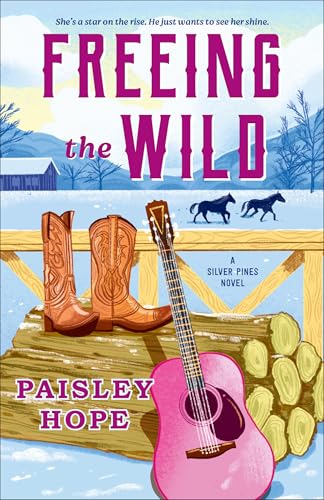
Picture this: a country starlet traumatised at a concert, fleeing to Kentucky, and bumping into a bloke she’d already shagged in his truck months prior. Sounds spicy, yeah? But mate, what could’ve been a ripper of a romance stumbles harder than a drunk at the Melbourne Cup. Paisley Hope’s fourth instalment in the Silver Pines Ranch series dishes up 336 pages of predictable plotting, a frustratingly entitled heroine, and chemistry so forced you can hear the gears grinding.
The setup’s there—Cassie Spencer, dubbed the “Princess of Bluegrass,” witnesses tragedy mid-tour and bolts to her sister’s ranch, straight into the arms of Haden Westbrook, the brooding cowboy she’d promised was a one-time thing. But this isn’t the slow-burn magic you’d hope for. It’s a tepid bath that never quite gets hot enough.
Stick around to uncover:
- Why Cassie’s bratty behaviour in Chapter 1 sets a toxic tone that never fully redeems itself
- How the “forbidden romance” angle crumbles faster than a Tim Tam in hot coffee
- The glaring lack of real conflict that makes this 336-page book feel like 500
- Whether Haden’s “grumpy cowboy” schtick actually delivers or just recycles tired tropes
Detailed Summary
Opening Chaos
The book kicks off with Cassie Spencer arriving at Silver Pines Ranch to visit her sister Ivy. She’s all sass and zero sense, ignoring explicit warnings about a spooked rescue horse named Clover. Within minutes, she’s putting herself and the animal in danger because she reckons she knows better. Enter Haden Westbrook, the ranch’s senior hand, who rightfully tears strips off her for the reckless stunt.
Instead of apologising like a reasonable human, Cassie lashes out with defensive attitude. No accountability, no “my bad, mate”—just entitlement. This first interaction is meant to establish their “fiery chemistry,” but honestly? It reads like watching someone argue with a Maccas employee over not getting enough sauce. The tension feels manufactured, not magnetic.
The Truck Incident
Later that evening, at a bonfire gathering with the extended Silver Pines crew, Cassie and Haden’s bickering somehow morphs into attraction. They end up shagging in his truck—a scene that’s meant to be steamy but feels rushed and transactional. The physical description tries for “raw passion” but lands closer to “horny convenience.” They agree it’s a one-time thing, Cassie jets off for her tour, and that’s that.
Except it’s not, because this is a romance novel and commitment to anything—including believable pacing—isn’t on the cards.
Tragedy Strikes
A few months later, Cassie’s performing at a packed venue when a stage light rig malfunctions catastrophically. A crew member is killed, others are injured, and Cassie witnesses the whole horror show. She develops severe PTSD and panic attacks—an aspect the book handles with surprising sensitivity, even if it’s wrapped in a package that doesn’t quite earn that emotional weight.
Her manager, Dex, is painted as a cartoonish villain who pressures her to get back on stage immediately. He’s so over-the-top callous that he stops feeling like a real obstacle and starts feeling like a plot device with a moustache to twirl. There’s no nuance, just “bad man wants money, good cowboy wants healing.”
Return to Silver Pines
Cassie retreats to Kentucky, ostensibly to heal and reconnect with her sister. Surprise, surprise—she ends up living in the cabin right next door to Haden’s place. The forced proximity trope could work, but here it’s deployed with all the subtlety of a dropped anvil. They’re suddenly neighbors, constantly bumping into each other, and the “will they, won’t they” starts up again.
But here’s the rub: there’s no real reason they shouldn’t. Wade Ashby, Haden’s boss and Cassie’s brother-in-law, gives a half-hearted “don’t date my sister-in-law” warning that has zero teeth. It’s mentioned once, ignored immediately, and never becomes an actual barrier. So what’s the bloody conflict?
The Non-Conflict Spiral
The bulk of the middle section is Cassie and Haden circling each other, having philosophical conversations about dreams and trauma, and occasionally getting it on. Haden’s unfailingly patient and supportive—to the point where he stops being a character and becomes a cardboard cutout labelled “Perfect Cowboy Therapist.” He has his own baggage with an absentee father and a half-sister named Penny, but it’s treated like window dressing rather than genuine character development.
Cassie’s anxiety is front and center, which should add emotional stakes. Instead, it becomes repetitive. She has a panic attack, Haden soothes her, she feels guilty about being a burden, he reassures her, rinse and repeat. By the fourth iteration, you’re checking the page count wondering when something—anything—will actually happen.
The Career “Dilemma”
The book tries to manufacture tension around whether Cassie will return to her music career or stay at the ranch. But this feels hollow because Paisley Hope never commits to making either choice genuinely difficult. Cassie’s love for music is told more than shown—we hear she’s the “Princess of Bluegrass,” but we rarely see her connection to songwriting or performing beyond surface-level descriptions.
When she eventually fires her toxic manager Dex and hires a new one, Fiona, it’s supposed to be this empowering moment. But Fiona appears out of thin air, perfect and accommodating, ready to restructure Cassie’s entire career around her new relationship. It’s convenient to the point of being laughable.
Side Character Parade
A significant chunk of page time is devoted to interactions with characters from previous books—Wade and Ivy, Cole and Ginger, Nash and CeCe. If you’ve read the series, this might feel like catching up with old mates. If you haven’t, it’s like being dragged to your partner’s school reunion where everyone keeps referencing inside jokes you’re not part of.
The “Sangria Sundays” with the ranch wives are clearly meant to showcase found family vibes, but they come across as filler. Yes, we get it—everyone’s supportive and lovely and makes casseroles. Moving on.
The Grand Gesture
Towards the end, Cassie performs at a major venue and dedicates a song to Haden, who’s sitting in the audience. It’s meant to be this tear-jerking declaration of love, proving she can have both her career and her cowboy. The execution, though? Predictable as a rom-com finale and about as emotionally earned as a participation trophy.
Haden’s grand gesture is… showing up. That’s it. He drives to watch her concert. Revolutionary stuff, truly.
The Resolution
They decide to make it work long-distance when Cassie’s touring, and Haden will occasionally travel with her. Cassie restructures her career to allow for more time at the ranch. It’s all tied up neatly with a bow, no real sacrifice required from either party, no lingering doubts. They’re in love, the end, everyone’s happy.
The final chapters rush through their happily-ever-after so quickly you’d think the publisher had a word count they needed to hit and then suddenly didn’t. Penny, Haden’s half-sister, gets a sweet moment of acceptance into their lives. Cassie’s family drama with her alcoholic mother is mentioned and then dropped. Every loose thread is either tied off in a sentence or ignored entirely.
Epilogue Territory
While there’s no formal epilogue, the last chapter jumps forward slightly to show them settled and blissful. There are crumbs dropped about the next couple in the series—Asher and Olivia—because of course there are. It’s the interconnected series formula: give readers enough of other characters to keep them buying the next book.
The problem isn’t that the ending is unhappy. It’s that it’s unearned. These two faced so little genuine adversity that their triumph feels hollow. They were into each other from page one, circumstances kept conveniently aligning in their favor, and any obstacle that arose was dispatched with the urgency of doing the washing-up.
Characters
Cassie Spencer
The so-called heroine of this piece, Cassie’s meant to be a free-spirited, sassy country music star with hidden depths. What she actually is: reckless, defensive, and frustratingly inconsistent. Her opening chapter stunt with the horse—ignoring safety warnings because she fancies herself a horse whisperer after visiting a ranch twice—sets a tone of entitlement that never fully shakes off.
When Haden calls her out, she doesn’t apologise or reflect. She doubles down, gets snippy, and acts like he’s the problem for not appreciating her “connection” with animals. This would be forgivable if it were addressed as a character flaw she grows from, but it’s played as quirky confidence. It’s not cute; it’s dangerous and self-absorbed.
Her trauma from the concert accident is the book’s strongest element regarding her character. The panic attacks, the hyper-vigilance, the guilt—these are handled with genuine care. But even here, the execution gets repetitive. Cassie’s internal monologue cycles through the same beats: fear, shame, Haden’s support, temporary relief. It needed more variety in how she processed and confronted her PTSD.
Her career ambitions feel paper-thin. We’re told she’s a rising star, the “Princess of Bluegrass,” but we see precious little of what makes her special as an artist. Her songwriting process is glossed over, her connection to music is stated rather than demonstrated, and her decision-making around her career reads as passive. Things happen to Cassie; she rarely drives the action.
Haden Westbrook
Oh, Haden. The grumpy cowboy with a heart of gold and abs you could grate cheese on. Except he’s not particularly grumpy—he’s mildly irritated once, then spends the rest of the book being endlessly patient, understanding, and accommodating. It’s less “grumpy/sunshine” and more “slightly peeved/sunshine.”
His backstory involves an absentee father and complicated feelings about his half-sister Penny. These elements are present but never really explored with the depth they deserve. Haden’s issues exist to be soothed by Cassie’s presence, not to create genuine character complexity. He’s supportive to a fault, functioning more as Cassie’s emotional support animal than as a fully realized person with his own wants and conflicts.
The “charming heartthrob of Laurel Creek” label is told but not shown. He works with rescue horses, which is his one defining trait beyond “hot” and “nice.” His dialogue is functional—delivering reassurances and occasionally flirting—but rarely memorable. You could swap his lines with any other brooding cowboy from any other ranch romance and barely notice the difference.
Wade Ashby
Cassie’s brother-in-law and Haden’s boss, Wade’s supposed to be the obstacle with his “don’t date my sister-in-law” warning. But he’s written as so reasonable and laid-back that the prohibition has no weight. He mentions it, Haden acknowledges it, and then everyone proceeds as if it was never said. Wade exists primarily to anchor the interconnected series, reminding readers he was the hero of book two.
Ivy Spencer-Ashby
Cassie’s sister, married to Wade. Ivy’s role is to be supportive, make casseroles, and facilitate girl-talk scenes. She has no agency beyond being Cassie’s sounding board and emotional support. Any personality she might have had in her own book is flattened into “caring sister” and “ranch wife.”
Dex (Manager)
Cassie’s original manager is a cardboard cutout villain. He’s greedy, insensitive, and pushy to the point of parody. There’s no attempt to give him believable motivations or moral complexity. He’s just the Bad Manager Who Doesn’t Care, existing solely to be fired so Cassie can hire someone better. Lazy character writing at its finest.
Fiona (New Manager)
The anti-Dex, Fiona appears fully formed and perfect, ready to restructure Cassie’s entire career around her personal life with zero pushback or realistic industry constraints. She’s a deus ex machina in a blazer.
Penny Westbrook
Haden’s younger half-sister gets sweet moments but is more of a plot device than a person. She exists to soften Haden’s image and provide heartwarming scenes. Her relationship with Haden is underdeveloped, told mostly through exposition rather than shown through meaningful interaction.
The Extended Silver Pines Crew
Nash, CeCe, Cole, Ginger, and assorted others pop up regularly to remind you this is a series. They blend together into a homogenous mass of “supportive friends who drink sangria and throw barbecues.” Individual personalities are sacrificed for wholesome found-family vibes.
| Character | Archetype | Actual Depth | Page Purpose |
| Cassie Spencer | Sassy Pop Star with Trauma | Surface-level, repetitive processing | Drive romance plot via proximity |
| Haden Westbrook | Grumpy Cowboy | Not actually grumpy, just Patient Boyfriend | Be perfect, soothe Cassie |
| Wade Ashby | Protective Brother-in-Law | Toothless authority figure | Fake obstacle, series connection |
| Ivy Spencer-Ashby | Supportive Sister | Flattened to caretaker role | Enable girl-talk scenes |
| Dex | Villain Manager | One-dimensional greed | Be fired for empowerment moment |
| Fiona | Savior Manager | Unrealistically perfect | Solve career conflict magically |
| Penny Westbrook | Sweet Kid Sister | Underdeveloped | Soften Haden’s image |

Compare with Other Works
If you’ve read Elsie Silver’s Chestnut Springs series, you’ll notice Freeing the Wild desperately wants to be that but lacks the sharp dialogue and genuine character growth that makes Silver’s work sing. Silver’s cowboys have actual flaws that create real conflict; Haden’s just vaguely sad about his dad sometimes.
Lyla Sage’s Rebel Blue Ranch series shares the small-town cowboy romance DNA but executes it with more wit and less repetition. Sage’s heroines make mistakes and own them; Cassie makes mistakes and gets defensive.
The closest comparison might be Bailey Hannah’s Bellmont Ranch series, which also leans heavy on found family vibes and interconnected stories. But Hannah balances ensemble warmth with individual couple focus better. Freeing the Wild gets so caught up in reminding you other characters exist that Cassie and Haden’s story gets diluted.
Even within Paisley Hope’s own Silver Pines series, this is the weakest link. Book one, Holding the Reins, had actual stakes with CeCe escaping a toxic engagement and navigating complex family dynamics. Book three, Riding the High, had the accidental marriage and secret-keeping tension. Freeing the Wild has… Cassie and Haden living next door and being into each other while absolutely nothing stops them from being together.
For readers seeking contemporary romance with mental health representation, The Soulmate Equation by Christina Lauren or Beach Read by Emily Henry do anxiety and trauma with more narrative integration. Here, Cassie’s PTSD is handled respectfully but repetitively, cycling through the same beats without meaningful progression.
If you want country music industry romance, Daisy Jones & The Six by Taylor Jenkins Reid (obviously more literary fiction) or even The Heartbreak Tour by Sophie Cousens give you a richer sense of what it means to be a performer. Cassie’s career feels like set dressing, not a lived experience.
Achievement
Let’s talk numbers, because despite its narrative shortcomings, Freeing the Wild has commercial clout behind it:
- Goodreads Rating: 4.46/5 based on 640 ratings (as of late October 2025, pre-official release)
- Series Performance: Book 1 (Holding the Reins) has 31,156 ratings (3.90 average), Book 2 (Training the Heart) has 17,302 ratings (4.08), Book 3 (Riding the High) has 10,813 ratings (4.24)
- Author Status: Paisley Hope is a USA Today Bestselling Author—her recent release e hit the USA Today Bestseller list in October 2025
- Publisher Backing: Published by Random House/Ballantine Dell, giving it major distribution muscle
- Page Count: 336 pages
- Release Date: November 11, 2025
- Format Availability: Paperback (ISBN 9798217094097) and ebook (ISBN 9798217094103)
The series has sold well enough to warrant five books and counting, with book five teasing Asher and Olivia’s story. Random House doesn’t back small potatoes—this series is shifting units, even if quality varies.
| Metric | Number | Context |
| Goodreads Rating | 4.46/5 | 640 ratings (pre-release) |
| Series Book 1 Ratings | 31,156 | Shows strong reader base |
| USA Today Bestseller | Yes (Author) | Commercial credibility |
| Publisher | Random House | Major industry backing |
| Series Books | 5+ | Sustained reader demand |
| Page Count | 336 | Standard contemporary romance |
The high rating suggests most readers enjoyed it, but ratings inflation is real in romance communities. A 4.46 often means “cute and inoffensive” rather than “literary excellence.” The declining ratings count from book one to book four (31k to 10k to just 640 for this one at pre-release) might signal series fatigue or suggest the initial book’s buzz hasn’t fully translated to loyal readership.
What Actually Works
To be fair—and the user wants criticism, but let’s not be completely one-sided—the PTSD representation is solid. Cassie’s panic attacks, hyper-vigilance, and guilt are written with care. If you’re reading for mental health rep, this aspect delivers.
The setting descriptions of Kentucky farmland and ranch life have moments of genuine warmth. When Hope focuses on the physical environment rather than manufactured drama, her prose relaxes into something more authentic.
Haden’s work with rescue horses provides sweet, grounding scenes that feel lived-in. These moments hint at what the book could’ve been if it had committed to quieter, character-driven storytelling.
What Doesn’t
Pretty much everything else. The lack of real conflict is fatal. Romance needs obstacles, and “we like each other but she might tour sometimes” isn’t enough to sustain 336 pages. The chemistry feels forced rather than organic, with the narrative insisting they’re perfect together while the page-level interaction reads as cordial at best.
Cassie’s entitlement and lack of growth poison the well early. When your heroine can’t acknowledge putting a horse in danger and acts bratty when called out, it’s hard to root for her happiness. The side characters overwhelm the main couple’s story, turning what should be an intimate romance into a series advertisement.
The writing itself is competent but uninspired. Functional sentences, predictable phrasing, reliance on telling over showing. It reads like content designed to hit genre beats rather than a story someone was burning to tell.
Final Verdict
Right, let’s wrap this up: Reckon you agree Cassie’s opening chapter behaviour was cooked, or do you think I’m being too harsh? Drop a comment below and let’s have a yarn about whether “grumpy cowboy” can just mean “mildly inconvenienced hot guy” these days.
And look, if this review helped you dodge a reading bullet, chuck a small donation my way or click those ads—keeps the lights on and the honest reviews coming. Cheers for reading, you legends!
G'day, you lot of dark fantasy junkies! Imagine this: you're trudging through a foggy bog of flesh-munching monsters and cursed blokes, only to trip over plot holes bigger than the Sydney Harbour. What if the ...
Picture this: a 29-year-old librarian who's been with her bloke for 11 bloody years decides to shag around for a month before marriage, crushes on her grumpy coworker, then spends 416 pages doing absolutely nothing ...