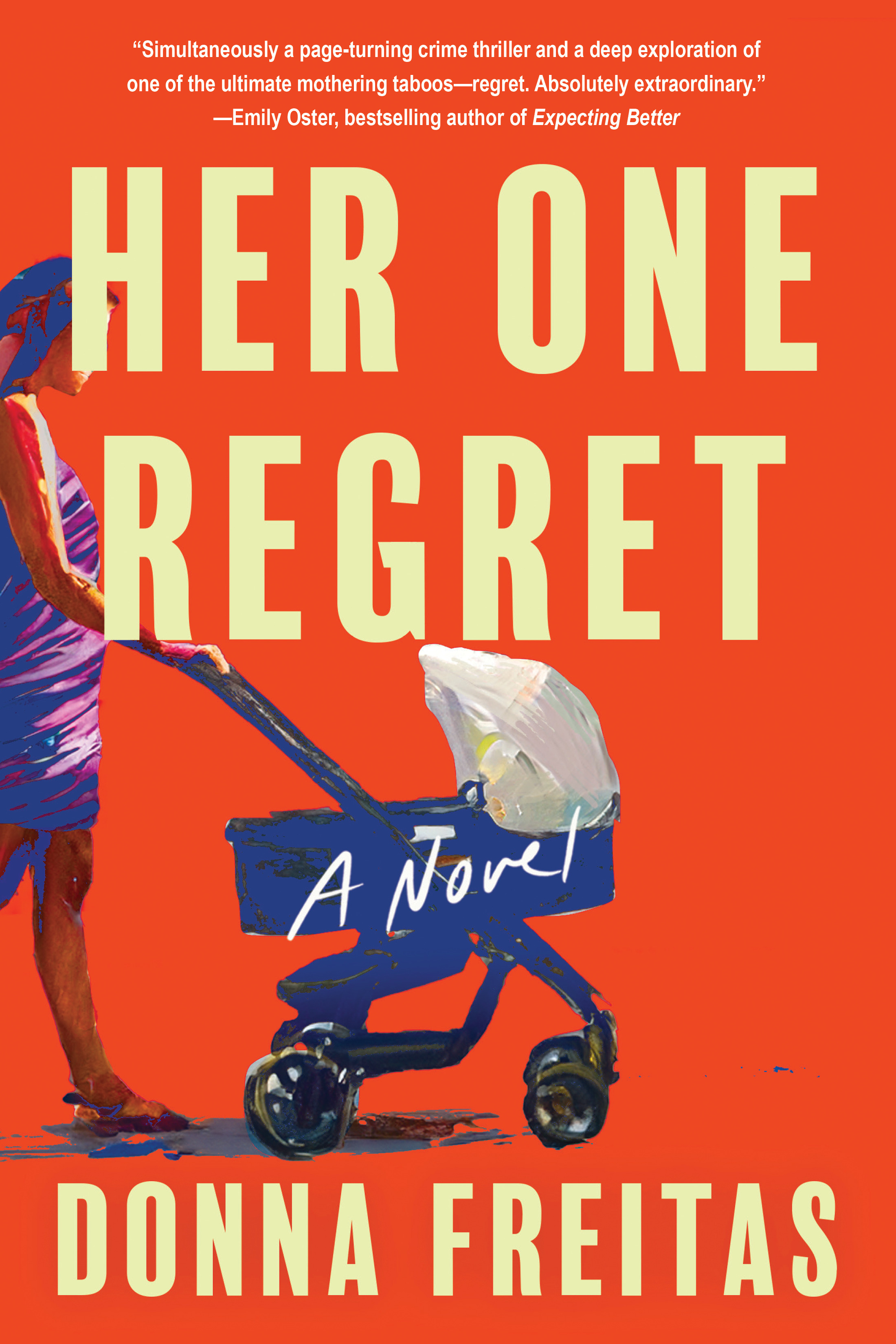
Book Review: Her One Regret – 1 Missing Mum, 384 Pages of Waffle
A successful real estate agent vanishes from a Narragansett Beach car park, abandoning her 9-month-old baby Emma in a shopping trolley. National headlines scream “monster mother,” social media erupts, and the police scramble.
But here’s the kicker: Lucy Mendoza had confessed to her best mate Michelle that she regretted motherhood so deeply she’d fantasised about faking her own kidnapping. One woman disappears, four narrators whinge about their lives, and 384 pages later, you’re left wondering if this “feminist thriller” was worth the slog.
Stick around to discover:
- Why 384 pages feel like 600 when nothing happens for half the book
- How Donna Freitas turns a cracking premise into a tedious sermon
- The predictable twist you’ll see coming from page 50
- Why this ain’t the “Gone Girl of motherhood” everyone claims it is
Detailed Summary
The Vanishing Act
Lucy Mendoza loads groceries into her car on a stunning early autumn afternoon in Rhode Island. Her baby Emma sits in the trolley, perfectly content. Then Lucy disappears—phone found smashed under a truck, baby left crying alone, zero witnesses.
The police launch an investigation, the media goes mental, and the small beach community of Narragansett rallies together. It’s the kind of setup that should hook you immediately, right? Wrong. Because Freitas immediately shifts away from the actual mystery to spend the next 300-odd pages meandering through the internal monologues of women who aren’t Lucy.
Instead of investigating what happened, we’re subjected to endless navel-gazing about the pressures of motherhood. Fair enough—important topic. But this isn’t a sociology textbook, mate. It’s supposed to be a thriller.
The First 48 Hours (That Feel Like 48 Days)
Michelle, Lucy’s best friend, is absolutely gutted. She’s convinced Lucy’s been kidnapped, possibly murdered. But Michelle’s harbouring a secret that could destroy Lucy’s reputation: that confession about regretting motherhood and fantasising about escaping. Should she tell the police? Will it help or harm the investigation? Freitas stretches this moral dilemma across dozens of pages, with Michelle agonising over the same questions repeatedly.
Meanwhile, the media circus intensifies. Cable news pundits debate whether Lucy’s a victim or villain. Online forums dissect every detail of her life. Podcasts spring up overnight discussing maternal regret. It’s all very 2025, very “ripped from the headlines,” but it reads like Freitas copy-pasted a bunch of Twitter threads into her manuscript. The social media commentary feels forced, like she’s trying too hard to be relevant.
Enter Julia: The Artist Who Stopped Creating
Here’s where the book really loses its way. We’re introduced to Julia, a former artist now trapped in full-time motherhood with a baby the same age as Emma. Julia never wanted children—her first instinct upon discovering she was pregnant was abortion. But her husband Marcus was chuffed, so she couldn’t disappoint him. Classic, right? Now she’s stuck at home, unable to paint, unable to bond with her son, unable to feel anything except dread and resentment.
Julia sees herself in Lucy. She understands that fantasy of disappearing. And as the town turns against Lucy, condemning her as a monster, Julia spirals deeper into her own darkness. She’s envious of Lucy, actually envious that Lucy might have escaped. Freitas hammers this point home chapter after chapter: Julia is miserable, Marcus is useless, society is unfair. We get it. Move on.
Marcus the Muppet
Speaking of Marcus, let’s talk about this absolute dropkick of a husband. When Julia decides to stop breastfeeding (because, you know, her body her choice), Marcus throws a tanty. He shames her, acts like she’s failing their son, treats her body like it exists solely as a milk factory.
Yet he swans off to work every day while Julia drowns in isolation at home. He’s written so cartoonishly awful that he stops feeling like a real person and starts feeling like a feminist talking point with legs. Yes, plenty of blokes are rubbish partners. But Marcus is so one-dimensionally terrible that you wonder if Freitas has ever met an actual man.
The book makes it abundantly clear: Julia never wanted this baby, Marcus pressured her into keeping the pregnancy, and now he’s done sweet FA to actually parent the child. It’s meant to make you angry, and it does—but not in the way Freitas intended. Instead of feeling angry at systemic inequality, you’re just frustrated that this subplot exists at all.
Diana the Retired Detective
Diana, a former detective, becomes personally invested in Lucy’s case because it reminds her of other missing women investigations from her career. She starts poking around, asking questions, drawing connections. Finally, some actual detective work! Except… not really. Diana mostly just thinks about her past cases, reflects on how society judges women differently than men, and occasionally interviews someone. She’s supposedly this hardened investigator, but she spends more time philosophising than investigating.
Diana’s chapters should provide the thriller elements—the clues, the red herrings, the building tension. Instead, they’re more therapy sessions about gendered double standards. Yes, we know society treats missing mothers differently than missing fathers. We’ve known this since page 10. Stop telling us and show us something interesting.
Michelle’s Moral Dilemma
Back to Michelle, who’s still wrestling with whether to reveal Lucy’s confession. She loves being a mum herself—absolutely adores it. But her husband isn’t exactly father of the year either. Even in Michelle’s “happy” motherhood experience, Freitas shows us the cracks: Michelle does most of the childcare, most of the emotional labour, most of everything. Her husband “helps out” as if parenting his own child is a favour to Michelle rather than his actual responsibility.
Michelle defends Lucy to anyone who’ll listen. She insists Lucy would never abandon Emma willingly. But doubt creeps in. What if Lucy really did stage her own disappearance? What if Michelle never truly knew her best friend at all? This could’ve been gripping psychological suspense. Instead, it’s Michelle having the same circular thoughts every three chapters.
The Podcast Subplot
A podcast about maternal regret starts gaining traction, featuring women who anonymously confess they wish they’d never had children. Julia becomes obsessed with it, listening to episodes on repeat, feeling seen for the first time. The podcast interviews researchers, therapists, and mothers who’ve experienced these feelings. It’s all very NPR, very educational, very… boring. These podcast excerpts read like Freitas wanted to include her research notes and couldn’t figure out how to work them in naturally. So she invented a podcast. Subtle as a brick.
The Community Turns
Once Lucy’s confession about regretting motherhood leaks (courtesy of a police investigation slip-up), the community goes absolutely feral. Neighbours who’d been sympathetic now call her selfish. Online commenters brand her a monster. Think pieces proliferate about “bad mothers” and “the sanctity of motherhood.” The vitriol is visceral and, to be fair, pretty realistic. Freitas captures how quickly society turns on women who transgress motherhood’s sacred boundaries.
But here’s the problem: we spend SO MANY PAGES on this public condemnation that the actual mystery—what happened to Lucy?—becomes almost secondary. The book morphs from “thriller about a missing woman” into “dissertation on maternal regret disguised as a thriller.” If I wanted an academic paper, I’d have read one. I signed up for suspense.
Julia’s Breaking Point
Julia’s mental state deteriorates. She stops eating properly, stops sleeping, stops engaging with her husband (not that he notices). Her son cries constantly, and she feels nothing but resentment. She fantasises about leaving, about disappearing just like Lucy. She even scouts out places where she could go, plans she could execute. The book desperately wants you to empathise with Julia’s plight, and on some level, you do. But it’s repetitive. Same thoughts, same feelings, same scenes of her staring at her neglected art supplies, chapter after chapter after chapter.
There’s a creepy neighbour subplot involving someone Julia sees wandering around at night. Is this person connected to Lucy’s disappearance? Is Julia in danger? Freitas teases this out for ages, building minor suspense, only to resolve it in the most anticlimactic way possible. Not everything needs to be a red herring, but when your actual mystery is this thin, you can’t afford to waste reader attention on pointless subplots.
The Investigation Stalls
Diana and the police hit dead ends. No witnesses saw Lucy leave the car park. No surveillance footage captured anything useful. Lucy’s phone was destroyed deliberately. Her bank accounts untouched. It’s as if she vanished into thin air. Either she’s been abducted by someone extremely careful, or she planned her exit meticulously. The police lean toward the latter, especially after the maternal regret revelation. They think Lucy’s living it up somewhere, free of her responsibilities, leaving everyone else to clean up the mess.
The “Twist”
Without spoiling specifics (though honestly, you’ll guess it), the resolution involves Lucy’s actual fate being revealed. The book wants you to be shocked, moved, devastated. But if you’ve read any thriller published in the last decade, you’ll see this coming from miles away. The clues are telegraphed so obviously that the “twist” lands with all the impact of a wet newspaper. It’s meant to be profound commentary on how society fails mothers, but it feels more like Freitas writing herself into a corner and choosing the most melodramatic exit possible.
The ending attempts to tie everything together: Julia’s story, Michelle’s guilt, Diana’s redemption arc. But it’s all wrapped up too neatly, too conveniently. Everyone learns their lesson, grows as a person, and moves forward with newfound awareness. Yawn.
Characters !
Lucy Mendoza
Successful real estate agent who vanishes mysteriously. We rarely see her perspective directly—she’s more symbol than person. Lucy’s the catalyst for everyone else’s character development, but she remains frustratingly opaque. We know she regretted motherhood, felt trapped, fantasised about escaping. But beyond these broad strokes? Nothing. She’s a plot device in a wig.
| Trait | Details |
| Profession | Real estate agent in Rhode Island |
| Age of child | 9-month-old daughter Emma |
| Key confession | Regretted becoming a mother, fantasised about faking kidnapping |
| Character depth | Minimal—exists mostly in other characters’ memories |
| Function in story | Catalyst for thematic discussions, not fully realised person |
Michelle
Lucy’s best friend, devoted mother who loves her role. Michelle’s the “good mother” counterpoint to Lucy’s “bad mother.” She’s desperate to defend Lucy while also questioning whether she truly knew her friend. Michelle’s character arc involves learning that she gaslit Lucy by dismissing her feelings. It’s a valid point, but Freitas beats it into the ground. Michelle spends the entire book feeling guilty, which becomes exhausting to read.
| Trait | Details |
| Relationship to Lucy | Best friend, confidante |
| Parenting style | Loves motherhood, finds fulfillment in it |
| Major conflict | Whether to reveal Lucy’s confession to police |
| Character flaw | Dismissed Lucy’s struggles, failed to truly listen |
| Husband situation | Also does minimal parenting despite Michelle’s happiness |


Julia
Former artist, current struggling mother. Julia’s the emotional core of the book—her perspective dominates large chunks. She never wanted children, her husband pressured her, and now she’s trapped in a life she despises. Julia should be compelling, but she’s so relentlessly miserable that spending time in her head becomes draining. There’s no nuance, no complexity—just page after page of “I hate this I hate this I hate this.”
| Trait | Details |
| Former career | Artist who no longer creates |
| Pregnancy decision | Wanted abortion, husband Marcus wanted baby |
| Current state | Postpartum depression, emotional isolation, resentment |
| Relationship to Lucy | Doesn’t know her but identifies with her completely |
| Character development | Minimal—stays miserable throughout |
Marcus
Julia’s husband, poster child for useless partners everywhere. Marcus wanted the baby, pressured Julia to continue the pregnancy, then buggered off to work every day while Julia shouldered all childcare. He shames her for stopping breastfeeding, treats her feelings as invalid, and generally acts like a controlling tosser. He’s written so broadly that he’s more caricature than character. Every scene with Marcus feels like Freitas screaming “SEE? MEN ARE THE PROBLEM!”
| Trait | Details |
| Parenting involvement | Minimal to none—goes to work, leaves Julia alone |
| Reaction to Julia’s struggles | Dismissive, shaming, controlling |
| View on fatherhood | Wanted child desperately but won’t actually parent |
| Character complexity | Zero—he’s just Bad Husband™ |
| Purpose | Represent systemic male negligence |
Diana
Retired detective who involves herself in Lucy’s case. Diana’s meant to provide the investigative thriller backbone, but mostly she just reminisces about past cases and thinks Deep Thoughts about gender inequality. She’s competent enough but never particularly interesting. Her subplot about similar historical cases could’ve been fascinating but instead reads like Wikipedia summaries dropped into the narrative.
| Trait | Details |
| Background | Retired detective with decades of experience |
| Connection to case | Sees parallels to other missing women cases |
| Investigation style | Lots of thinking, minimal actual detective work |
| Character purpose | Provide “professional” perspective on Lucy’s disappearance |
| Success rate | Solves nothing readers couldn’t figure out themselves |
Plot Twists
The Maternal Regret Confession
The biggest “twist” is Lucy’s confession to Michelle about regretting motherhood—except it’s revealed in the first few chapters, so it’s hardly a twist at all. This confession becomes public knowledge around the book’s midpoint, triggering the community’s vicious backlash. The leak itself is meant to shock you, but it’s so obviously telegraphed that you’re mostly just waiting for it to happen. No surprise, no tension, just inevitability.
Julia’s Dark Fantasies
Julia’s escalating fantasies about abandoning her own family are positioned as shocking revelations. But given that we’ve spent 200 pages inside her miserable head, is anyone genuinely surprised she’s having these thoughts? Freitas treats these moments like plot twists when they’re really just natural progressions of Julia’s established character. There’s no twist—it’s exactly what you’d expect from someone this unhappy.
The Creepy Neighbour Red Herring
Julia notices someone lurking around her neighbourhood at night. Is it connected to Lucy’s disappearance? Is Julia being stalked? Will something terrible happen? Spoiler: No. It’s completely unrelated, resolved in a throwaway paragraph, and exists solely to pad the page count. This isn’t a twist—it’s a waste of time. When your central mystery is this weak, you can’t afford to burn reader goodwill on pointless diversions.
Lucy’s Actual Fate
The revelation of what really happened to Lucy is supposed to be the book’s emotional gut-punch. Freitas clearly thinks she’s delivering a devastating commentary on how society treats mothers. But the “twist” is so heavily foreshadowed and follows such obvious thriller conventions that it lands with zero impact. You’ll figure it out ages before the characters do, then spend the remaining pages waiting for them to catch up. It’s not clever, it’s not surprising, and it’s definitely not worth 384 pages of buildup.
The Podcast’s Role
The podcast about maternal regret becomes increasingly prominent, eventually connecting to Lucy’s story in a way that’s meant to be revelatory. But again—obviously telegraphed from the moment the podcast is introduced. If you can’t see this “connection” coming from a mile away, you’ve never read a thriller before. It’s Chekhov’s gun in the most literal, unsubtle way possible.
Compare With Other Works
Gone Girl by Gillian Flynn
Multiple reviews compare this to Gone Girl, which is insulting to Gone Girl. Flynn’s thriller featured genuinely shocking twists, unreliable narrators who kept you guessing, and prose sharp enough to cut glass. Her One Regret features… women thinking about their feelings for 384 pages. Amy Dunne was a complex, terrifying, fascinating character. Lucy Mendoza barely exists as a character. Gone Girl earned its twists through meticulous plotting and character development. This book telegraphs everything then acts like it’s blown your mind.
The Nine Lives of Rose Napolitano by Donna Freitas
Freitas’s previous novel explored alternate timelines based on whether Rose had a baby. Critics loved its inventive structure and nuanced portrayal of reproductive choice. Unfortunately, Her One Regret feels like Freitas retreading the same thematic ground but with a thriller veneer slapped on top. Where Rose Napolitano trusted readers to engage with complex ideas through character and story, Her One Regret lectures you repeatedly about maternal regret as if you’re too thick to understand the subtext. It’s preachy where Rose was provocative.
The Push by Ashley Audrain
Both books explore maternal ambivalence and regret, but The Push does it better. Audrain’s novel is genuinely unsettling, with Blythe’s unreliable narration keeping you constantly off-balance. You’re never sure if Violet is actually dangerous or if Blythe’s projecting her own issues. That ambiguity creates real tension. Her One Regret has no such ambiguity—Freitas spells everything out explicitly, repeatedly, then explains it again just to be sure you got the message. There’s no room for interpretation, no space for readers to think for themselves.
Big Little Lies by Liane Moriarty
Both feature multiple female POVs navigating motherhood in affluent communities. But Moriarty balances social commentary with actual plot momentum, likeable (if flawed) characters, and genuine suspense. Her One Regret frontloads the message at the expense of everything else. Big Little Lies trusts you to draw conclusions from character actions. This book treats you like a student who needs everything explained in excruciating detail.
Nightbitch by Rachel Yoder
Another recent novel about maternal dissatisfaction featuring body horror elements as metaphor. Nightbitch is weird, darkly funny, and genuinely unsettling. It takes creative risks and earns its premise through commitment to the bizarre. Her One Regret plays it safe—conventional thriller structure, predictable beats, no real innovation. Yoder’s protagonist literally turns into a dog, yet feels more grounded and authentic than Julia’s endless misery spiral.
Achievement
Sales and Rankings
Her One Regret was selected as a Book of the Month pick for November 2025, which guaranteed it significant visibility and distribution. It hit the Apple Books Women Sleuths bestseller list in early November 2025, claiming the number-one spot briefly. However, it failed to crack the New York Times bestseller list, unlike Freitas’s previous novel The Nine Lives of Rose Napolitano. That book was an international bestseller—this one seems destined for middling success at best.
Critical Reception
Goodreads reviews are mixed at best. While early ARCs generated some glowing reviews praising its “important message,” reader reviews post-publication have been considerably less enthusiastic. The main complaints? Pacing issues, repetitive internal monologues, predictable plot, and characters that feel more like mouthpieces than people. Currently sitting around 3.5 stars on Goodreads—respectable but hardly spectacular for a “Gone Girl of motherhood.”
Publishing Details
Published by Soho Crime in November 2025 with significant marketing push. The book runs 384 pages—about 100 pages too long given how thin the actual plot is. Freitas conducted numerous interviews and podcast appearances promoting the book’s “groundbreaking” exploration of maternal regret. The publisher clearly positioned this as both commercial thriller and Important Social Commentary, hoping to capture both beach-read audiences and book clubs. Results suggest they’ve succeeded with neither demographic fully.
Awards and Recognition
Too early to tell if it’ll garner any major award nominations, but early signs suggest no. The book lacks the literary polish for prestigious fiction awards and the actual suspense for thriller-specific prizes. It exists in an awkward middle ground—too literary for thriller fans, too genre for literary fiction enthusiasts. Most likely outcome? A smattering of “best of” lists focused on feminist fiction, then quiet obscurity.
Writing Quality
Freitas can write—that’s not the issue. Individual sentences are competent, occasionally even elegant. The problem is structure and pacing. The book frontloads all its interesting elements (Lucy’s disappearance, the maternal regret revelation) then spins its wheels for 250 pages before limping to a predictable conclusion. Thrillers need momentum. This has the momentum of continental drift.
The multiple POV structure should create dynamic tension, but instead it fragments the narrative. We’re constantly jumping between characters who are all thinking similar thoughts about similar themes. It becomes repetitive fast. Julia resents motherhood. Michelle feels guilty. Diana contemplates inequality. Julia resents motherhood. Michelle feels guilty. Diana contemplates inequality. See the pattern?
Thematic Execution
The book’s central theme—that maternal regret is a valid experience society refuses to acknowledge—is important. Genuinely important. Women deserve space to express these feelings without condemnation. But Freitas’s execution is about as subtle as a sledgehammer to the face. She doesn’t trust readers to grasp the nuance, so she explains it. Then explains it again. Then has a podcast explain it. Then has characters discuss the explanations.
Good fiction embeds its themes within story and character. Great fiction makes you think without telling you what to think. This book lectures. It’s a 384-page op-ed masquerading as a thriller. If you removed the Lucy disappearance framework, you’d have a decent nonfiction book about the research on maternal regret. But you can’t just staple Important Themes onto a weak mystery plot and call it a feminist thriller.
The Verdict
Her One Regret is a frustrating book because it has a genuinely compelling premise—successful mother vanishes after confessing she regrets having children—then squanders it completely. Instead of a taut psychological thriller exploring taboo territory, we get a bloated, repetitive, preachy slog that’s more interested in making A Point than telling a good story.
Drop a comment below if you’ve read this—am I being too harsh or did you also spend 384 pages waiting for something, anything interesting to happen? And if you’re looking for actual thrillers with feminist themes that don’t treat you like you’re dim, hit me up and I’ll point you toward better options.

G'day, mates! Imagine this: a cheeky NHL rookie fakes a romance with a no-nonsense softball star at a wild family campout, only for the sparks to fly hotter than a barbie in the outback. What ...

Picture this: a world where blokes are scarce, and a fierce sheila kidnaps a prince for hubby duties—bloody brilliant or a total stitch-up? Stick around as I unpack this spicy romantasy that'll have you chuckling ...