The Pirate Queen Review: 3 Timelines, 1 Pirate, No Mercy
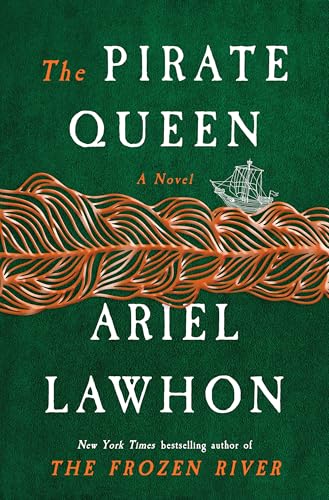
Ariel Lawhon trades frozen rivers for the Irish Sea, and mostly gets away with it. Here’s the full synopsis, every major character dissected, and whether this 448-page historical doorstopper earns a spot on your TBR — or your DNF pile.
Some historical fiction whispers. The Pirate Queen fires a cannonball through your lounge room window.
Ariel Lawhon has taken Gráinne Ní Mháille — the 16th-century Irish clan leader the English called a pirate and the Irish called a queen — and turned her into a 448-page fever dream of salt spray, blood feuds, and one woman refusing every box her era tried to stuff her into.
It’s Lawhon’s most ambitious book yet. It’s also, in this reviewer’s honest opinion, her most uneven. Grab a cuppa, because we’re going deep.
Detailed Summary
Fair warning: this is the full synopsis, broken into the three timelines Lawhon braids together. Light spoilers for structure, big reveals kept vague. If you want to go in blind, skip to the characters section.
The Maiden: A Girl Born Saltwater
We open on the O’Malley kingdom on Ireland’s wild west coast, where the ocean is the family business and everyone has a name you’ll need three attempts to pronounce.
Grace O’Malley is the only daughter of Eóin O’Malley, chieftain of a seafaring clan that controls the waters around Mayo. While other noble girls are learning to run a household, Grace is sneaking aboard her father’s ship, the Niamh, and falling in love with a horizon that has no interest in loving her back.
Because this is the 1500s, and the 1500s were rubbish for ambitious girls. Grace’s value, as far as the clan is concerned, is as a bargaining chip in a strategic marriage. The sea wants her; the land owns her.
That tension — between who Grace is and who Ireland demands she be — is the engine of everything that follows. Lawhon writes young Grace with genuine warmth, and the early chapters have a windswept, storybook quality that’s honestly lovely.
The problem? It’s also slow. Very slow. There’s a lot of staring at the ocean meaningfully before anything actually happens.
The First Marriage: Alliances and Bruises
The wrong husband arrives on schedule. Donal O’Flaherty is a neighbouring chief — hot-tempered, politically useful, and exactly the kind of man a father picks when he’s thinking about territory instead of his daughter.
Grace does what women in her position did: she works the system from inside. She raises a family, bears sons, and refuses to stop sailing. When Donal campaigns against rival tribes, Grace isn’t at home embroidering — she’s riding alongside him, learning warfare as a second language.
Lawhon doesn’t sugarcoat these marriages, and she deserves credit for that. The brutality of the period — clan warfare, English encroachment, the sheer disposable way women were traded between families — sits right alongside the romance of the sea.
When Donal dies and Grace is ousted from his land in the wake of his death, the book hits its first true gear change. Cast out of the life she built, she does what every great protagonist does with nowhere left to go.
She goes home. And then she goes to war.
The Pirate Years: Livelihood, Territory, and Iron
Back at her childhood seat, Grace stops being a wife playing at power and becomes a power in her own right. She claims territory. She commands ships. She builds a reputation that makes merchants pay tribute and rivals think twice.
She also finds deeper love — Richard-an-Iarainn Burke, “Iron Richard,” her second husband, and the rare relationship in the book that feels like a partnership instead of a transaction.
This middle stretch is the best of the book. Sea battles, cargo raids, negotiations conducted at knifepoint, and the ongoing shock of watching a woman do all of it in a world that had no script for her. When the book is in this mode — storm-lashed, foul-mouthed, kinetic — it’s an absolute ripping yarn.
The dialect gets gloriously filthy too. Nobody just says “Galway” in this book. It’s always “fecking Galway.” Honestly, respect.
The Matriarch vs the Crown
Then England gets serious about Ireland, and Grace’s livelihood — her ships, her land, her family — becomes collateral in a colonial project with Elizabeth I’s face on it.
The English administration, embodied by officials who treat Ireland as a chessboard, squeezes the clans with taxes, garrisons, and carefully engineered betrayals. Grace’s sons become targets. Her alliances start cracking. The body count climbs.
And here is where Lawhon’s structure — the Maiden/Mother/Matriarch braid borrowed from the Celtic Trinity Knot — starts to feel less like architecture and more like a decision that needed a stricter editor.
We know where this is heading: the historic meeting between Grace O’Malley and Queen Elizabeth I, two women running kingdoms built by men, negotiating across a table because the battlefield wasn’t available to either of them. Lawhon telegraphs it from early on, and getting there sometimes feels like sailing through treacle.
The final act lands. The meeting is staged with real theatre, and the themes — two women who broke every rule recognising each other across an ocean of politics — genuinely work.
But you will have earned it, and not only in a good way.
Characters
The cast is enormous. Lawhon has said she used the Trinity Knot structure to hold it together, and honestly, the character list could use its own knot. Here’s everyone who matters.
Grace O’Malley (Gráinne Ní Mháille)
The Pirate Queen herself, and Lawhon’s best protagonist since Nancy Wake — with one caveat.
Grace as written is brilliant, beautiful, fearless, and right about nearly everything. Her foes are sleazy scumbags. Her loyal crew are adoring and capable. The deck is stacked, and Lawhon stacks it on purpose.
It makes for a thrilling read and a slightly hollow one. The real Grace O’Malley was a smuggler, a raider, and a ruthless politician — a woman who’d fit comfortably in a season of Peaky Blinders. Lawhon keeps the ruthlessness but sands off enough edges that Grace sometimes feels more mascot than human.
Still: as a study in female ambition weaponised against a world built to deny it, she’s a genuinely great character.
Eóin O’Malley
Grace’s father and clan chieftain — the man who teaches her the sea and then marries her off to secure the land. Their relationship is the emotional spine of the early chapters.
He’s written warmly, which is an interesting choice given he’s the one who signs away her freedom. Lawhon lets both things be true: he loves her, and he uses her. It’s the book’s most quietly realistic relationship.
Donal O’Flaherty
The first husband. Hot-tempered, strategically useful, and written with just enough depth that you understand the marriage without being asked to like it.
Donal is the story’s first antagonist and its first tragedy, and Grace’s years campaigning beside him are where she learns that violence is a language she speaks fluently.
Richard-an-Iarainn Burke
“Iron Richard,” the second husband, and the book’s secret weapon. The marriage starts as politics — of course it does, everything in this world does — and grows into something the book treats as genuinely rare: a partnership.
If Lawhon is guilty of romanticising anything in this book, it’s this relationship. Iron Richard is loyal, capable, and conveniently understanding in ways that real 16th-century noblemen mostly weren’t. But you’ll be having too much fun to lodge a formal complaint.
Tibbot na Long
Grace’s son — literally “of the ships,” born at sea. The next generation, the stakes made flesh, and the walking argument that everything Grace fights for outlives her or doesn’t.
Queen Elizabeth I
The other queen, mostly glimpsed from a distance until she isn’t. When Elizabeth and Grace finally share a page, the book earns its title twice over. Their scene is the best thing Lawhon has written — two performance, power, and politics all dropped into a single conversation.
Quick Reference Table
| Character | Role | The Goss |
|---|---|---|
| Grace O’Malley | Pirate Queen, protagonist | Brilliant, fearless, occasionally too perfect |
| Eóin O’Malley | Grace’s father, chieftain | Loves her, uses her — the book’s most honest relationship |
| Donal O’Flaherty | First husband | Hot-tempered alliance; the beginning of Grace’s education |
| Richard-an-Iarainn Burke | Second husband | “Iron Richard” — the partnership the heart wanted |
| Tibbot na Long | Grace’s son | Born at sea; the next generation and the stakes |
| Elizabeth I | Queen of England | The mirror across the table; shares the book’s best scene |
Compare With Other Works
If you’ve read Lawhon before, here’s where The Pirate Queen sits — and how it stacks up against the neighbours on the historical fiction shelf.
| Book | The Vibe | How It Compares |
|---|---|---|
| Code Name Hélène (Lawhon) | WWII resistance, Nancy Wake | Same “woman vs history’s script” energy; Hélène is tighter |
| The Frozen River (Lawhon) | 1789 midwife, courtroom drama | Her commercial peak — better pacing, smaller cast |
| The Marriage Portrait (Maggie O’Farrell) | Renaissance Italy, dread | O’Farrell does prose; Lawhon does propulsion |
| The Wild Irish (Robin Maxwell) | Earlier Grace O’Malley novel | The other Pirate Queen book — more romance, less blood |
| Braveheart (the film) | Scots, freedom, yelling | Same adrenaline; Grace is Wallace with better navigation skills |

The honest hierarchy for Lawhon fans: The Frozen River still wears the crown, Code Name Hélène is the sharpest, and The Pirate Queen is the biggest swing. Big swings drop balls — more on that below.
Achievements
The numbers and milestones worth knowing — no inflated publisher fluff, just the receipts.
| Milestone | Detail |
|---|---|
| Publication | 8 September 2026, Doubleday |
| Length | 448 pages |
| New York Times | Reviewed in the NYT Book Review on release week |
| Critic verdicts | Aggregated “Rave” rating from major trade reviews — unanimous positive |
| Goodreads | Charting in Goodreads’ most popular new releases, September 2026 |
| Blogger reception | Named a top historical fiction title of 2026 by multiple book blogs |
| Format | Standalone — no series commitment required |
A NYT review on release week and unanimous rave verdicts from the trade press is genuinely elite company for any historical novel. Whatever my quibbles with the pacing, the industry consensus is clear: this book landed.
Should You Read It? (The Verdict)
Rating: 4 out of 5 stars — and I suspect I’m being stingier than the crowd.
Read it if: you love seafaring historical fiction, you’ve been waiting your whole life for a Grace O’Malley novel that actually goes feral, or you want to understand the Lawhon hype before her next inevitable bestseller.
Skip it if: a 448-page book with 40+ Gaelic names, a non-linear timeline, and present-tense narration sounds like homework. There are shorter, tidier ways to meet the Pirate Queen.
The honest wrap: Lawhon’s research is exhaustive, Grace is a hero worth 448 pages, and the Elizabeth meeting is genuinely electric theatre. But the present tense fights the material, the structure sags under its own ambition, and the first hundred pages could lose a third of their weight with nothing missed.
A brilliant, messy, storm-swept epic — which, fittingly, is exactly what a book about an Irish pirate queen should probably be.
FAQ
Is The Pirate Queen based on a true story?
Yes. Grace O’Malley was a real 16th-century Irish clan leader, sea captain, and “pirate” who famously negotiated with Queen Elizabeth I. Lawhon blends documented history, folklore, and invention — she’s upfront that large stretches are reimagined.
Do I need to read Ariel Lawhon’s other books first?
No. It’s a standalone. Start here if you like; go back to The Frozen River or Code Name Hélène afterward depending on your tolerance for courts versus cannons.
Is it a series?
No — complete in one volume, no cliffhanger, no waiting.
Is it violent?
Very. Clan warfare, executions, and dialect that would make a sailor blush. It’s rated by history.
Is it too slow in the beginning?
Yes. Push through to the pirate years — the book repays patience unevenly but pays.
Over to you — dropped anchor on this one or bailing out? Did the present tense do your head in like it did mine, or am I just soft? Leave a comment below and tell me your Lawhon ranking.

G'day, mates. Picture this: a posh sheila named Juliette from a dodgy powerful family bumps into a shadowy bloke called Roman, who's secretly the heir to their arch-rivals. Sparks fly in the dark, but daylight ...

Picture this: a changeling wakes up 200 years late, stumbles into modern London like a confused tourist, and teams up with a heartbroken witch to solve organ-theft murders. Sounds brilliant, yeah? Nah, mate. This 448-page ...