Knave and the Moon Review: 5 Tournaments, 1 Betrayer (Spoilers)

Rachel Gillig’s duology finale drags a drugged captive queen through five tournaments thrown by the husband who murdered everyone she loved. BookTok has already crowned it the romantasy event of the season. Here’s what those five-star ratings aren’t telling you — full synopsis, every character dissected, and a verdict that will make me very unpopular at parties.
The maths looks bulletproof.
The Knave and the Moon has been on shelves for a fortnight, and it’s already sitting on 27,312 Goodreads ratings at a 4.36 average. Orbit has a #1 New York Times bestselling, multi-million-copy author on its hands and a marketing budget to match — and the marketing worked. Beautifully.
And the book that opens this well is not the book that closes it. The first 80 pages are a dream; the last 80 are a different dream — better, and worse.
Grab a cuppa. This is the full review — spoilers kept vague until the summary says otherwise.
The 10-Second Verdict
★★★☆☆ — 3.0 / 5
A duology finale better than its pacing and worse than its best scene. Finish the story if you loved book one — just don’t expect the middle to hurry.
Read it if:
- you finished The Knight and the Moth and need closure
- you’re here for gothic atmosphere and court intrigue, not romance fireworks
- Maude Bauer was your favourite — this one’s going to hurt
Skip it if:
- you want a romance that builds, not one that remembers
- tournament-repeat pacing is a dealbreaker
The Book at a Glance
| Detail | |
|---|---|
| Author | Rachel Gillig (#1 NYT bestselling, multi-million copies) |
| Publisher | Orbit (Hachette) |
| Released | 1 September 2026 |
| Length | 353 pages, hardcover |
| Genre | Gothic romantasy |
| Goodreads | 4.36 average from 27,312 ratings |
Detailed Summary
Fair warning: this is book two of The Stonewater Kingdom duology, and the summary below assumes you know how The Knight and the Moth ended. Light structural spoilers throughout, big reveals kept vague.
Part 1: The Wedding Nobody Asked For
We open on Sybil Delling’s wedding day. That sounds lovely until you learn the groom is King Benedict “Benji” Castor III — the friend who, one book ago, murdered Rodrick Myndacious, shattered the gargoyle Bartholomew’s wing, kidnapped Sybil, and walked off with the Omens’ five magical stone objects.
Aisling Cathedral is rubble. The kingdom of Traum believes sprites did it. Rory, Maude and Bartholomew are officially dead. And Sybil — the last Diviner, the girl whose dreams once carried the kingdom’s faith — is paraded as queen in a marriage designed to redirect an entire religion’s money and devotion toward one man’s crown.
She is also, crucially, drugged. Kept docile. Bleeding internally from limestone in her stomach, in pain every single day, and trotted from hamlet to hamlet like a relic.
Grimdark Magazine’s reviewer called this setup “genuinely delicious,” and I agree with the first third of that sentence unreservedly. The opening act is Gillig at her absolute best: dark, controlled, patient. A queen in a cage, smiling for a kingdom that thinks she’s chosen this.
To celebrate the union — and to tighten his grip on Traum — Benji forces the five noble families of the five hamlets to host a series of tournaments. Each hamlet, each family, each round: a chance for the new king to be seen, cheered, and paid tribute. His knights, each handed one of the Omen stones, are meant to win, collect the winnings, and bind the nobles to him.
It’s a grift wearing a festival hat. The kingdom still aches from the Cathedral’s fall, still tithes to a faith that no longer has a home, and Benji’s solution is to convert belief into box office. Every tournament purse is a bribe. Every joust is a sermon about who God apparently prefers now.
Sybil attends all of it as the smiling prize. Drugged into compliance, dying slowly from limestone in her stomach, and trotted from hamlet to hamlet like a relic. Her value to Benji is precisely her old holiness — for a price, the captive queen can still divine futures, and Traum’s faithful still queue up to believe her.
Enter the book’s title character: a knave with no name, no memory, and stone-grey eyes, fighting his way up the tournament lists.
If you’ve read book one, you know exactly who this is by page 40, and honestly, Gillig doesn’t try that hard to hide it — the mystery isn’t the point. The point is watching Sybil realise the dead boy she loved is standing ten feet away, winning bouts for a king, and doesn’t know her face. The book shifts into dual POV here, and it’s the best structural decision Gillig makes: his chapters give us the tournaments from the outside, hers give us the cage from the inside.
The chapters alternate like a heartbeat speeding up. Every time the knave wins, Sybil’s chapters get harder to read and harder to put down.
Part 3: The Sabotage
The story assembles itself as a heist. The knave regains his memories after taking the loomstone in the first tournament — one moment of contact with the stone, and a whole life crashes back into stone-grey eyes. Maude and Bartholomew — alive, hidden, and quietly furious — enter the games alongside him, and the crew’s real objective crystallises: use Benji’s own tournaments to destroy the five Omen stones, the anchors of the false faith, and with them the king’s claim to divine right.
Five stones. Five tournaments. The symmetry is the plan, and the plan is also the trap — every object destroyed is a piece of the kingdom’s soul, and the crew knows it. They aren’t liberating Traum from a con; they’re demolishing the cathedral the con replaced, and praying something true is left standing.
Sybil’s price is the highest of anyone’s. Her plan requires destroying the stones and herself.
The middle of the book lives in this stretch, and this is where my rating starts fighting with the Goodreads average. Five tournaments is a structural promise of escalation. In practice, the cycle — travel, bout, sabotage, escape — repeats with diminishing returns around tournament three, and the pacing sags under the weight of its own schedule.
The plot machinery is still gorgeous. The character work wobbles. But keep reading, because the final act repays you.
Part 4: The Fall of a King
Everything Benji built comes apart fast. He kills Sybil’s guard, sets the Chiming Woods ablaze, and burns through allies like kindling — until the nobles strip him of the crown and hand the throne, of all people, to Maude.
Sentenced to a death-duel against Sybil herself, Benji gambles on resurrection one last time — dying into the Spring Water to be reborn. The sprites have other plans. Sybil ends him on the palace floor, and Gillig gives the moment a cold, unglamorous weight that most romantasy wouldn’t dare.
But the victory is not free. The coin Benji throws in his final chapter kills Hamelin — and later, effectively, Maude, who refuses resurrection for the second time and tells the children she never wanted exactly why.
Bartholomew — Sybil’s stone gargoyle protector — cracks, and crumbles. Both deaths land in the same chapter. I won’t pretend I saw it coming, and I won’t pretend I was dry-eyed.
Part 5: The Hundred-Year Epilogue
The final pages jump forward a century. The kingdom has become something new; the faith has been remade rather than destroyed, which retroactively justifies the book’s best thesis — “the only way to truly destroy the Stonewater Kingdom’s faith is to save it.”
The last image — that a story is like the moon, visible in phases, whole even when it doesn’t look it — is the kind of closing line that forgives a lot.
Not everything. But a lot.
Characters
| Character | Role | Status in one line |
|---|---|---|
| Sybil Delling | Captive queen, last Diviner | The book’s spine |
| Rory Myndacious | The knave — resurrected, memory-wiped | The heart (running on fumes) |
| Benji Castor III | King of Traum, former friend | The coldest thing here |
| Maude Bauer | Rebel, reluctant mother-figure | The quiet gut-punch of the book |
| Bartholomew | Stone gargoyle protector | Cracks, crumbles, matters |


Sybil Delling — The Queen in the Cage
The best thing in the book, and it isn’t close.
A year of drugging, internal limestone bleeding, and public smiling hasn’t broken her — it’s refined her into something quiet and terrifying. Gillig writes her captivity without melodrama: the horror is in the routine, the scheduled smiles, the three kicks to the stomach she takes in stride because her body is already the enemy’s.
Her arc is a deliberate inversion of the Diviner she was in book one — the dreamer turned weapon turned, finally, author of her own story.
The resurrected boy with stone eyes and no name is a beautiful premise that Gillig only half-executes.
His amnesia chapters genuinely ache — he calls Sybil the most beautiful woman he’s ever seen, with no idea why. Mid-book, he watches the king kiss her in public and doesn’t flinch, because the knave has a role to play in his own story. That’s the kind of restraint that makes a reviewer put the book down and stare at the ceiling.
The memory recovery, though, arrives early and without much friction, and from that point he’s mostly a competent sword with excellent cheekbones. The romance’s second half runs on fumes of the first book’s tension — two people who already fell in love, remembering that they did.
Still, his final choice — staying human, drinking the Spring Water, slowly turning to stone finger by finger over a century to keep the life he chose — is the most romantic thing in the duology. It hurts in the good way.
Benedict “Benji” Castor III — The King
The villain problem, and the book’s boldest swing.
Benji is not a dark romantic lead, and Gillig refuses to redeem him into one — which will lose her readers who wanted exactly that. He’s a narcissist with a god-shaped hole, and his final acts (the coin that saves Sybil, kills her enemy, and later murders her mother-figure in one arithmetic of selfishness) are the coldest, smartest character writing in the book.
Whether that payoff was worth two books of buildup is the question this review keeps circling.
Maude Bauer — The Reluctant King
The gut-punch nobody warned me about.
A mother-figure who never wanted children, handed a throne, then killed by the boy she raised — her deathbed refusal of resurrection (“I’m sorry, my boy. This time… I cannot do as you ask.”) is the single best scene in the novel. Watch for it. Bring tissues.
Bartholomew — The Gargoyle
The fan favourite, and deservedly so. A stone guardian who spends the book cracking apart and still finds the strength for one last limestone throw. His quiet resurrection afterwards is earned rather than cheap.
The Nobles (Hamelin, Dedrick, Tory, and company)
Functional rather than memorable. Hamelin’s cruelty marks the book’s darkest turn. Dedrick and Tory exist to die meaningfully. This is a five-family political chessboard that never quite gets the depth its plot role demands.
Themes: What Gillig Is Actually Arguing About
Strip the tournaments and the gargoyle, and The Knave and the Moon is a book about what happens when a community’s faith gets captured and resold.
Benji’s play isn’t violence — it’s monopoly. He doesn’t destroy Traum’s religion; he acquires it, moves its revenue model, and appoints himself the middleman between the divine and the desperate. Gillig wrote this before it felt quite this pointed, and it lands with a wallop anyway.
The counterweight is resurrection economics. Every miracle in this world has an invoice: memory for Rory, flesh for Bartholomew, dignity for Maude. The book keeps asking who can afford to come back, and quietly answers that the people who refuse resurrection are the ones with the strongest claim on it. “Tell them I did not die a sprite killer. The name Bauer means something yet.” — that’s not a death scene, that’s a thesis.
And then there’s the moon metaphor — for a duology about a faith built on phases and apparitions, it’s a quietly perfect closing argument.
Compare With Other Works
| Book | Vibe match | Where they differ |
|---|---|---|
| The Knight and the Moth (Gillig, 2025) | Direct predecessor | Slower burn, stronger romance setup; this one is darker and messier |
| One Dark Window (Gillig, 2022) | The signature voice | Nightshade-ish gothic romance vs full political siege |
| Iron Flame (Yarros) | The famous ‘book two wobble’ | Same sophomore-finale pacing complaints, different fandom response |
| The Cruel Prince (Black) | Court intrigue, toxic king | Holly Black’s scheming is tighter; Gillig’s grief is heavier |
| Fourth Wing (Yarros) | BookTok romantasy energy | More dragons, less interiority; Knave is the moodier sibling |
Achievement
| Metric | Number |
|---|---|
| Goodreads ratings (as of mid-September 2026) | 27,312 |
| Goodreads average rating | 4.36 / 5 |
| Release date | 1 September 2026 |
| Publisher | Orbit (Hachette) |
| Format | Hardcover, 353 pages |
| Series position | Book 2 of 2 — duology complete |
| Author pedigree | #1 New York Times bestselling author, multi-million copies sold |
| Debut that started it all | One Dark Window (2022) |
What Works Brilliantly
- Sybil’s captivity arc — one of the strongest female interiority arcs in current romantasy
- The tournament heist structure — when it works, it hums
- Maude’s deathbed refusal — the emotional peak of the duology, no contest
- Refusing to redeem Benji — braver than most books in the genre
- The hundred-year epilogue — quiet, earned, and unexpectedly beautiful
Where It Hurts
- The middle sag — five tournaments, roughly three tournaments’ worth of story
- Rory’s post-amnesia arc — the romance runs on book-one fumes
- The undercooked nobles — a chessboard that needed more pieces
- The tonal tightrope — gothic grief and tournament spectacle occasionally step on each other
Verdict: 3.0 / 5
If you loved The Knight and the Moth, finish this — the ending earns the journey. New to Gillig? Start with One Dark Window and let her earn your trust properly.
The 4.36 average is a fandom talking. The 3.0 is me listening to the book instead.
FAQ
Do I need to read The Knight and the Moth first?
Yes. This picks up days after that ending and assumes you know who died, who betrayed, and why the Cathedral matters.
Is it a duology finale?
Yes — the Stonewater Kingdom story concludes here. No cliffhanger.
Is it spicy?
Less than book one. The romance is load-bearing but the grief is the main event.
Does the dog die?
No dog. A gargoyle does. Prepare accordingly.
Is it as good as One Dark Window?
Different species. One Dark Window is a tighter gothic romance; this is a messier political siege with better highs and lower lows.
Over to you — did the Maude chapter wreck you as thoroughly as it wrecked me, or did the middle stretch lose you at tournament three? Drop a comment below with your Gillig ranking. I read every one.
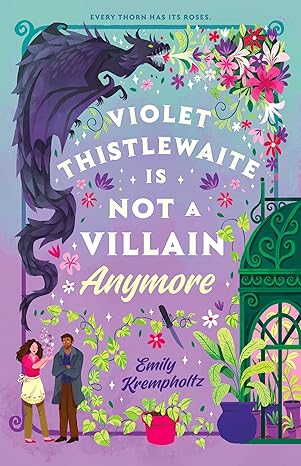
A former murderer opens a flower shop and suddenly she's Miss Congeniality? Violet Thistlewaite spent years terrorizing villages as the fearsome Thornwitch under evil sorcerer Guy Shadowfade, racking up bodies and dark magic like frequent ...

Early review — based on advance copies and pre-publication material. Veronica Roth walks Tris back to the Choosing Ceremony, changes one answer, and builds a whole hidden city under the one you remember. The synopsis, ...