Murder Unabridged Book Review, Synopsis & 3 Flaws Explained
A stranger arrives at a bookshop, confesses to an old killing, and accepts a bed for the night. By morning, he has been poisoned—and his host has acquired a rather inconvenient position on the suspect list. Murder Unabridged: An Old Juniper Bookshop Mystery by P.J. Nelson has a deliciously troublesome premise, though its heroine’s approach to personal safety could make a smoke alarm resign.
This advance review considers the published opening and early reader reception ahead of the scheduled 1 December 2026 release.

Detailed Summary
A Fresh Start With an Unfortunate History
Madeline Brimley has returned to Enigma, Georgia, after her acting career faltered. Inheriting her aunt’s bookshop offered a new direction, although the property has already attracted more criminal activity than a sensible business plan would accommodate.
The setting combines a livelihood, a home and a family inheritance. That combination makes each intrusion potentially personal.
Chapter 1: A Visitor Who Brings More Than Family News
An elderly man named Trilby arrives claiming a family connection. He says he killed his parents in the house in 1968 and produces a revolver.
Despite this, Madeline develops a rapport with him through their shared theatrical interests. She allows him to stay overnight.
Chapter 2: The Guest Who Never Comes Downstairs
Madeline’s assistant, Jennifer, challenges that decision. Later, the resident cat, Cannonball, draws attention to the guest’s room.
Madeline discovers Trilby dead. His explanation of the past has been interrupted permanently.
The Central Mystery: Confession, Poison and Suspicion
Trilby was poisoned, making Madeline a possible suspect. She must investigate his death alongside the older crime he claimed to have committed.
The published opening establishes these questions without revealing their eventual answers. A complete chapter breakdown or explanation of the killer’s identity would require the full text.
Characters?
Madeline “Maddy” Brimley
Madeline Brimley is an appealingly imperfect starting point for an amateur detective: someone rebuilding her life while trying to understand the people around her.
Her central difficulty is judgement. Sympathy can make a protagonist attractive, but sympathy that overrides an obvious threat needs convincing motivation. Otherwise, readers stop worrying about the danger and start wondering why the heroine keeps holding the door open for it.
The interesting question is whether her intuition becomes a meaningful investigative strength. It should occasionally cost her something, too.
Trilby
Trilby supplies the opening’s most effective complication. He presents himself as a source of answers, then becomes the subject of another investigation.
A confession usually appears to simplify a mystery. Here, it generates uncertainty about motive, timing and reliability.
His role invites readers to separate a compelling story from a proven account. That distinction is particularly promising when the person telling the story has spent a lifetime performing.
Jennifer
Jennifer, a college student who helps run the shop, provides a practical counterweight to Madeline.
Her objections matter because they acknowledge the reader’s likely response to the overnight invitation. Someone inside the novel recognises that this arrangement is peculiar.
Still, a supporting character pointing out a problem does not automatically solve it. A raised eyebrow is useful; it is not structural reinforcement.
Aunt Rose
Rose, Madeline’s deceased aunt, remains important through the shop and the people connected to it.
An inherited property can carry emotional obligations as well as material benefits. Rose’s place in the story makes Madeline’s new life inseparable from someone else’s history.
The potential weakness is overdependence on that inheritance. A series must eventually let its protagonist create consequential relationships and problems of her own.
Dr Philomena “Phil” Waldrop
Philomena Waldrop is a college instructor and an old friend of Rose’s.
Her position connects the bookshop’s social world with Enigma’s academic community. She also represents continuity between the person who owned the shop and the person now trying to manage it.
The critical test for a recurring supporting character is individuality. Readers should recognise what she contributes beyond being knowledgeable and available.
Gloria Coleman
Gloria Coleman, the local Episcopal priest, belongs to Madeline’s established circle.
Her presence is especially interesting in a story involving confession. Listening compassionately and evaluating evidence are different responsibilities, and a mystery can gain considerable depth from the friction between them.
Whether the novel fully develops that opportunity cannot be established from the opening alone.
Billy Sanders
Billy Sanders is part of local law enforcement. Early reader commentary describes him as sharper than he first appears.
That is encouraging. An amateur sleuth becomes more impressive when the police are competent, because her contribution then requires a genuine advantage: personal knowledge, unusual access or a different way of interpreting evidence.
Making every professional foolish is the detective-fiction equivalent of lowering the basketball hoop.
David
David is associated with Madeline’s continuing romantic storyline.
Some advance reactions find that relationship insufficiently developed. A secondary romance can occupy little space and still work, but its emotional steps must be visible.
Readers need reasons to believe in a connection beyond the narrative repeatedly reminding them that one exists.
Tanya
Tanya is identified in advance commentary as a local conspiracy enthusiast.
That gives her an obvious comic function, but also a potentially useful thematic one. A mystery already concerns competing explanations; a character inclined towards elaborate theories can expose how people mistake confidence for evidence.
The danger is turning her into a recurring delivery service for the same joke.
The Supporting Cast
These additional figures are identifiable in the excerpt or advance commentary, although their complete roles remain unverified.
| Character | Established connection |
|---|---|
| Cannonball Adderly | The bookshop’s resident black cat. |
| Detective Jordan | An investigator mentioned in early reader responses. |
| Devenport | A figure associated with the investigation. |
| Ian | A London guitarist connected to Jennifer. |
| Gwendolyn | A singer involved in Jennifer’s relationship concerns. |
| George | A student customer appearing in the opening. |
| Dr Milton Goldberg | A mentor mentioned in Trilby’s recollections. |
The ensemble gives the story several possible sources of humour and conflict. Its effectiveness ultimately depends on how distinctly those people act, rather than how many names the town directory can accommodate.

G'day, mates – ever cracked open a book that promises epic gods clashing with monsters, only to find it drowning in its own overblown drama? "The Wrath of the Fallen" by Amber V. Nicole kicks ...

A faded doll, a stolen medallion and an embroidered handkerchief become evidence of lives that Nazi persecution tried to erase. In The Bureau of Unknown Fates, Gaëlle Nohant follows a French archivist attempting to return ...
Compare With Other Works
Booked for Murder: Where Madeline’s New Life Begins
Booked for Murder establishes Madeline’s inheritance, return to Georgia and initial exposure to danger. It offers the clearest introduction to the series’ relationships.
For newcomers, beginning there provides context that a third instalment cannot reproduce without slowing its own story. For returning readers, Murder Unabridged faces a different challenge: making another crime at the same property feel consequential.
Repeated murder is an acceptable genre convention. Repeated emotional reset is less satisfying.
All My Bones: The Property’s Past Resurfaces
In All My Bones, human remains are discovered during gardening outside the shop. The second novel therefore makes hidden history physically unavoidable.
Murder Unabridged approaches the past through testimony instead. That is a worthwhile change in emphasis: physical evidence and a person’s explanation of it do not carry the same uncertainties.
The Thursday Murder Club: The Pleasure of Investigative Company
Richard Osman’s The Thursday Murder Club offers a useful comparison for readers who value friendship and community alongside a criminal puzzle.
The shared attraction is the social experience of detection. Readers spend time with people whose conversations matter almost as much as their discoveries.
That comparison also establishes a demanding standard: warmth needs specificity. A group becomes memorable through conflicting personalities, loyalties and vulnerabilities—not simply because everyone enjoys a chat.
| Book | Central attraction | Most useful comparison |
|---|---|---|
| Booked for Murder | An inheritance and a disrupted fresh start | Introduces Madeline’s circumstances. |
| All My Bones | A discovery outside the shop | Develops the property’s connection to crime. |
| Murder Unabridged | A confession followed by poisoning | Tests the reliability of a visitor’s account. |
| The Thursday Murder Club | Friendship and amateur investigation | Provides a reference point for ensemble appeal. |
Achievements and Numbers
Confirmed Publication Details
As of 13 November 2026, the book’s publication information is established, but a substantial commercial record is not.
| Measure | Confirmed information |
|---|---|
| Series position | Book 3 |
| Listed length | 352 pages |
| Scheduled publication | 1 December 2026 |
| Publisher | Minotaur Books |
| Verified sales total | No reliable public figure located |
| Verified major bestseller placement | No confirmed placement located |
| Verified award for this title | No confirmed award located |
These figures describe the release. They do not establish bestselling status or exceptional sales.
Recognition for the Earlier Series
Booked for Murder was a 2025 Lilian Jackson Braun Memorial Award finalist. Its publisher also records Indie Next, LibraryReads and SIBA recognition.
Those distinctions provide useful background to the series. They belong to the earlier novel, however; they are not achievements earned by Murder Unabridged. Awards do not automatically follow sequels around like loyalty points.
Three Flaws That Could Divide Readers
1. The Opening Makes Credibility Work Overtime
The strongest criticism concerns Madeline’s willingness to accommodate an armed visitor who has confessed to killing his parents.
A protagonist can behave irrationally. People do. The issue is whether the irrationality feels sufficiently grounded in personality, circumstances and emotion.
Here, the opening asks readers to accept a large decision before the new mystery has earned much trust. Humour makes that easier to entertain, but does not remove the difficulty.
2. Atmosphere Can Become a Detour
An advance review praises the setting and inhabitants while identifying slower passages involving history, reflection and recollection. That suggests a possible imbalance between the pleasure of spending time in Enigma and the urgency of solving its latest crime.
Slow pacing is not inherently weak pacing. A quiet conversation can alter a suspect’s significance or make a later discovery more painful.
The trouble begins when a passage changes nothing. At that point, the reader is admiring the wallpaper while the investigation waits outside.
3. The Mystery May Not Surprise Every Reader
Some advance readers report guessing the culprit early; others describe an enjoyable puzzle. The available response is mixed, so calling the solution universally obvious would overstate the evidence.
A guessed culprit need not ruin a mystery. The explanation can still reveal an unexpected motive, expose a mistaken assumption or transform an apparently minor detail.
The real disappointment comes when the ending merely confirms what the reader already understood. A satisfying solution should add meaning, not simply announce a name.
What the Premise Gets Right
The Confession Creates Several Questions at Once
The opening offers more than an unidentified killer. It introduces uncertainty about why someone would return, why they would speak now and why they would choose this particular listener.
That is an efficient foundation for suspense. Each answer could potentially change the meaning of another question.
The Setting Has Personal Stakes
The shop represents Madeline’s livelihood and her connection to family history. Trouble there threatens more than a convenient place to browse.
That makes the location potentially meaningful. A strong setting influences choices, relationships and access to information; it should do more than supply attractive shelves.
The Humour Can Reveal Faults
The most promising comic tension comes from the gap between Madeline’s interpretation of events and everyone else’s reaction.
Used well, that gap reveals character without lengthy explanation. Used too generously, it can soften consequences that ought to matter.
The difference is whether the joke exposes a mistake or excuses it.
Who Is Most Likely to Enjoy Murder Unabridged?
| Reading preference | Likely appeal |
|---|---|
| An established cast and recurring community | A strong reason to continue the series. |
| Bookshop settings | Central to the novel’s identity. |
| Theatrical interests | Particularly relevant to the opening. |
| Strictly plausible decisions | The initial invitation may frustrate. |
| Rapid investigative progress | Reported pacing pauses deserve consideration. |
| A substantial romantic subplot | Early reactions suggest restrained expectations. |
Final Verdict
Murder Unabridged offers a compelling setup with a conspicuous credibility problem. The confession and subsequent death create immediate curiosity, while Madeline’s decision-making gives readers an equally immediate reason to argue with her.
The provisional balance is mixed: an appealing premise, promising social dynamics, and concerns about plausibility, momentum and surprise. The opening earns interest; the available evidence does not justify declaring the complete mystery a triumph.
Would an early guess spoil a mystery for you, or would memorable characters keep you reading? Leave your verdict in the comments—and explain whether Trilby would have made it past your front door.
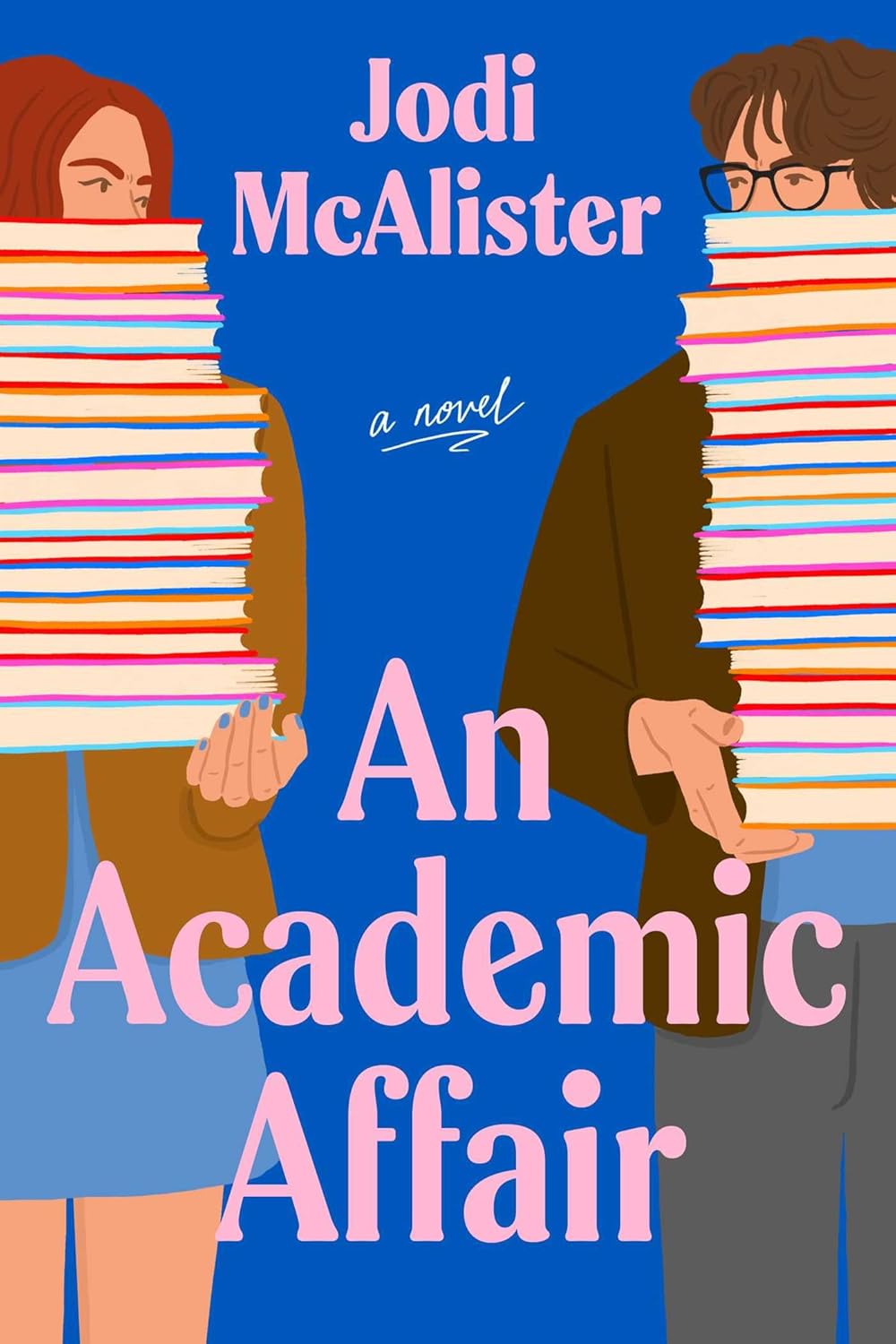
What if two academics who've despised each other for 15 years had to marry for a job—and discovered the friction might've been something else entirely? Jodi McAlister's An Academic Affair throws English professors Sadie Shaw ...

Imagine waking up with two magical rings tattooed onto your finger: a gold band for the soulmate destined to love you, and a crimson band for the sworn enemy fated to butcher them. Soul Sworn ...