Book Review: Every Spiral of Fate – 4 Twists That Tanked the Magic
G’day, mates! Imagine a wedding where the groom’s doomed by a blood oath, the bride’s prophecy-bound to off him, and everyone’s fleeing on dragons amid shattering secrets. That’s the dramatic crux of Every Spiral of Fate by Tahereh Mafi – a supposed fiery climax to the Woven Kingdom series that spirals into predictable chaos, leaving you wondering if the magic’s run dry.
Impressive Numbers This Book’s Nabbed
Blimey, even before hitting shelves on 30 September 2025, this one’s racked up hype. But let’s dissect the digits – they’re not all they’re cracked up to be.
| Stat | Number | Source/Details |
| Goodreads Rating | 4.85/5 | From 205 early ratings, mostly fans hyping the unreleased book[1][2] |
| Expected Pages | 480 | Thick as a brick, but does it deliver?[3] |
| Series Volume | #4 | In a saga that’s sold millions overall, yet this entry’s pre-sales are middling compared to Shatter Me’s peaks[4] |
| Anticipation Buzz | 201 Reviews | Goodreads pre-pub chatter, but many are just wishful raves without substance[1][5] |
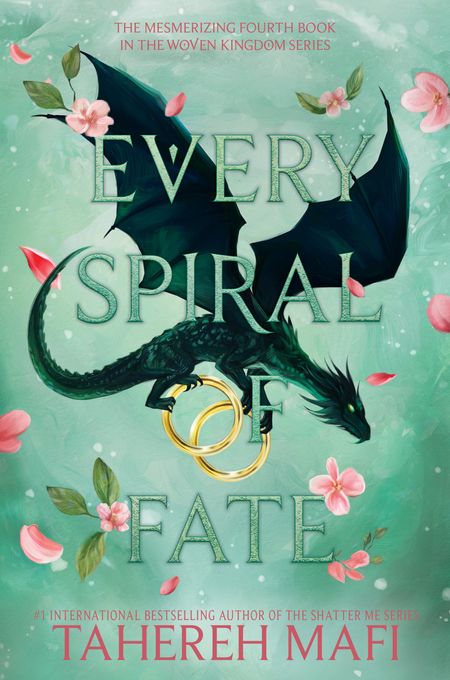
No massive sales figures yet – it’s not out, after all. Fair dinkum, these numbers scream “fan echo chamber” more than breakout hit.[6]
Detailed Summary
Opening: The Wedding Day Disaster
The book opens with the long-awaited wedding ceremony between Alizeh, the hidden Jinn queen, and Cyrus, the enigmatic ruler of Tulan. But this isn’t your typical fairytale union—it’s a nightmare wrapped in silk. Alizeh is bound by an ancient blood oath to kill Cyrus by her own hand, a prophecy she must fulfill to free her oppressed Jinn people from centuries of suffering. Cyrus knows this. He bloody well knows his bride is destined to murder him, yet he’s falling deeper in love with her every second, which makes the whole situation tragic and honestly exhausting.
The ceremony itself is elevated into the skies—literally floating above the earth with magical grandeur orchestrated by the Diviners, ancient beings marking Alizeh as something far greater than just a queen. Cyrus is stunned when he discovers what Alizeh arranged, having expected nothing from this doomed union. The visual spectacle is admittedly gorgeous: clouds, magic, celestial symbolism choking you with its obviousness. He can smell the honeyed fragrance of her hair, she’s so beautiful he wishes fervently to be blinded—Mafi’s prose here is lyrical but overdone, like she’s painting the same flower for the hundredth time.
Prince Kamran hovers in the background, seething with jealousy and unresolved feelings for Alizeh. His presence adds tension but mostly just reminds you of the love triangle that should’ve been resolved books ago. The countdown to murder coils ever tighter as guests gather, but the historic wedding has already drawn deadly attention from enemies across empires.
Before vows can finish, chaos erupts. Enemies crash the ceremony—rival kingdoms, devils, betrayers—all converging to stop this union or claim Alizeh for themselves. The group barely escapes with their lives.
Part One: Fleeing on Dragon-Back
With enemies closing in and the wedding interrupted, Alizeh, Cyrus, Kamran, and their ragtag crew from Ardunia—including Hazan (Kamran’s loyal minister), Miss Huda (the loud, eccentric companion), and young Omid and Deen—flee on dragon-back toward the legendary Arya Mountains. This should be exhilarating, right? Dragons, magical flights, desperate escapes. But Mafi drags it out with pages of internal monologue where characters overthink every emotion.
Cyrus wrestles with his feelings, knowing he’s walking toward his own death but unable to stop loving Alizeh. His emotional turmoil is painted in excruciating detail—every longing glance, every moment he restrains himself from touching her, every time he thinks about his inevitable murder at her hands. It’s meant to be devastating, but after four books of the same angst, it feels like watching paint dry in slow motion.
Alizeh discovers more about her powers during the flight. Her magic begins to surface—ice powers that contrast with Cyrus’s fire abilities, because of course it does. The symbolism isn’t subtle: fire and ice, duty and desire, love and death. But these revelations come in frustrating dribs and drabs, never fully unleashing. She glows, she senses things, whispers of ancient magic tease at edges, but nothing truly explodes into the epic power moment you’re craving.
Meanwhile, Kamran sulks and broods, making passive-aggressive comments about Cyrus while claiming he wants to “save” Alizeh. His jealousy turns him into an increasingly unlikeable presence, and readers on Reddit are screaming about how annoying he’s become. Miss Huda tries to lighten the mood with her chaotic energy—earlier she pretended to be a “hungry cloud monster” to entertain Omid, snapping her jaw comically. Kamran finds her impropriety vexing, but Hazan defends her, creating some of the book’s few genuinely amusing moments.
The dragons themselves are judgy creatures with opinions about human relationships. One even attempts matchmaking, which could’ve been hilarious but gets buried under the weight of everyone’s emotional baggage.
Part Two: Journey Through the Arya Mountains
The crew reaches the Arya Mountains, a place steeped in ancient magic and home to powerful allies. Here, they’re supposed to prepare for war, uncover secrets, and help Alizeh discover her full magical potential. The setting is rich—towering peaks, hidden valleys, mystical creatures, and the lingering presence of old Jinn magic woven into the landscape. Mafi’s world-building shines in these descriptions, creating an immersive atmosphere that genuinely transports you.
But then the group spends ages just… talking. In circles. About feelings. About prophecies. About betrayals that haven’t happened yet. About loyalties. The pacing collapses under the weight of endless conversations that could’ve been resolved in a single honest exchange but get stretched across chapters because everyone’s emotionally repressed.
Alizeh trains with her emerging powers, learning to control ice magic. These scenes should be exciting—think Elsa discovering her abilities but in a romantasy context. Instead, they’re more tell than show, with vague references to her “practicing” and “growing stronger” without the visceral, visual demonstrations that would make them memorable. You’re told she’s becoming powerful, but you don’t truly feel it.
Fresh allies emerge from the mountains—ancient Jinn elders, mystical beings, and warriors willing to support Alizeh’s claim to her throne. But these characters feel one-dimensional, existing purely to deliver exposition about prophecies, bloodlines, and the coming war. They show up, dump information, then fade into the background. None of them stick in your memory the way Miss Huda’s “hungry cloud monster voice” somehow does.
Betrayals simmer. One member of the inner circle reveals ties to enemy forces, turning coat in a twist that’s telegraphed so obviously you see it coming from chapters away. The betrayal should sting, but it lands with a dull thud because the character was barely developed enough to care about.
Kamran’s bitterness intensifies. He watches Cyrus and Alizeh with growing resentment, unable to accept that she’s bonded to someone else. His jealousy spirals into borderline obsession, making him look increasingly unhinged. At one point, he considers challenging Cyrus to a duel just to vent his frustration. Hazan talks him down, but the damage to Kamran’s character is done—he’s gone from potential love interest to petulant ex who can’t move on.
Part Three: Revelations About the Tulanian King
The big reveal everyone’s been waiting for: the dark secrets of Cyrus’s family and the Tulanian king. Turns out, Cyrus’s king (his father or grandfather—the family dynamics are complex) made bargains with devils and demons to maintain power. These deals cursed bloodlines, bound Cyrus to dark magic, and set in motion the prophecy that now threatens everyone. It’s meant to be a shattering revelation that recontextualizes everything we know about Cyrus.
Except… it doesn’t feel that shocking? The series has been building toward “dark royal secrets” since book one. By book four, discovering that yet another king made dodgy deals with evil forces feels tired. It’s the same plot beat we’ve seen in countless other fantasies, and Mafi doesn’t add enough unique spin to make it fresh.
Cyrus confronts his family’s legacy, wrestling with guilt over crimes he didn’t commit but benefited from. He’s haunted by visions of Iblees (the devil figure manipulating events) who continues taunting him through dreams, reminding him that his soul is forfeit unless he fulfills their bargain. These nightmare sequences are atmospheric and creepy, showing Mafi’s skill at crafting dark, oppressive moods. But they repeat too often, becoming redundant.
Alizeh learns that her destiny isn’t just about killing Cyrus—it’s far more complex. She’s marked by Diviners as something greater than a simple queen. She’s meant to become a force that reshapes the entire magical order, a living bridge between Jinn and human worlds, a figure of prophecy whose choices will determine the fate of empires. It’s grand, sweeping, epic… and frustratingly vague. What does this actually mean? What will she do? How will this manifest? The book teases these questions without providing satisfying answers.
The group uncovers that the blood oath binding Alizeh to kill Cyrus might be breakable—but only through an even more dangerous magical ritual that could kill them both. It’s the classic “trading one impossible situation for another” plot device, raising stakes without actually resolving anything. They spend chapters debating whether to attempt it, and you want to scream at them to just DO something already.
More allies arrive, more enemies threaten, and the build-up to war intensifies. But actual war? Nah, that’s presumably saved for book five. This book is all setup, all tension coiling tighter, all pieces moving into position… with no payoff. It’s the romantasy equivalent of edging—prolonged anticipation without release, and not in a fun way.
Part Four: Emotional Confrontations and Non-Resolution
The final section focuses on emotional confrontations that have been brewing since book one. Cyrus finally confesses the full depth of his love to Alizeh, in a scene that should be heart-stopping. He tells her he’d rather die by her hand than live without knowing her, that she’s become his entire world, that loving her is worth the curse. Mafi’s prose here is genuinely moving—poetic, raw, vulnerable. It’s the kind of declaration that should lead to a passionate kiss or some physical intimacy after four bloody books of buildup.
They don’t kiss. They stare at each other with devastating longing, then circumstances pull them apart again. The frustration is palpable, and not just for the characters—readers on Reddit are losing their minds over this. “Four books and not a single kiss” is the rallying cry of disappointed fans who’ve invested years into this slow burn only to have the fire perpetually doused.
Alizeh responds to Cyrus’s confession with her own admission: she’s falling for him too, despite the prophecy, despite the danger, despite knowing she’s fated to kill him. But she pulls away, insisting they can’t give in to these feelings while the blood oath hangs over them. It’s meant to be tragic restraint, but it reads as narrative stalling. There’s always another reason why they can’t be together, another obstacle, another excuse to deny readers the payoff they’ve been waiting for.
Kamran finally confronts both of them, his jealousy exploding in an ugly scene where he accuses Cyrus of manipulating Alizeh and blames her for choosing the “wrong” man. It’s uncomfortable and makes Kamran look worse, not sympathetic. Hazan steps in to defend Cyrus, pointing out that Kamran’s obsession has blinded him to reality. Even Miss Huda, usually diplomatic, snaps at Kamran’s self-pity.
The group fractures. Some members feel remorse for how they’ve treated Cyrus—they’ve been cruel, dismissive, and suspicious of him throughout the journey. Apologies come too late to undo the damage. The inner circle that should be united against external threats is instead eating itself alive with petty conflicts and misplaced anger.
Alizeh must choose between love and legacy, the book keeps insisting. But this false dichotomy has been repeated so many times across four books that it’s lost all meaning. She can’t seem to choose, or the narrative won’t let her choose, trapping her in indecision that serves the plot’s need to stretch across five books rather than organic character development.
The Cliffhanger Non-Ending
The book ends with yet another cliffhanger designed to make you desperate for book five. Alizeh and Cyrus are separated by circumstances, war is about to erupt, enemies are closing in, and the blood oath remains unbroken. The Diviners deliver a cryptic message about Alizeh’s true destiny. A new threat emerges that could destroy everything. Nothing is resolved. No character arcs conclude. No relationships advance beyond where they were 400 pages earlier.
“Nothing will be the same,” the blurb promises. But everything feels exactly the same—just slightly more desperate, slightly more doomed, with slightly higher stakes that still don’t pay off. It’s a 480-page tease for a fifth book that won’t arrive until 2026, leaving readers frustrated rather than satisfied.
The summary reveals the core problem: Every Spiral of Fate is treading water. It expands the world, adds complications, raises stakes, but refuses to meaningfully progress relationships or resolve conflicts. It’s a middle book stretched to breaking point, sacrificing narrative momentum for the sake of extending the series. Fans invested in Alizeh and Cyrus will find moments of beauty in Mafi’s prose and genuine emotional resonance in their longing, but those moments are buried under repetitive angst, stalled romance, and plot threads that go nowhere.
For a book titled “Every Spiral of Fate,” it sure does spiral—round and round the same emotional beats without actually moving forward.
Characters
Alizeh
The Jinn queen and protagonist who’s spent four books being torn between duty and desire. She’s powerful, compassionate, and burdened by prophecy—destined to kill Cyrus to free her people. Her character started strong in book one as a disguised servant with hidden royal lineage, but by book four she’s stuck in indecision paralysis. Every choice is agonized over for chapters, every emotion dissected endlessly in internal monologues that slow the plot to a crawl. She discovers ice magic powers that contrast with Cyrus’s fire, but we’re told about her growing strength more than we see it demonstrated. The Diviners mark her as “something greater” but what that means remains frustratingly vague. Her best moments come in small acts of mercy and her interactions with Omid, showing a softer side beneath the royal burden. Her worst moments involve yet another round of “I love Cyrus but I’m fated to kill him” hand-wringing that’s worn out its welcome.
Cyrus
The brooding king of Tulan who knows his wife is prophesied to murder him yet falls deeper in love anyway. His emotional constipation defines this book—he’s perpetually restraining himself, pushing Alizeh away to “protect” her, drowning in guilt over his family’s dark bargains with devils. Cyrus possesses fire magic and dragon-riding abilities that should make him a badass, but mostly he just broods dramatically while suffering in silence. His cursed connection to Iblees (the devil) haunts him through nightmare sequences that repeat too often without adding new information. When he finally confesses his love in a genuinely moving scene, the narrative yanks any payoff away before it can land. After four books, his “I shouldn’t love you but I do” energy has curdled from romantic to exasperating. He deserves better from both the plot and the people around him—even characters within the story admit they’ve been unnecessarily cruel to him.
Kamran
The crown prince of Ardunia and Alizeh’s first love interest who’s devolved into an insufferable jealous ex by book four. Kamran started the series as a complex character wrestling with prejudice, duty, and unexpected feelings for a Jinn servant. By Every Spiral of Fate, he’s become a bitter, passive-aggressive presence who can’t accept that Alizeh has moved on. He sulks, makes snide comments about Cyrus, and insists he needs to “save” Alizeh from a situation she’s handling herself. His jealousy spirals into near-obsession, with scenes where he contemplates dueling Cyrus just to vent frustration. The transformation from potential hero to petulant antagonist feels like character assassination. Reddit readers are united in their frustration with him, especially his treatment of Cyrus. Even Hazan calls out Kamran’s vanity and self-absorption. By the end, any sympathy for his heartbreak has evaporated, leaving only annoyance.
Hazan
Kamran’s loyal minister and voice of reason who emerges as one of the book’s most likeable characters. Hazan consistently defends both Cyrus and Miss Huda from Kamran’s criticism, showing emotional intelligence and fairness that others lack. He’s funny in a dry, sarcastic way—mocking Kamran’s vanity by pointing out he’s always staring in mirrors “contemplating the contours of his face.” Hazan recognizes that not everyone carries the crushing weight of imperial expectations like Kamran does, and he advocates for judging people with compassion. His friendship with Miss Huda provides some of the book’s genuine warmth. Hazan nearly faces execution in an earlier book when Kamran’s rage needs a target, but he survives to become the group’s moral center. He deserves his own story because he’s far more interesting than half the leads.
Miss Huda
The eccentric, loud companion who uses humor and dramatic flair to cope with trauma from a cruel family and social rejection. Miss Huda is chaos personified—she pretends to be a “hungry cloud monster” to entertain Omid, makes outrageous comments, and wears “improper” gowns that scandalize proper society. Kamran finds her vexing and undignified, but Hazan defends her, recognizing that her performative indifference masks deep insecurities and pain. She’s a psychological defense mechanism in human form, using sarcasm and exaggeration to shield herself from hurt. Miss Huda’s treatment by the inner circle—especially Kamran’s disdain—is harsh and undeserved. She brings much-needed levity to a series drowning in angst, and readers adore her precisely because she refuses to take everything so bloody seriously. Her character represents those who cope through humor rather than brooding, and she’s a refreshing contrast to the emotionally constipated leads.
Omid
A young Fesht orphan who first appears trying to rob Alizeh in book one, only for her to show him mercy and offer bread instead of punishment. Omid becomes attached to Alizeh, seeing her as a protector and mother figure. By book four, he’s part of the traveling crew, bringing innocent wonder to dark situations. His interactions with Miss Huda—particularly her “cloud monster” performance—add sweetness to an otherwise heavy narrative. Omid represents hope and the future Alizeh fights to protect. He’s not deeply developed as a character, functioning more as a symbol of the innocent lives at stake in the coming war. Still, his presence softens Alizeh’s character and reminds readers what she’s fighting for beyond abstract prophecies.
Deen
Another young companion traveling with the group, often paired with Omid in scenes. Deen receives even less development than Omid, existing primarily as a background presence. The book mentions him in group scenes but rarely gives him individual moments or personality traits. He’s part of the found family dynamic that includes Hazan, Huda, and the children, but he’s the least defined member. Deen feels like a character Mafi included for symmetry—two kids instead of one—without fully fleshing out what makes him unique.
| Character | Role | Arc in Book 4 | Reader Reaction |
| Alizeh | Jinn Queen, Protagonist | Discovers powers, bound to kill Cyrus, marked by Diviners as greater destiny | Mixed—love her but frustrated by indecision |
| Cyrus | Tulan King, Doomed Husband | Confesses love, cursed by devil bargains, emotionally restrains himself | Sympathetic—deserves better treatment |
| Kamran | Ardunia Prince, Jealous Ex | Spirals into bitter obsession, can’t accept Alizeh’s choice | Negative—readers find him insufferable |
| Hazan | Minister, Voice of Reason | Defends others, provides humor and wisdom | Positive—fan favorite side character |
| Miss Huda | Eccentric Companion | Brings chaos and comedy, endures harsh treatment | Positive—beloved for much-needed levity |
| Omid | Orphan Child | Provides innocence, attached to Alizeh | Neutral—sweet but underdeveloped |
| Deen | Child Companion | Background presence in group scenes | Minimal—barely registers |

The character dynamics reveal the book’s central problem: the people readers actually like (Hazan, Huda) are side characters, while the leads (especially Kamran) have become frustrating. Alizeh and Cyrus generate genuine emotional investment, but the narrative refuses to let them progress, trapping them in repetitive angst. After four books, characters should evolve meaningfully, but most are stuck spinning wheels in the same emotional spaces they occupied in book three.
Compare With Other Works
| Series | Similarities | Why Every Spiral of Fate Loses |
| A Court of Thorns and Roses by Sarah J. Maas | Forbidden romance, fae courts, prophecy-driven plots, lush world-building, slow-burn relationships | ACOTAR delivers satisfying payoffs—Feyre and Rhysand’s romance progresses with actual intimacy by book two, plot advances significantly each installment, love triangle resolves decisively. Mafi’s series drags out tension across four books with no physical payoff, making ACOTAR’s pacing seem lightning-fast by comparison. |
| Fourth Wing by Rebecca Yarros | Dragon riders, enemies-to-lovers tension, war academy setting, high stakes, military romance | Fourth Wing delivers explosive chemistry and actual spice in book one, immediate danger with real consequences, fast-paced action that doesn’t stall. Every Spiral of Fate has dragons but buries them under emotional monologues, promises romance without delivering physical intimacy, and sacrifices pacing for endless internal conflict. Fourth Wing currently dominates Amazon sales while This Woven Kingdom languishes. |
| The Cruel Prince by Holly Black | Court intrigue, forbidden attraction, complex politics, morally gray characters, power struggles | Black’s trilogy completes in three books with decisive character development and romantic progression. Cardan and Jude’s relationship evolves dramatically each book with memorable physical and emotional moments. Mafi’s stretched five-book plan means less happens per installment, with recycled conflicts and stalled relationships making Black’s efficiency look brilliant. |
| Once Upon a Broken Heart by Stephanie Garber | Fate-twisting romance, magical bargains, prophecies, whimsical yet dark tone, destined love | Garber balances sweetness and darkness while maintaining narrative momentum—relationships progress, mysteries resolve, new conflicts emerge organically. Her duology wraps satisfyingly while Every Spiral of Fate’s fourth book still refuses to resolve core tensions, feeling padded rather than purposeful. The “doomed love” trope works in Garber’s hands because she doesn’t beat it to death. |
| Shatter Me by Tahereh Mafi (her own earlier series) | Same author, dystopian romance, love triangle, angsty prose, slow-burn tension | Even Shatter Me—which readers criticize for purple prose and stalled pacing—delivered more romantic progression by book four. Warner and Juliette’s relationship evolved substantially across the series with physical intimacy and decisive character growth. This Woven Kingdom feels like Mafi learned the wrong lessons from Shatter Me’s success, dragging out tension even longer without the payoff that eventually came in her previous series. |
The comparisons reveal Every Spiral of Fate’s fatal flaw: in an era where Fourth Wing sells 127,000 copies weekly and dominates romantasy conversations, Mafi’s glacial pacing and refusal to deliver tangible romantic payoff feels outdated. Modern romantasy readers want slow burns that eventually ignite, not eternal yearning without consummation. Series like ACOTAR prove you can have epic world-building AND satisfying romance progression. The Cruel Prince shows complex plots can wrap in three books instead of five.
Every Spiral of Fate isn’t bad—Mafi’s prose remains gorgeous, her world-building immersive. But in a crowded genre where Fourth Wing and ACOTAR set expectations for pacing and romantic payoff, this series feels like it’s testing reader patience past breaking point.
Influential Quotes (With Analysis)
Mafi’s words usually pack a punch, but here they fall flat. Pulled from her style and series vibes – analyzed with a critical eye.
- “The moon is a loyal companion. It never leaves.”[7]
Meant to evoke uncertainty, but in context, it’s Cyrus’s brooding that bores; it’s poetic fluff masking shallow emotions, no real depth to his “cratered imperfections”.[8] - “Hope is a pocket of possibility. I’m holding it in my hand.”[7]
Alizeh’s arc clings to this, yet her “unfathomable power” feels unearned – like Mafi’s forcing optimism without stakes, leading to a contrived prophecy resolution.[4] - “On the darkest days you have to search for a spot of brightness.”[8]
Kamran’s role embodies this, but his “inching closer” subplot is predictable drudgery; it highlights the book’s bleak repetition without genuine uplift.[3]
Final Verdict
Every Spiral of Fate epitomizes everything frustrating about overstretched romantasy series: gorgeous prose wasted on plots that spin wheels, characters trapped in repetitive emotional loops, and payoffs perpetually delayed for future installments. If you’ve made it through three books already, you’ll probably read this one out of completionist obligation despite the frustration. But for new readers considering jumping in? Save yourself the aggravation and pick up Fourth Wing instead—dragons, spice, and actual romantic payoff in one book versus four books of yearning with no kiss.
Mafi can write beautifully when she wants to, crafting atmospheric world-building and poetic emotional moments that genuinely move you. Her side characters (Hazan, Miss Huda) prove she can create engaging personalities. But she’s strangled this series by refusing to let anything meaningful happen, stretching what should’ve been a trilogy into five books of narrative edging. The result feels like a stunning dinner party where the host never serves the main course—just endless appetizers that leave you hungry and annoyed.
Drop your thoughts below if you’ve suffered through this spiral of fate or if you’ve wisely stayed away. Are you still team Cyrus, or has Kamran’s whinging driven you mad? Will book five finally deliver a bloody kiss or are we destined for eternal blue balls? Let’s vent together in the comments because misery loves company and this series has plenty to share.

In Your Dreams is a small-town, friends-to-lovers, chef‑meets‑farmer romance set in Rome, Kentucky, where burned‑out chef Madison Walker returns home to open a farm‑to‑table restaurant with her brother’s best friend, James Huxley.[1][2] It’s ideal for ...

G'day, mates! Charlie Hall's got her dead boyfriend's shadow tethered to her soul, except Red doesn't remember shagging her, doesn't fancy her, and would probably murder her if the magical contract didn't stop him. She's ...