Book Review: The Burning Library Explained —2 Secret Societies, 1 Dud?
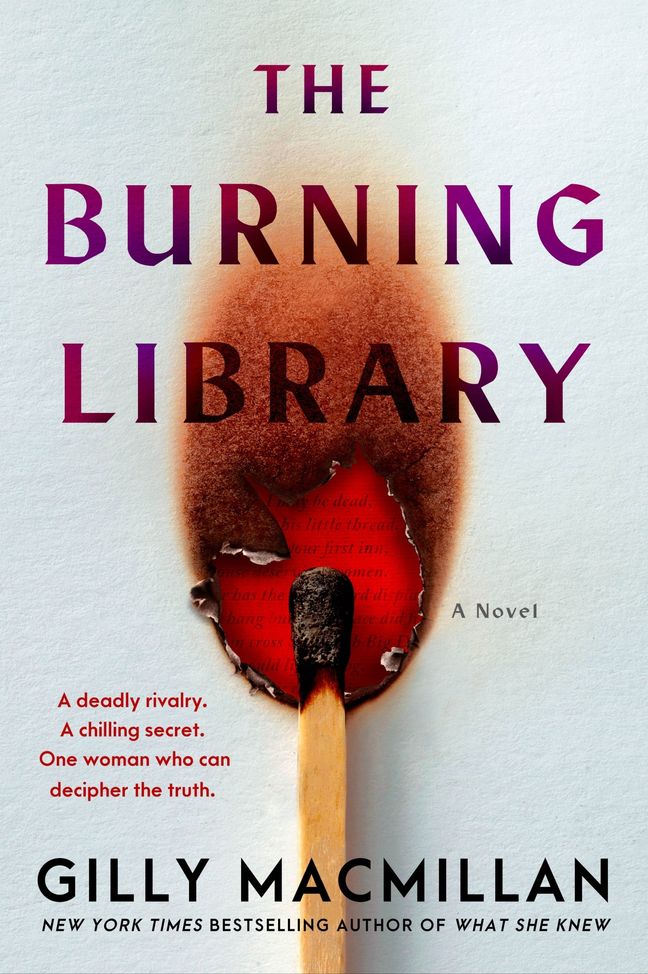
Eleanor Bruton’s corpse washes ashore clutching a tatty bit of embroidery, and suddenly two centuries-old women’s societies are ready to murder anyone standing between them and a medieval manuscript that supposedly grants ultimate power.
Sounds epic, right? Dr. Anya Brown gets headhunted to translate ancient texts at a Gothic Scottish institute, Detective Clio Spicer smells foul play, and bodies start stacking up like overdue library books. But here’s the kicker: 496 pages later, you still won’t know what the bloody manuscript actually does or why anyone should care.
Stick around to discover:
- Why 2 rival feminist cults fighting over a mystery MacGuffin feels more exhausting than exhilarating
- How 496 pages can drag when the central mystery refuses to make sense
- Whether Gilly Macmillan’s dark academia pivot from psychological thrillers was worth your time
- The specific reasons this Dan Brown knockoff can’t hold a candle to her earlier hits
Detailed Summary
The Hook That Promises Everything
The story kicks off in Scotland’s Western Hebrides, where Eleanor Bruton’s body gets dragged from the freezing shore. To her family, Eleanor was your standard middle-aged church lady—flower arrangements, cushion fluffing, the works. Plot twist: she was secretly hoarding a scrap of frayed embroidery torn from a medieval manuscript called the Book of Wonders.
For over a century, two women’s organizations have been murdering their way toward this artifact. We’re talking proper secret-society drama with initiation rites, coded messages, and enough backstabbing to make Game of Thrones look like a knitting circle.
The Order of St Katherine believes women should manipulate men from the shadows—classic puppet-master vibes. Meanwhile, the Fellowship of the Larks wants women in direct power positions, though their methods are dodgy as hell and they’ll kill to keep them quiet.
Enter Dr. Anya Brown
Our protagonist Anya scores international acclaim for translating some cryptic medieval text called Folio 9. She’s brilliant, she’s ambitious, and she’s got two massive anchors: a sick mum in London and a boyfriend who needs a job.
When Diana Cornish—a professor and high-ranking Lark—offers Anya a cushy position at the Institute of Manuscript Studies in St. Andrews, it seems too good to be true. Spoiler: it bloody well is.
The Institute comes with a cottage for two, reasonable commuting distance to London, and the kind of prestige that makes academic careers. What Diana conveniently forgets to mention is that she’s recruited Anya as an unwitting pawn in a centuries-old war over manuscripts.
The Institute of Manuscript Studies
St. Andrews provides proper Gothic atmosphere—mist-cloaked halls, candlelit archives, ancient stone buildings that scream “someone’s definitely getting murdered here.” Anya settles into her new role, translating medieval texts she thinks are just academic curiosities.
The Institute operates as a front for the Fellowship of the Larks, who believe Anya’s translation skills are their golden ticket to finding the Book of Wonders before the Katherines do. Nobody bothers to tell Anya she’s in mortal danger, because apparently informed consent isn’t a thing in secret societies.
Diana plays the supportive mentor while secretly manipulating Anya into translating specific manuscripts. The academic setting provides endless opportunities for hushed conversations in libraries, suspicious colleagues lurking in shadowy corridors, and the general sense that everyone knows something Anya doesn’t.
Detective Clio Spicer Enters the Chat
Over at Scotland Yard, Detective Clio Spicer isn’t buying the official story about Eleanor Bruton’s death. Eleanor was Clio’s mentor, and when your mentor turns up dead with mysterious embroidery, you start asking awkward questions.
Clio launches a private investigation because apparently the regular police investigation isn’t cutting it. She starts connecting dots between Eleanor’s death, the two secret societies, and a pattern of suspicious deaths stretching back decades.
Her investigation runs parallel to Anya’s story, with both women slowly realizing they’ve stumbled into something far more dangerous than they imagined. Bodies keep piling up—anyone who gets close to the manuscript or knows too much about either society tends to end up conveniently dead.
The Rival Factions Clash
The Katherines and the Larks have been at this for over a century, which raises the obvious question: what’s so special about this manuscript that justifies multiple murders across multiple generations? The book never really answers this satisfactorily.
The Order of St Katherine operates on the principle that women gain power by manipulating influential men. They’re the “behind every great man is a woman pulling the strings” crowd, which feels dated even for a historical secret society.
The Fellowship of the Larks wants women in positions of direct power—CEOs, politicians, university administrators. Noble goal, except they’re willing to commit murder, manipulation, and general skullduggery to get there, which somewhat undermines the feminist credentials.
The Embroidery Mystery
That scrap of embroidery Eleanor died clutching? It’s supposedly torn from the original Book of Wonders manuscript. Both societies believe finding all the fragments will lead them to the complete manuscript.
The embroidery contains cryptic symbols and text that require expert translation—hence Anya’s recruitment. She’s basically the Rosetta Stone for unlocking whatever power this manuscript supposedly contains.
Multiple characters possess different fragments, leading to a convoluted treasure hunt across Scotland. Ancient manuscripts, hidden clues, centuries-old rivalries—it’s Dan Brown without the satisfying payoff.
Anya’s Dangerous Education
As Anya translates more texts, she starts noticing patterns. References to the Book of Wonders pop up in multiple manuscripts. Colleagues act suspicious. Diana’s mentorship feels increasingly manipulative.
Her boyfriend grows concerned about the long hours, the secrecy, and the fact that Anya seems to be getting in way over her head. He’s right, obviously, but Anya’s too invested in the academic prestige and the intellectual challenge to back out.
The Fellowship feeds Anya just enough information to keep her translating while withholding the truly dangerous details. She’s a tool to them, not a colleague, which becomes painfully obvious as the story progresses.
Bodies Start Dropping
The death toll escalates as both societies grow desperate to secure the manuscript first. Anyone who gets in the way—scholars, innocent bystanders, rival faction members—becomes expendable.
Clio’s investigation reveals a pattern of deaths connected to manuscript fragments. Eleanor wasn’t the first casualty and won’t be the last. The violence escalates from “mysterious accidents” to outright murder, with both factions increasingly reckless.
Anya realizes she’s not safe. Diana’s protection only extends as far as Anya’s usefulness. Once she translates what they need, she becomes a liability who knows too much.
The Truth About Diana Cornish
Diana’s carefully constructed facade as supportive mentor crumbles. She’s a true believer in the Fellowship’s cause, willing to sacrifice anyone—including Anya—to advance their agenda.
Her recruitment of Anya was calculated from the start. She’d been watching Anya’s work for years, waiting for the right moment to draw her into the Institute. Every kindness, every opportunity, was bait in an elaborate trap.
The betrayal hits hard because Anya genuinely respected Diana. The realization that she’s been manipulated by someone she admired adds emotional weight to her physical danger.
On the Run
When Anya finally grasps the full scope of the danger, she and her boyfriend go on the run. They’re being hunted by both the Larks and the Katherines, neither of whom can afford to let Anya live with what she knows.
Clio becomes an unlikely ally, offering protection and resources for her own rogue investigation. The three of them form a desperate alliance, trying to solve the mystery before one of the societies solves their “Anya problem” permanently.
The chase scenes and near-misses should be thrilling, but the stakes feel hollow when you still don’t know what everyone’s actually fighting over. It’s like watching people kill each other over a box that might be empty.
The Book of Wonders Revealed—Sort Of
The manuscript finally comes into play, and here’s where the book really fumbles. After 400+ pages of buildup, the Book of Wonders remains frustratingly vague about what it actually does or contains.
Is it political power? Blackmail material? Ancient feminist manifestos? Magical prophecies? The book gestures vaguely at “immense influence” without specifying what that means in practical terms.
This vagueness kills the tension because it’s impossible to understand why rational people would commit multiple murders over something so poorly defined. The MacGuffin is too MacGuffin-y, if that makes sense.
The Climax That Doesn’t Quite Land
Everything builds to a confrontation between the societies, with Anya caught in the middle. Loyalties fracture, true motivations emerge, and violence erupts.
The ending provides some resolution to character arcs—who survives, who faces justice, what happens to the manuscript. But the emotional satisfaction feels muted because the central mystery never clicked into place.
Loose threads remain deliberately untied, either setting up a sequel or acknowledging that some questions don’t have satisfying answers. Either way, it’s unsatisfying after such a lengthy buildup.
Characters
Dr. Anya Brown
Brilliant but naive, Anya’s the classic “wrong place, wrong time” protagonist who stumbles into a conspiracy because she’s good at her job. She’s got mad translation skills with medieval texts, particularly the obscure ones nobody else can crack.
Her character motivation hinges on three things: career ambition, obligation to her sick mother, and love for her boyfriend who needs a job. These ties keep her in Scotland when alarm bells should’ve sent her running.
The problem? Anya remains frustratingly passive for most of the story. Things happen TO her rather than because of her choices. She’s smart enough to translate ancient languages but somehow can’t spot obvious manipulation until it’s nearly fatal.
Diana Cornish
Professor, mentor, high-ranking Fellowship member, and master manipulator. Diana’s the wolf in academic robes, using institutional prestige to lure Anya into danger.
She genuinely believes in the Fellowship’s mission—women in power positions—but her methods are ruthless. She views people as chess pieces, expendable if they advance the cause.
Diana could’ve been a complex villain grappling with moral compromise, but she mostly reads as generically manipulative. Her backstory gets sketched in but never develops real depth.
Eleanor Bruton
Dead from page one, Eleanor haunts the narrative through flashbacks and investigation reveals. The church lady with a secret made her a perfect custodian for manuscript fragments—nobody suspects the cushion-fluffer of hiding century-old conspiracies.
Her death kicks off the plot, but we never learn enough about her to truly care. She’s more plot device than person.
Detective Clio Spicer
Scotland Yard detective gone rogue to investigate her mentor’s suspicious death. Clio’s the dogged investigator archetype—smart, determined, willing to break rules for justice.
Her relationship with Eleanor provides emotional stakes for the investigation. She’s not just solving a case; she’s avenging someone she loved and uncovering why her mentor kept such dangerous secrets.
Clio deserved more page time. Her investigation provides the story’s most compelling moments, but she gets sidelined too often for academic intrigue that goes nowhere.
The Boyfriend
Anya’s partner exists primarily to need a job (creating pressure for Anya to accept Diana’s offer) and to be worried about Anya’s safety. He’s supportive but personality-free.
Even his name barely registers. He’s the human equivalent of beige wallpaper—present, functional, utterly forgettable.
The Order of St Katherine Members
The rival society operates mostly in shadows, emerging periodically to threaten people and commit murder. Individual Katherines blur together into a faceless collective of “those other dangerous women.”
They’re more concept than characters—the ideological opposition to the Larks without distinct personalities or compelling individual motivations.
The Fellowship of the Larks Members
Beyond Diana, other Fellowship members populate the Institute and surrounding academic circles. They whisper in corners, attend secret meetings, and generally act suspicious.
Like the Katherines, they lack individual definition. They’re a monolith of “feminist secret society” without the character work to make them distinct people with their own stakes in the conflict.
| Character | Role | Fatal Flaw | Development Arc |
| Dr. Anya Brown | Protagonist translator | Naivety, passivity | Barely grows; more traumatized than transformed |
| Diana Cornish | Mentor/manipulator | Ruthless ambition | Revealed as villain rather than evolving |
| Eleanor Bruton | Murder victim | Secretiveness | None; dead from start |
| Detective Clio Spicer | Rogue investigator | Underutilized | Most interesting character, least page time |
| The Boyfriend | Anya’s partner | Being utterly forgettable | Exists to worry and flee |
| The Katherines | Rival society | Faceless collective | No individual development |
| The Larks | Secret feminist society | Generic villainy | No meaningful complexity |


Compare With Other Works
Versus Gilly Macmillan’s Previous Books
Macmillan built her reputation on psychological thrillers like The Nanny and What She Knew—tight, character-driven mysteries with devastating twists. Both hit The New York Times bestseller list and earned serious critical acclaim.
The Burning Library represents a genre pivot into dark academia, and honestly? She should’ve stayed in her lane. The Nanny delivered gut-punch reveals about family secrets and memory. What She Knew had actual emotional resonance about a missing child and unreliable narrators.
This book trades psychological depth for conspiracy breadth and loses what made Macmillan special. Publishers Weekly nailed it: “more atmosphere than substance.”
Dark Academia Comparisons
Against proper dark academia like Donna Tartt’s The Secret History, this feels lightweight. Tartt made you understand exactly why her characters would kill—the intellectual obsession, the moral corruption, the specific pressures of their world.
The Burning Library gestures at academic obsession but never makes it feel real. The Institute could be any setting; nothing about the academic environment feels essential to the story.
Compared to Ruth Ware or Alex Michaelides (the comps HarperCollins used), it’s similarly underwhelming. Ware’s gothic thrillers deliver on atmosphere AND plot. Michaelides’ The Silent Patient had a twist that redefined everything before it.
The Dan Brown Problem
Multiple reviewers compared this to Dan Brown, and yeah—secret societies, ancient manuscripts, academic protagonists, European locations, mysterious artifacts. The formula’s all there.
The difference? Brown’s conspiracy theories feel internally consistent. You understand what everyone’s fighting over, even if it’s bonkers. The Holy Grail, Illuminati secrets, whatever—the MacGuffin makes sense within the story’s logic.
The Book of Wonders never achieves that clarity. It’s vague power for vague reasons pursued by vague people, which drains tension from every chase scene and murder.
Feminist Secret Society Stories
The premise—rival feminist organizations with different philosophies about power—could’ve been fascinating. Katherine Arden or Alix E. Harrow would’ve wrung genuine thematic complexity from “shadow manipulation versus direct power.”
Instead, both societies just seem like murderous cults with feminist window dressing. Their ideological differences don’t drive character choices or create meaningful moral dilemmas.
Achievement
Publication Stats
Released November 18, 2025 in the United States and ebook in the UK, with UK hardback following January 29, 2026 via HarperCollins imprint William Morrow. The hardback runs 496 pages—nearly 500 pages for a mystery that could’ve been told in 300.
Bestseller Status—Or Lack Thereof
Unlike Macmillan’s previous hits, The Burning Library hasn’t appeared on major bestseller lists yet. The Nanny was a Spring 2020 Richard & Judy WHSmith Book Club pick. What She Knew earned Edgar Award nomination and ITW Award finalist status.
This one? Crickets so far. No award buzz, no book club selections, no breakout success.
Critical Reception Numbers
Publishers Weekly gave it a lukewarm review, calling it “overstuffed” with “more atmosphere than substance” and specifically noting “frustrating refusal to tie up its core mysteries.”
Goodreads ratings aren’t available yet since it’s so recent, but early NetGalley reviews skew mixed. Some readers loved the gothic setting and secret society vibes. Others found it “quite a slow burn” and “struggled relating to anything.”
StoryGraph shows an average of 3.5 stars based on limited early reviews—solidly mediocre.
Translation Rights
Macmillan’s previous works sold translation rights to 25 languages and appeared on bestseller lists in multiple countries (New York Times, Sunday Times, Globe & Mail, Der Spiegel). No word yet on translation deals for The Burning Library, which probably says something about publisher confidence.
Sales Figures
No public sales data available yet, but the lack of reprint announcements or bestseller list appearances suggests it’s underperforming compared to her earlier thrillers.
| Metric | The Burning Library | Previous Macmillan Books |
| Page count | 496 pages | 300-400 average |
| Bestseller lists | None yet | NYT, Sunday Times, Globe & Mail |
| Awards buzz | None | Edgar nom., ITW finalist |
| Goodreads rating | TBD | 3.5-4.0 typical range |
| Critical reception | Mixed-negative | Generally positive |
| Book club picks | None announced | Richard & Judy selection |
| Translation deals | Not announced | 25 languages previously |
What Actually Works
Gothic Atmosphere
Credit where it’s due: Macmillan nails the creepy Scottish setting. Mist-cloaked halls, candlelit archives, windswept Hebrides coastline—the atmosphere drips with gothic dread.
If you’re here purely for dark academia vibes, you’ll get your money’s worth in spooky libraries and shadowy corridors. The setting research clearly happened, with St. Andrews and the Institute feeling properly realized.
The Secret Society Concept
The core premise—rival feminist organizations with opposing philosophies—had potential. The Katherines versus the Larks represents legitimate ideological conflict about how women should pursue power.
Shadow manipulation versus direct authority is genuinely interesting as a debate. The execution fumbles it, but the concept itself isn’t the problem.
What Doesn’t Work (Spoiler: Most of It)
The MacGuffin Mystery
You can’t build 496 pages around a mysterious manuscript and then never explain what it does or why it matters. The Book of Wonders remains frustratingly vague throughout, which murders (pun intended) the stakes.
Every chase scene, every murder, every betrayal feels hollow because we don’t understand what everyone’s fighting over. “Immense influence” isn’t enough. Influence HOW? Over WHOM? To DO WHAT?
Passive Protagonist
Anya reacts rather than acts for most of the book. Things happen around her, to her, near her—but rarely because of her choices. For a brilliant academic, she’s shockingly slow to spot obvious manipulation.
The story needs her to be naive for the plot to work, which makes her feel less like a person and more like a plot device the author moves around the board.
Pacing Like Treacle
496 pages for this story is criminal. Massive chunks could be cut without losing anything essential. Reviewers consistently mentioned the slow pace, and they’re not wrong.
Dark academia should feel atmospheric, not interminable. There’s a difference between slow-burn tension and just plain slow.
Character Soup
Too many characters without enough development. The Fellowship and the Order both have multiple members who blur together. Side characters appear, deliver exposition, disappear.
Clio deserved more page time. The boyfriend needed an actual personality. Diana required psychological complexity beyond “ambitious and manipulative.”
Unearned Feminism
Slapping “feminist secret societies” on a murder conspiracy doesn’t make it feminist literature. Neither group articulates compelling politics beyond “women should have power somehow.”
The ideological conflict between the Katherines and Larks never generates real philosophical debate or moral complexity. They’re just two groups of women who kill people, with different PR about why.
The Verdict: Should You Bother?
Skip it unless you’re a completist fan of Macmillan’s earlier work. The Burning Library represents a genre shift that doesn’t play to her strengths. She’s a killer psychological thriller writer who’s written a mediocre dark academia conspiracy.
At 496 pages with a mystery that refuses to make sense, it’s a slog that doesn’t earn its length. The atmosphere is properly gothic and the premise had potential, but execution matters more than concept.
Want Macmillan? Read The Nanny or What She Knew instead. Want dark academia? Read The Secret History. Want secret society thrillers? Pick up Dan Brown and at least you’ll understand what the hell everyone’s fighting over.
This one’s 2 rival societies, 496 pages, and 1 massive disappointment. The burning question isn’t what’s in the manuscript—it’s why this book needed to be so bloody long while saying so little.
Drop a comment below and tell me: would YOU read 496 pages about a manuscript nobody bothers to explain? Or am I being too harsh on Macmillan’s genre experiment? Reckon this deserves a second chance or should it stay on the shelf gathering dust?

Arthie Casimir survives her own death at the end of book one, only to drag her ragtag vampire crew through 384 pages of sluggish plotting, cringe-worthy dialogue featuring "super vampires," and a gut-punch ending where ...
Quick Info Box Feature Details Author Katrina Leno Genre YA Magical Realism / Urban Fantasy / Mythology Retelling Series Standalone Tropes Sisterhood, Ghost Romance, Underworld Journey, Greek Mythology Retelling, Found Family, Forbidden Love, Character-Driven Spice ...