Book Review: Daddy Issues Synopsis & Explained 5 Reasons Fails
A 26-year-old barista stuck in her mum’s condo shags a 39-year-old Chili’s manager with a 9-year-old daughter, and somehow this is meant to be romantic? Kate Goldbeck’s sophomore novel serves up a quarter-life crisis wrapped in an age-gap romance that’ll have you screaming at the pages more than swooning. Sam Pulaski is drowning in student debt, trapped in a toxic situationship, and about to make the worst decision of her life—falling for her neighbor who comes with more baggage than a jumbo jet.
Notes:
- Why a depressed 26-year-old dating a divorced dad feels more like a disaster than destiny
- The 13-year age gap that makes this romance uncomfortable as hell
- How the book spends half its pages on the wrong relationship
- A 9-year-old with more emotional intelligence than both protagonists combined
Detailed Summary
The Stuck Life
Sam Pulaski is the poster child for millennial malaise. At 26, she’s been squatting in her mother’s condo for five years after the pandemic derailed her academic dreams. She studied art history, racked up massive student loans, and now bartends at a tiki bar while sending out PhD applications that go nowhere.
Her personal life is equally tragic. She’s in a friends-with-benefits situation with Hal, an aspiring literary type who treats her like a convenient shag rather than girlfriend material. Sam keeps hoping he’ll suddenly realize she’s The One, but mate, he won’t.
She owns a valuable comic book collection that belonged to her absentee father. These comics represent the only tangible connection to a man who bailed on her childhood. Sam clings to them like a life raft, refusing to sell despite needing the money desperately.
Her mother announces she’s getting remarried and moving abroad, which means Sam needs to finally get her shit together. The pressure mounts, but Sam remains paralyzed by perfectionism and fear of failure.
Enter the Single Dad
Nick moves into the neighboring condo with his 9-year-old daughter, Kira. He’s 39, recently separated (not even divorced yet, mind you), and manages a bloody Chili’s restaurant after giving up his globetrotting career. He’s the definition of “stable” in the most boring way possible.
Sam immediately notices his large hands and dad energy. Despite claiming she’s afraid of kids and has zero interest in an “ultra-dependable guy pushing forty,” her ovaries apparently didn’t get the memo.
Nick is devoted to Kira above all else. He left his exciting international job to provide stability after his separation. Every decision revolves around his daughter’s happiness and maintaining a functional co-parenting relationship with his ex-wife.
The thin wall between their condos means Sam and Nick keep running into each other. Awkward encounters turn into longer conversations. Nick’s quiet confidence forces Sam to examine the rubbish men in her life—both Hal and her absent father.
The Wrong Relationship Drags On
For a book titled “Daddy Issues,” an absurd amount of pages focus on Sam’s doomed situationship with Hal. She keeps circling back to this emotionally unavailable tosser, hoping he’ll magically transform into boyfriend material. Spoiler: he doesn’t.
Readers suffer through Sam’s internal monologues about whether Hal might eventually want something serious. The answer is always no, but Sam can’t seem to accept reality. This plotline eats up roughly half the book when we’re supposed to care about Nick.
Hal represents everything wrong with Sam’s life choices. He’s noncommittal, self-absorbed, and treats Sam like an afterthought. Yet she keeps going back because familiar dysfunction feels safer than unknown possibilities.
The Hal storyline finally implodes, but not before readers have lost patience with Sam’s inability to recognize a dead end. This wasted narrative space could’ve been used developing the actual romance we’re meant to root for.
The Romance Rushes In
After endless pages of Hal drama, Sam and Nick’s relationship accelerates from zero to sixty with whiplash-inducing speed. They have a couple of one-on-one interactions, and suddenly she’s giving him a blowie in his car. Then waffles at his apartment. Then they’re in a relationship. What? How? Why?
The progression feels unearned because the groundwork wasn’t laid. The author was too busy with the Hal subplot to build genuine chemistry between Sam and Nick. Their connection lacks the slow-burn tension that makes romance satisfying.
Nick proves to be frustratingly bland. He’s honest, dependable, upfront about his feelings, and boring as watching paint dry. There’s nothing particularly attractive about him beyond being a decent human—which, fair enough, but that’s a low bar for a romance hero.
The steamy scenes are present but feel perfunctory rather than passionate. The author describes their sexual encounters with explicit detail, including some light bondage, but the emotional connection that should make these moments electric just isn’t there.
The Kira Problem
Sam’s first time alone with Kira goes spectacularly wrong. The 9-year-old asks if Sam is her dad’s girlfriend, expresses concern about her dad “cheating” on her mum (because remember, Nick isn’t actually divorced), and then deliberately damages one of Sam’s valuable comic books after being told not to touch them.
Sam yells at Kira. The kid cries. Nick tells Sam not to yell at his daughter. Sam gets mad at Nick for defending his child. This entire sequence makes Sam look awful and raises serious questions about her readiness for this relationship.
Throughout the book, Sam repeatedly refers to Kira as “spoiled,” but the kid actually demonstrates more emotional maturity than both adults. Kira recognizes the complicated situation with her parents’ separation and acts out in understandable ways.
The book never adequately addresses Sam’s fear of children or disinterest in becoming a stepparent figure. One minute she’s terrified of kids, the next she’s supposedly cool with being in Kira’s life. The transition feels false and rushed.
Mum Knows Best
Sam’s mother delivers the most devastating and accurate assessment of the entire situation. She warns Sam that divorced guys with kids pursue younger, childless women because it’s easier for them—they get to plug someone into their existing life without making sacrifices.
She tells Sam that Nick will never have any “firsts” with her because he’s already done everything: marriage, baby, building a home. Sam will always be his second time around. She’ll never be the most important person in his life because Kira will always come first.
The mum explains that the stepparent makes all the sacrifices while the guy’s life gets exponentially better. Sam’s life, with all her dreams still unfulfilled, will become exponentially harder. These warnings are brilliant and ring absolutely true.
But does Sam listen? Of course not. She lets this wisdom go in one ear and out the other, convinced her situation is somehow different. Readers who’ve been screaming these exact points feel validated but also frustrated that Sam ignores the obvious.
The Daddy Issues
Despite being the book’s title, Sam’s actual daddy issues feel underdeveloped. Her father left, her parents divorced, and he’s been mostly absent. He missed weekends with her and got angry teaching her to drive. That’s… it?
The book tries to position her father as this devastating absence that shaped Sam’s entire psychology, but we never see enough of their relationship to justify her level of attachment. It feels like an outline of an idea without the substance.
Sam’s mother tells her that her manipulative tendencies scare her because they remind her of Sam’s father. But where in the book do we see Sam being manipulative? This character trait is mentioned but never demonstrated, leaving readers confused.
The comics that connect Sam to her father become a metaphor for her inability to move forward. She clings to them despite their monetary value because selling them means accepting her father isn’t coming back. This works thematically but feels thin.
The Art History Angle
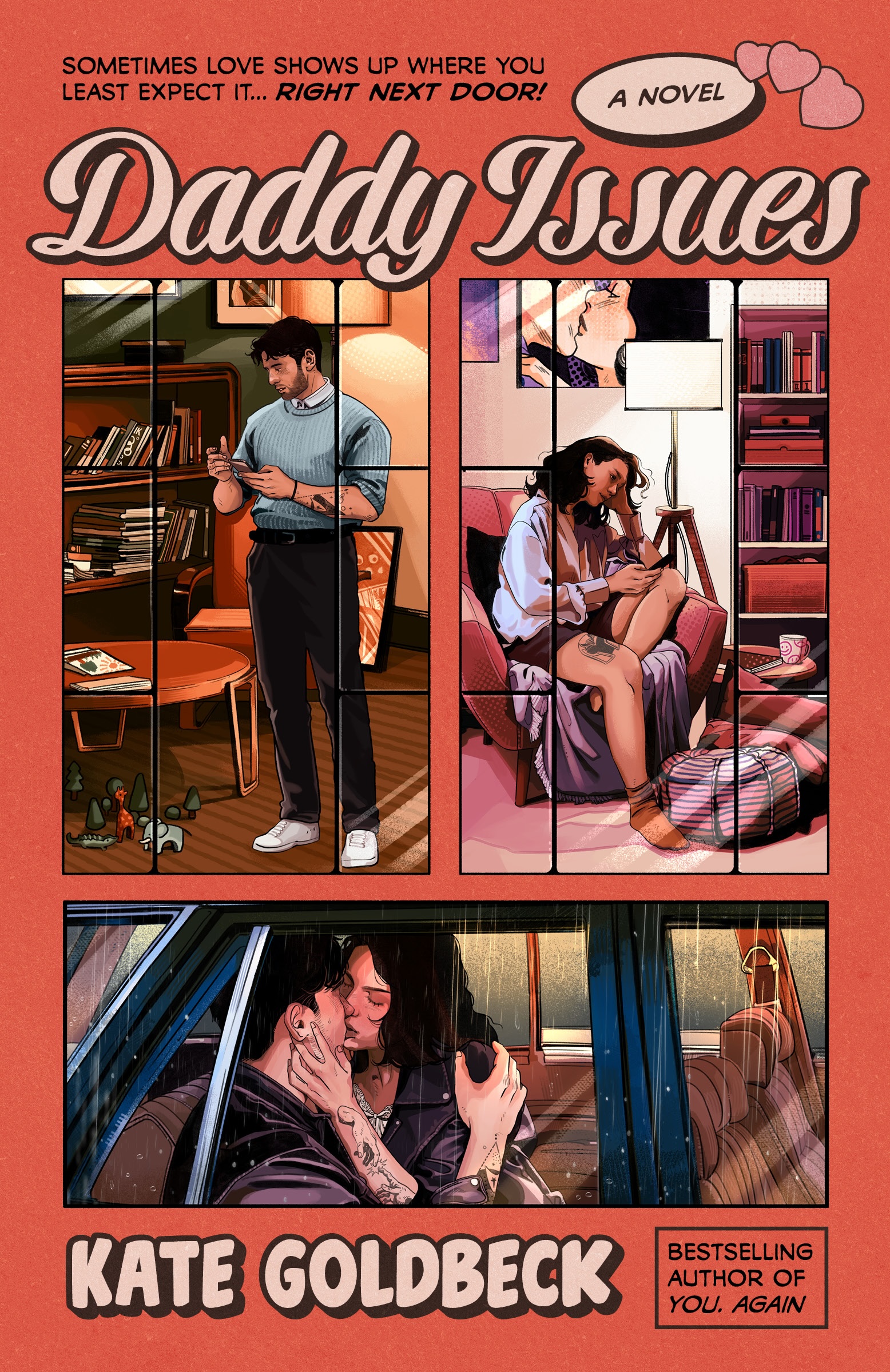
Sam studied art history, has a deep knowledge of comics and graphic novels, and the book incorporates comic book aesthetic into its narrative structure. Sections are framed in sequential panel style, which is creative and unique.
When Sam talks about art, the character comes alive. These moments showcase her intelligence and passion, making readers understand why Nick would be interested in her. Unfortunately, these sequences are too rare in a book focused on her romantic drama.
Her PhD applications get rejected repeatedly, which feeds her depression and stagnation. She’s overqualified for bartending but can’t break into academia, representing thousands of millennials stuck in similar limbo after expensive educations.
The book eventually sends Sam to a university program, which is the only time she seems genuinely happy. This should’ve been the focus—Sam finding herself through her passion—rather than rushing her into a complicated relationship.
The Quick Fix Ending
After Sam finally gets her act together and moves forward with her academic pursuits, the book rushes to reunite her with Nick. She’s spent minimal time figuring out who she is independently before diving back into a relationship that requires enormous compromise.
The ending attempts to present their reunion as a happy-ever-after, but it feels forced. Sam has barely begun her personal growth journey, and suddenly she’s ready to take on stepmom responsibilities? Not bloody likely.
The book tries to convince readers that Sam and Nick belong together, but the foundation is shaky. They had a few good conversations, some decent sex, and now they’re meant to build a life together despite massive lifestyle incompatibilities?
The resolution ignores all the legitimate concerns raised throughout the book. Sam’s mother was right about everything, but the narrative dismisses her wisdom in favor of a feel-good ending that doesn’t feel earned or realistic.
The Pandemic Shadow
Covid’s lasting impact hovers over Sam’s life. She moved home during lockdowns and never left, becoming one of countless young people whose momentum was destroyed by the pandemic. This context adds depth to her stagnation.
The book acknowledges how the pandemic crushed dreams, eliminated opportunities, and left an entire generation scrambling. Sam’s inability to launch into adulthood isn’t just personal failure—it’s systemic and relatable.
However, five years is a long time to use the pandemic as an excuse. At some point, Sam needed to take responsibility for her choices rather than remaining passively stuck. The book struggles to balance empathy with accountability.
The pandemic mention feels both timely and dated simultaneously. Future readers might find these references jarring, while current readers will either relate intensely or feel exhausted by yet another Covid-adjacent narrative.
What Could’ve Been
The book’s dedication reads: “For anyone who has ever felt unlikeable. You are lovable.” This sentiment is lovely, but Sam’s unlikeability stems from her actions, not her inherent worth. She makes poor choices, ignores sound advice, and rushes into situations that serve Nick more than herself.
A better version of this book would’ve focused entirely on Sam’s personal journey. Let her get therapy, work through her father abandonment, build her career, and then maybe—MAYBE—she meets someone age-appropriate without parental baggage.
The Nick romance could’ve been a subplot to Sam’s main character arc, not the other way around. The book gets this backwards, sacrificing character development for a romance that doesn’t work.
The comic book aesthetic and Sam’s art history knowledge deserved more prominence. These unique elements get overshadowed by relationship drama that feels exhaustingly familiar despite the author’s attempts at freshness.
Characters?
| Character | Analysis | Fatal Flaw |
| Sam Pulaski | 26-year-old bartender with art history degree, drowning in student debt, stuck in her mum’s condo for 5 years, desperate for PhD acceptance | Paralyzing perfectionism, inability to take action, ignores solid advice, makes decisions that benefit others over herself |
| Nick | 39-year-old Chili’s manager, separated father of one, gave up international career for stability, Star Trek nerd, Mr. Dependable incarnate | Painfully boring, no distinct personality beyond “good dad,” pursues much younger woman while still married, brings nothing exciting to the table |
| Kira | 9-year-old daughter caught between separated parents, actually quite perceptive about adult relationships, acts out in age-appropriate ways | Labeled “spoiled” by Sam when she’s actually the most emotionally intelligent person in the book |
| Hal | Sam’s emotionally unavailable fuck buddy, aspiring literary type, treats Sam like convenient sex rather than girlfriend material | Waste of page space, drags the plot down for chapters, represents everything wrong with situationships |
| Sam’s Mother | Getting remarried and moving abroad, delivers brutal truth about Sam’s relationship choices, speaks from experience about stepmom struggles | Tries to protect Sam but gets dismissed, her wisdom ignored in favor of forced happy ending |
| Sam’s Father | Absentee dad who abandoned Sam, left behind valuable comic collection, the source of Sam’s supposed “daddy issues” | Barely present in narrative despite being book’s title, underdeveloped character whose impact feels thin |

Sam Pulaski is meant to be a realistic portrayal of millennial struggle—and she is. Too realistic. She’s depressed, aimless, stuck in analysis paralysis, and makes frustrating choices. Some readers will relate intensely; others will want to shake her. Her best moments come when discussing art, showing glimpses of the passionate, intelligent woman buried under layers of dysfunction.
Nick brings almost nothing to the table besides stability and dad energy. He’s honest and upfront about his feelings, which should be attractive, but comes across as bland. There’s no spark, no edge, nothing that makes readers understand why Sam would upend her life for him. He’s a regular bloke with a regular job, which is fine, but doesn’t make for compelling romance.
Kira deserves better than both these adults. She’s dealing with her parents’ separation, a strange woman suddenly in her dad’s life, and complex emotions she can’t fully articulate. Her “spoiled” behavior is actually normal child development, but Sam lacks the maturity to recognize this.
Hal exists to waste everyone’s time. The book dedicates excessive pages to this dead-end relationship when readers are supposedly here for the Nick romance. Every scene with Hal is a scene we could’ve spent actually building chemistry between Sam and Nick.
Sam’s Mother is the only person talking sense. Her warnings about dating divorced dads, her concerns about Sam sacrificing her youth for someone else’s established life, her recognition that stepmothers do all the emotional labor—all absolutely spot-on. The fact that Sam ignores this wisdom is infuriating.
Sam’s Father is a ghost haunting the narrative without substance. For a book called “Daddy Issues,” we get surprisingly little actual exploration of their relationship or how his abandonment specifically shaped Sam’s psychology. It’s tell instead of show.
Compare With Other Works
Kate Goldbeck’s debut “You, Again” was a national bestseller—a gender-swapped “When Harry Met Sally” retelling that earned Goodreads Choice Award nomination in 2023. That book had structure, borrowed from a beloved rom-com framework that provided clear narrative beats. “Daddy Issues” lacks that scaffolding and suffers for it.
Emily Henry dominates the beach-read romance space with books like “Beach Read” and “Book Lovers” that feature protagonists working through personal issues while finding love. Henry’s characters feel fully realized, their growth arcs satisfying. Sam’s journey feels incomplete and rushed in comparison.
Ali Hazelwood writes STEM romances with socially awkward heroines and patient, supportive heroes. Goldbeck’s style might appeal to Hazelwood fans, but Hazelwood’s men bring more personality and charm than Nick manages. Hazelwood also balances career and romance better.
Christina Lauren’s “The Unhoneymooners” and other works deliver banter and chemistry that crackles off the page. Goldbeck attempts similar wit, but “Daddy Issues” lacks the spark that makes readers giggle and kick their feet. The humor falls flat when the central relationship doesn’t work.
Sally Rooney’s “Normal People” explores messy, realistic relationships with brutal honesty. “Daddy Issues” tries for similar realism but can’t decide if it’s literary fiction or romance. It ends up in an awkward middle ground satisfying neither audience fully.
Compared to Goldbeck’s own debut, “Daddy Issues” is a significant step down. The narrative meanders where “You, Again” had purpose. The romance feels rushed where the debut built tension expertly. The protagonist frustrates where Ari and Josh charmed despite their flaws.
Achievement
Kate Goldbeck’s “You, Again” achieved National Bestseller status and was named an NPR Best Book of 2023 plus a Glamour Best Book of 2023. The debut earned a Goodreads Choice Award nomination for Romance in 2023, landing among the top 20 romance novels of the year.
“Daddy Issues” releases 18 November 2025 from Penguin Random House’s Dial Press imprint. The book is 352 pages and features a 13-year age gap between protagonists (Sam is 26, Nick is 39). Pre-orders opened in late 2024 with the book available in paperback, ebook, and audio formats.
Goodreads currently shows 453 reviews before official publication, with ratings ranging wildly from 1 to 5 stars. The average hovers around 3.67 out of 5, significantly lower than “You, Again” which maintains a 4.07 average from over 89,000 ratings.
Ali Hazelwood provided an advance blurb calling it “Clever, honest, sexy, funny, emotional, unique, and deeply romantic,” though advance praise doesn’t always reflect reader reception. Early reviews show deep division—some praise the realistic character work, others find Sam insufferable.
The book secured 25 Goodreads giveaway copies for US readers, indicating standard marketing push from the publisher. International rights sold to Penguin UK for simultaneous release, showing continued publisher confidence in Goldbeck’s brand despite sophomore novel concerns.
“You, Again” film rights were optioned by CAA, Goldbeck’s film agency, though no production timeline has been announced. This success likely contributed to “Daddy Issues” receiving substantial marketing support despite mixed early reactions.
Writing Style & Execution
Goldbeck attempts something creative with comic book-style narrative framing. Sam sees the world through her art medium, so sections appear in sequential panel format textually. It’s unique and fresh, showing authorial ambition beyond typical romance structure.
The prose is sharp when focused. Sam’s voice has verve—funny, fully animated, distinctly hers. When the writing clicks, it really clicks. Unfortunately, these moments are inconsistent, buried under relationship drama that doesn’t earn its page count.
Pop culture references saturate the text, dating the book immediately. Future readers will find these references jarring. Current readers might feel exhausted by yet another piece of media desperately trying to be “of the moment” rather than timeless.
The pacing is disastrous. Half the book focuses on Hal when he’s not even the love interest. The Nick romance rushes through crucial development stages. Sam’s personal growth happens off-page in the final chapters. Nothing flows naturally.
The Verdict: Who This Book Serves
“Daddy Issues” works best for readers who prioritize realistic character work over satisfying romance. If you want messy, unlikeable protagonists making questionable choices, Sam delivers. If you need swoony chemistry and earned happy endings, look elsewhere.
The book serves Kate Goldbeck’s need to exorcise personal demons more than reader expectations. The author’s notes reveal both storylines—Sam’s arrested development and stepmom anxieties—come from real experiences. Sometimes that catharsis doesn’t translate to compelling fiction.
Readers in their twenties stuck in post-pandemic limbo might see themselves in Sam’s paralysis. That recognition could be validating or triggering depending on where you are in your own journey. Don’t read this if you’re currently depressed—it won’t help.
The book fails readers who picked it up for hot single-dad romance based on title and marketing. Those readers will be blindsided by the depressing first half, underwhelmed by the rushed second half, and frustrated by the unearned ending.
Final Thoughts: This Ain’t It
“Daddy Issues” commits the cardinal sin of making readers root against the central romance. Sam’s mother articulates every concern bouncing around your head—age gap implications, sacrifice imbalance, the reality that Sam will never be Nick’s first anything. Then the book ignores these valid points for a forced happy ending.
The title promises exploration of father-daughter dynamics and how they shape romantic choices. The book delivers surface-level daddy issues without depth or resolution. Sam’s father remains a phantom whose impact is told rather than shown.
Nick deserves criticism for pursuing a woman 13 years younger while not even officially divorced. The power imbalance is real—he’s established, she’s floundering. He gets a live-in girlfriend and potential nanny. She gets… his boring stability? Not a fair trade.
The book would’ve been stronger as straight literary fiction about a woman clawing her way out of depression and stagnation. The romance undermines Sam’s growth journey, giving her an “easy out” instead of forcing her to save herself first.
What to Read Instead
Craving single-dad romance done right? Try “The Friend Zone” by Abby Jimenez, where the relationship develops naturally and both parties grow. Want quarter-life crisis executed well? Emily Henry’s “Beach Read” delivers without sacrificing character development for rushed romance.
For age-gap dynamics handled thoughtfully, “The Worst Best Man” by Mia Sosa nails the balance. The power differential is acknowledged and worked through rather than glossed over. Both characters feel like equals despite their life stage differences.
If you loved “You, Again,” just reread that instead. Goldbeck’s debut remains her superior work—better pacing, stronger chemistry, more satisfying character arcs. Lightning didn’t strike twice here, unfortunately.
Sally Rooney’s “Normal People” explores realistic, messy relationships without pretending they’re healthier than they are. The book doesn’t ask readers to root for dysfunction packaged as romance, which “Daddy Issues” absolutely does.

Quick Info Box Feature Details Author Iliana Xander Genre Psychological Thriller / Suspense Series Standalone Tropes Undercover Investigation, Housekeeper Spy, Man of the Year Suspect, Friend in Coma, Missing Previous Housekeeper, Mansion Secrets, Watched/Followed, Red ...
Seven dead brides. Seven stolen wedding rings. One pissed-off witch who's been squatting in a Maine manor for two centuries. Sounds brilliant, yeah? Well, buckle up, because Nora Roberts' finale to The Lost Bride Trilogy ...