Ship of Spells Book Review: Explained & Synopsis 3 Reasons
Picture this: you’re floating in the ocean after your ship explodes, your hands are shredded ribbons of flesh exposing bone, and a magical sentient vessel rescues you. Your first move? Pull rank on the doctor saving your life and be an absolute knob to everyone aboard. Welcome to Honor Renn’s world, where arrogance drowns common sense faster than a stone anchor.
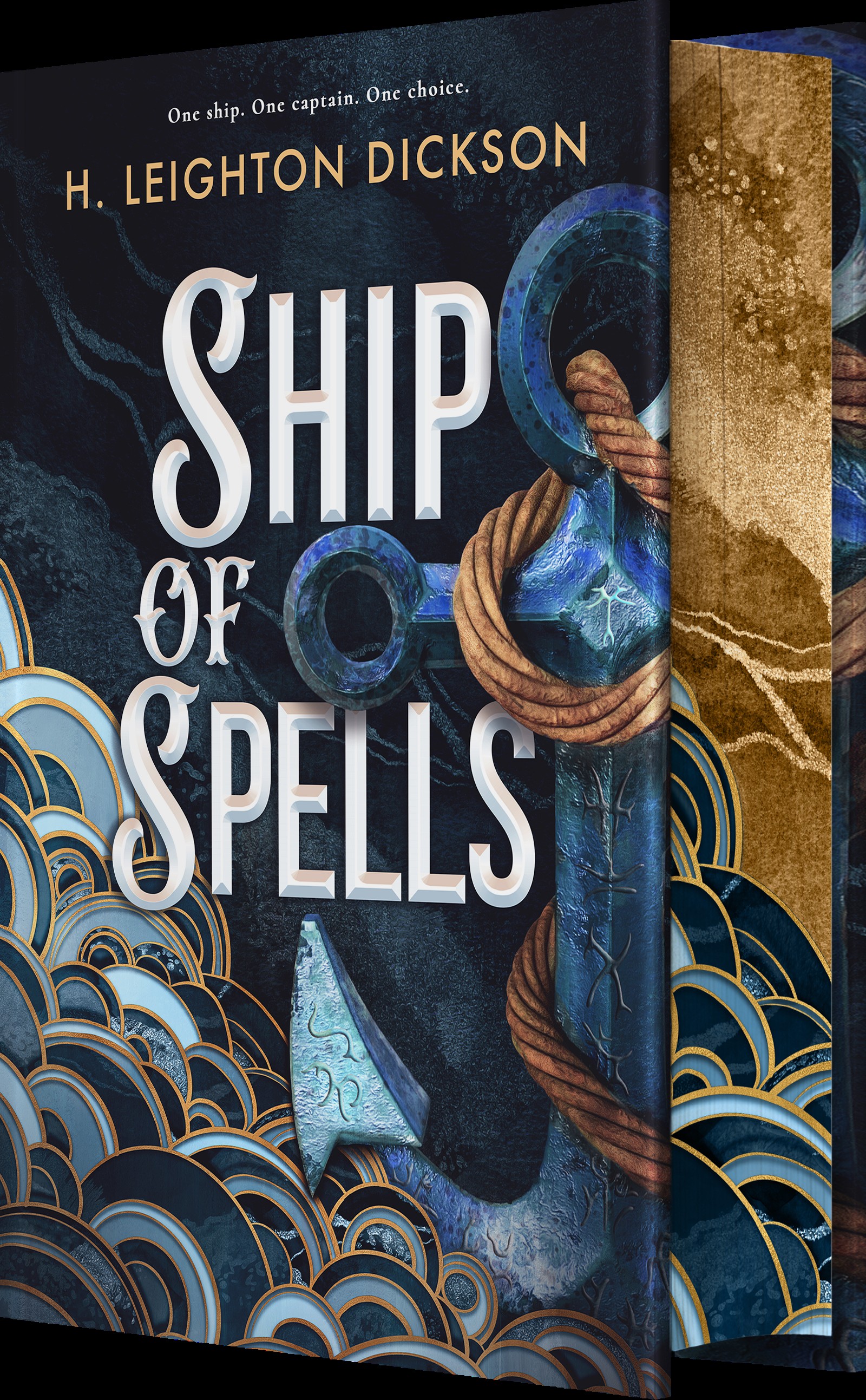
Ship of Spells promised a swashbuckling adventure with Pirates of the Caribbean vibes meets Shadow and Bone magic, but what H. Leighton Dickson delivered feels more like a beautiful book cover wrapped around a half-baked manuscript that needed three more rounds with an editor. The bones are there—sentient ship, chimeric magic, elven pirate captain—but the execution? Mate, it’s messier than a deck after a kraken attack.
NOTE:
- Why the FMC might be the most insufferable protagonist in 2025 fantasy
- The 108 times “fog” replaces the F-word (yes, someone counted)
- How a 512-page book still feels like it skips crucial plot points
- Whether the found family trope can salvage a sinking ship
Detailed Summary
Chapter 1: The Dawn Watch
Honor Renn remembers the first time she saw the Ship of Spells because she didn’t actually see it—hidden under a stormveil spell in Hodgetown’s dockyard. Fast forward to her current disaster: she’s Ensign Bluemage aboard a naval frigate getting absolutely demolished by a Rhi’Ahr enemy ship called the Endorathil. While her fellow mages are dying around her, Honor’s busy mentally judging how rubbish they are at their jobs, because apparently superiority complexes don’t take breaks during life-or-death battles.
During the chaos, something goes catastrophically wrong with the magic. Honor’s hands get shredded to ribbons—flesh torn away, bones and tendons exposed—and she’s blasted overboard. She ends up clinging to a plank in the middle of the ocean, the sole survivor of her ship, waiting to meet Davey Jones.
A hawk arrives and somehow she’s rescued by the legendary Touchstone, also known as the Ship of Spells. This vessel is whispered about in dockside ballads and royal war rooms, a mythic ship that shouldn’t exist.
Chapters 2-5: Welcome Aboard (Sort Of)
Honor wakes up in the ship’s medical bay with her hands mysteriously healing, covered in strange runic scars that glow with chimeric magic—the arcane element used exclusively by the elven Rhi’Ahr, her people’s sworn enemies. Instead of gratitude for being saved from certain death, she immediately tries to pull rank on the ship’s doctor. Because nothing says “thank you for saving my life” like being an entitled brat.
She meets Captain Gavriel Thanavar, and here’s the kicker: he’s Rhi’Ahr, one of the enemy. Honor’s reaction? She attacks him. Straight up assaults the captain of the ship that rescued her, driven by racist prejudices she never bothers to examine.
The Touchstone isn’t just any ship—she’s sentient, bonded to Thanavar, and apparently has more personality than most of the human characters. The ship operates with a skeleton crew of misfits including Echo (a telepathic faun), Buck (a jovial minotaur), Kithriit or Kit (a stoic harpy), Smoke, and Devanhan Fahr. Honor learns that Thanavar sails with a letter of marque from the Oversea king, making him a privateer rather than a pirate, though the line seems pretty blurred.
Chapters 6-10: Training Montage (But Make It Insufferable)
Honor discovers her new chimeric-infused magic is slowly killing her, but it also makes her incredibly powerful in ways no human mage has ever been. She’s essentially become a “runechaser,” able to manipulate the arcane magic that should be impossible for her species. This makes her valuable to Thanavar’s mission—and a target for literally everyone else.
The captain’s mission involves the Dreadwall, a massive magical barrier that’s kept the Overland and Nethersea from open war for a hundred years. It’s crumbling, and whatever Thanavar’s planning could either save the world or set the sea on fire. Honor decides to join the crew, not because she’s had any character growth, but because it’s her only shot at survival.
Cue the training sequences where Honor learns to use her new abilities. The magic system is based on musical notes and frequencies, which sounds cool in theory but gets bogged down in jargon. Bluemages weave spells, chimeric burns with runic power, and there’s a whole hierarchy of mage colors that’s explained through info-dumps rather than organic storytelling.
Chapters 11-15: Pirates, Princes, and Plot Holes
The ship encounters enemy vessels, rival privateers, and political intrigue from multiple kingdoms. There are battles at sea that happen so quickly you’ll need to reread pages to figure out what actually occurred. Ships explode, people die, and Honor continues being smug about her abilities while making reckless decisions that get crew members killed.
Somewhere in here, we learn there’s a stolen prince aboard. Or maybe he’s a prince in hiding? The details are fuzzy because the book moves at two speeds: glacial info-dumps about nautical terms, or breakneck action sequences that skip crucial explanations.
Honor starts developing feelings for Thanavar in that classic enemies-to-lovers trajectory, except it feels one-sided for most of the book. He’s mysterious, brooding, and made of secrets. She’s attracted to him but also still lowkey racist about his Rhi’Ahr heritage, which makes for deeply uncomfortable reading.
Chapters 16-20: Secrets and Shipwrecks
Plot twists start dropping. There’s a traitor aboard the Touchstone. Someone’s been feeding information to their enemies, and the crew is being hunted by forces from both Oversea and Nethersea. The political machinations involve princes, spies, and agendas Honor barely understands because she’s too busy thinking about herself.
The Touchstone proves she’s the real MVP of this story. The sentient ship has sass, personality, and refers to Thanavar as “beloved.” She’s basically the TARDIS if Doctor Who had a pirate phase, and honestly, she deserves better than this mess of a crew.
More backstory gets revealed about Thanavar through flashbacks and cryptic conversations. He’s got tragic past trauma, noble intentions, and apparently collects damaged people the way some folks collect stamps. The found family dynamic among the crew is genuinely the book’s strongest element—when Honor isn’t ruining it with her attitude.
Chapters 21-25: Chimeric Chaos
Honor’s magic continues evolving in dangerous ways. The chimeric is literally poisoning her system while making her more powerful. It’s a ticking time bomb situation that should create tension, but Honor’s so confident in her own abilities that stakes feel minimal.
There are encounters with magical creatures from the deep—sea serpents, maritime monsters, things that shouldn’t exist. The worldbuilding expands to show the Nethersea isn’t just enemy territory but a whole hemisphere with its own cultures, languages, and magic systems that have been demonized by Oversea propaganda.
The romance finally shifts from “I hate you” to “I want you” territory, but it happens so abruptly you’ll get whiplash. One chapter they’re barely tolerating each other, the next they’re confessing feelings. The slow burn wasn’t slow—it was nonexistent until suddenly it combusted.
Chapters 26-30: The Mission Revealed
Thanavar’s actual plan gets unveiled, and it’s appropriately dramatic: he’s trying to prevent the Dreadwall from collapsing entirely, which would plunge both hemispheres into catastrophic war. Honor’s unique chimeric abilities make her essential to whatever magical working he’s attempting, which is convenient plotting but not particularly earned character development.
The crew faces their biggest challenges yet. Ship-to-ship combat intensifies, with the Touchstone using her magical abilities in ways that should be impossible. These sequences should be thrilling but get bogged down in nautical terminology that makes following the action like reading a sailing manual mid-battle.
Honor makes decisions that put everyone at risk because she thinks she knows better than the experienced crew. People die as a result, and she barely reflects on it. There’s a distinct lack of consequences for her actions that makes her feel like a Mary Sue in pirate’s clothing.
Chapters 31-35: Betrayals and Battles
The traitor’s identity gets revealed in a twist that’s moderately surprising if you haven’t been paying attention. There are confrontations, emotional speeches, and a sense that relationships are fracturing under pressure. The found family is tested, and some bonds break while others strengthen.
Thanavar’s secrets spill out in a rushed confession that should hit harder than it does. His connection to the Touchstone, his real mission, his tragic backstory—it’s all there, but delivered in exposition chunks rather than emotionally resonant reveals.
Honor finally faces real consequences for her arrogance, sort of. She’s humbled by circumstances but not by genuine character growth. The difference matters, and the book doesn’t seem to recognize it.
Chapters 36-40: Endgame
The final confrontation involves multiple ships, clashing magical forces, and the fate of the Dreadwall hanging in balance. Honor uses her chimeric magic in ways that should kill her but don’t because plot armor is thicker than ship’s hull.
There’s a climactic magical working where Honor and Thanavar must combine their abilities. It’s supposed to be romantic and epic, and partially succeeds despite the rushed pacing. The Touchstone plays a crucial role, reminding readers she’s the character who deserved top billing all along.
The ending wraps up some threads while leaving major questions for the inevitable sequel. It’s a cliffhanger that feels less “edge of your seat” and more “oh, so we’re doing this again?” There are casualties, victories, and a sense that nothing’s truly resolved—just paused.
Characters
Honor Renn is the Ensign Bluemage who survives a naval disaster and becomes the protagonist we’re stuck with for 512 pages. She’s arrogant without cause, judgemental without reflection, and makes impulsive decisions that get people killed while never learning from mistakes. Honor believes she’s smarter and more talented than everyone around her, constantly thinking about how rubbish her fellow mages are at their jobs.
Her character arc is virtually nonexistent—she starts as an insufferable brat and ends as an insufferable brat with more power. The book tries to sell her confidence as strength, but there’s a massive difference between a strong female character and a character who’s simply strong-headed to the point of stupidity. Her racism toward the Rhi’Ahr persists for half the book without proper examination or growth, making her deeply uncomfortable to follow.
Captain Gavriel Thanavar is the mysterious elven Rhi’Ahr who commands the Touchstone. He’s the classic tall, dark, and brooding love interest with a tragic past and noble intentions hidden behind a cold exterior. Thanavar collects damaged souls for his crew and sails with secrets that could change the world.
The problem? He’s barely developed beyond “mysterious captain with trauma.” His backstory gets revealed in rushed exposition rather than organic character moments. Why does he trust Honor when she’s proven herself reckless and prejudiced? The book never adequately explains it beyond “the plot requires it.”
Echo is the telepathic faun who serves as the ship’s lookout and general voice of reason. He’s genuinely likeable, providing comic relief and emotional grounding when Honor’s busy being terrible. Echo represents what the book could’ve been—a character with depth, humor, and actual growth. Multiple reviews cite him as a favourite, which says everything about how the supposed protagonist fails to connect.
Devanhan Fahr gets criminally underutilized despite being swoon-worthy according to multiple readers. He’s got presence, personality, and apparently enough chemistry that some wondered if there’d be a love triangle. The fact that a side character generates more romantic interest than the actual male lead is damning.
Kithriit (Kit) is the stoic harpy whose loyalty and competence make her invaluable to the crew. She gets minimal development despite being potentially fascinating—a harpy aboard a magical ship should have stories worth telling, but the book’s too busy with Honor’s internal monologue to explore anyone else properly.
Buck is the jovial minotaur who provides muscle and warmth to the crew dynamic. He’s the found family member who makes everyone feel at home, which is lovely, but again—barely developed beyond his archetype.
Smoke remains largely mysterious throughout, which might be intentional character design but feels more like underdeveloped supporting cast lost in the shuffle.
The Touchstone herself is genuinely the best character in the book. She’s sentient, sassy, bonded to Thanavar whom she calls “beloved,” and has more personality than most human characters. The ship is basically the TARDIS meets a pirate vessel, conscious and magical and thoroughly done with everyone’s drama. The premise of a ship in love with her captain is brilliant—the execution through Honor’s dismissive perspective is the tragedy.
| Character | Role | Development | Reader Reception |
| Honor Renn | Protagonist/Bluemage | Virtually none | Widely disliked |
| Gavriel Thanavar | Captain/Love Interest | Underdeveloped | Mixed feelings |
| Echo | Telepathic Faun | Minimal but effective | Fan favourite |
| Devanhan Fahr | Crew Member | Underutilized | Wanted more |
| The Touchstone | Sentient Ship | Best in show | Unanimous praise |
Compare With Other Works
Ship of Spells gets marketed as “One Piece meets Shadow and Bone,” which is doing heavy lifting that the book can’t support. Let’s break down how it actually stacks against similar fantasy offerings.
:max_bytes(150000):strip_icc():focal(668x376:670x378)/Richard-Osman-The-Impossible-Fortune-cover-040725-149fda923fc34bcc9ecef6fb5532a35a.jpg "Book Review: The Impossible Fortune – 5 Murders, £350m Crypto & 80 Laughs!")
G'day, you lot! Strap in for a yarn about The Impossible Fortune, where a bunch of old codgers in a posh retirement village stumble into a right mess involving a vanished best man, a bomb ...

Walter Nash gets his cozy corporate life torched in under 50 pages when the FBI knocks on his door demanding he spy on his own company, Sybaritic Investments. What follows is a money-laundering mess, a ...
Shadow and Bone by Leigh Bardugo gave us Alina Starkov, an orphan who discovers world-changing power and navigates complex relationships while growing from insecurity to strength. The magic system is clear, the political intrigue is layered, and the love triangle actually makes sense within character development. Ship of Spells tries for similar beats but fumbles them—Honor starts overly confident rather than growing into power, the magic system drowns in jargon, and the romance feels forced rather than earned.
Pirates of the Caribbean (yes, the films) balanced swashbuckling action with humor, heart, and characters you actually cared about. Jack Sparrow is selfish and ridiculous but charismatic enough that you root for him anyway. Honor Renn is selfish and arrogant without the charm to make it work. The Touchstone deserves her own film franchise, though.
Ship of Magic by Robin Hobb is the real comparison point for sentient vessels. Hobb’s liveships are family heirlooms that quicken after three family deaths, creating complex relationships between ships and their families. The worldbuilding is meticulous, the characters are deeply flawed but compellingly written, and the emotional weight is devastating. Ship of Spells has the sentient ship concept but lacks the depth, patience, and character work that makes Hobb’s series a masterpiece.
Red Seas Under Red Skies by Scott Lynch delivers proper pirate fantasy with Locke Lamora’s schemes going predictably sideways while maintaining wit, tension, and genuine stakes. The nautical terminology enhances rather than obscures the action. Ship of Spells could learn volumes from Lynch’s balance of technical detail and readability.
Daughter of the Pirate King by Tricia Levenseller offers a confident female pirate protagonist who’s actually fun to read despite her arrogance, because there’s cleverness and growth beneath the swagger. Honor Renn feels like someone tried to write Alosa but forgot the charm, intelligence, and character development that made her work.
The brutal truth? Ship of Spells reads like a first draft that got rushed to publication because the concept was strong enough to sell. The bones of a brilliant story are buried under excessive jargon, underdeveloped characters, and a protagonist who needed several more rounds of revision to become even marginally likeable.
Achievement
Let’s talk numbers, because that’s where things get interesting—and by interesting, we mean “this book hasn’t actually achieved much yet.”
Release Date: November 4, 2025 (literally just dropped)
Page Count: 512 pages in the deluxe limited edition
Publisher: Red Tower Books (an Entangled Publishing imprint)
Goodreads Rating: Not yet established with official star rating due to recent release, but early ARC reviews show significant polarization
Price Points:
- Standard edition: $16.99 paperback
- Deluxe limited edition: $43.99 with sprayed edges
- Ebook: $9.99
The book got coverage from Publishers Weekly, which called it “jam-packed nautical romantasy” with “intricate world of seaborne wonders” but noted “it’s occasionally difficult to parse the heavy worldbuilding.” That’s publishing speak for “this needed more editing.”
Kirkus Reviews gave it a “GET IT” verdict, praising the “rich fantasy worldbuilding and strong character development,” which makes you wonder if they read the same book everyone else did. Their review focuses on the world and crew dynamics while conspicuously avoiding deep discussion of the protagonist—telling.
Pre-release Buzz: Ship of Spells generated decent social media traction on BookTok and Bookstagram, primarily around the gorgeous cover art and the sentient ship concept. The sprayed edge designs for the deluxe edition are legitimately stunning—shame about what’s between the covers.
Author Background: H. Leighton Dickson is an established indie author with 10+ previous novels including the Cold Stone & Ivy series and Dragon of Ash & Stars, which won awards and garnered genuine praise. She’s got a fanbase from her indie work, which likely drove initial preorders.
Comparison to Author’s Other Works: Dragon of Ash & Stars has substantially better reviews, with readers praising the emotional depth, character work, and storytelling that feels absent from Ship of Spells. Multiple reviewers noted this feels like a step backward from her previous quality, suggesting perhaps the pressure of traditional publishing and deadlines impacted the final product.
Sales Data: Too early for concrete numbers, but the book hasn’t hit any bestseller lists in its first weeks. For comparison, successful debuts in the romantasy space typically chart on Amazon within days if they’re going to make waves.
Social Media Metrics:
- Author’s Instagram posts about the book average 200-500 likes
- TikTok reviews range from glowing praise to scathing criticism
- Reddit discussions are minimal, which isn’t great for fantasy releases
The achievement section is remarkably empty because Ship of Spells is too new to have accomplished much beyond “got published.” No awards, no bestseller status, no major media coverage beyond standard trade reviews. The numbers we do have—512 pages, $43.99 for the pretty edition—mostly emphasize that this is a hefty investment for a divisive reading experience.
| Metric | Ship of Spells | Typical Successful Debut |
| Goodreads Rating | TBD (newly released) | 4.0+ within first month |
| Reviews Count | ~100 ARC reviews | 500+ first month |
| Bestseller Lists | None yet | Amazon Top 100 within week |
| Media Coverage | Trade publications only | Multiple outlets + features |
| Social Media Buzz | Moderate | Viral moments/widespread sharing |
The Verdict:
Rating: 2.5/5 stars (and that’s being generous for the Touchstone)
Read this if: You’re obsessed with sentient ships and can tolerate an annoying protagonist for the sake of creative worldbuilding.
Skip this if: You need characters you can actually root for, or if excessive nautical jargon makes your eyes glaze over.
What’s the most insufferable protagonist you’ve ever encountered? Let’s commiserate together. See you in the comments, mates.

Imagine watching your teeth fall out one by one while your pastor husband praises God for "cleansing" you. That's the nightmare Dark Sisters serves up. Kristi DeMeester crafts a folk horror masterpiece where the real ...

G'day, mates. Picture this: a posh sheila named Juliette from a dodgy powerful family bumps into a shadowy bloke called Roman, who's secretly the heir to their arch-rivals. Sparks fly in the dark, but daylight ...