Book Review: The Forget Me Not Library Synopsis & Explained
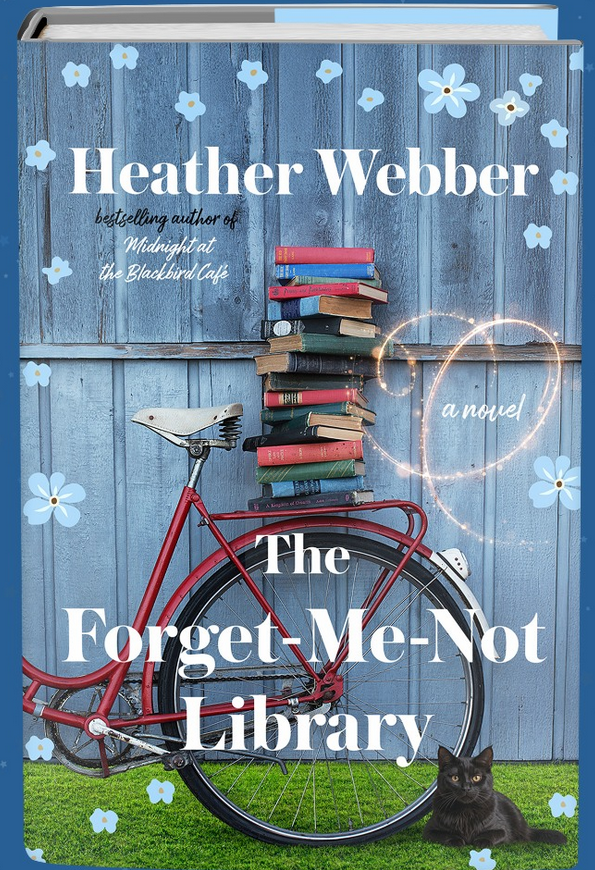
What if I told you two heartbroken women, a psychic library cat, and 300+ pages of Alabama charm still couldn’t make me care? The Forget-Me-Not Library by Heather Webber drops Juliet Nightingale—lightning strike survivor with memory loss—into a town where cars mysteriously break down and emotions get sorted by smoke color.
Tallulah, fresh from divorce with 2 kids, works at the titular library where books supposedly unlock memories. Sounds magical, right? Wrong. This saccharine mess trades substance for sentiment, serving up predictable plot beats wrapped in so much Southern whimsy you’ll need insulin.
Note:
- Why 2 romance subplots feel like recycled Hallmark scripts
- How a fortune-telling cat becomes the book’s only interesting character
- Why the “magical library” delivers zero actual stakes
- What Webber’s 360,490 Goodreads readers apparently love that I don’t
Detailed Summary
The Lightning-Fried Setup
Juliet Nightingale survived a lightning strike that killed her grandfather and erased her childhood memories. Months later, she’s physically healed but emotionally hollow, so she embarks on a solo road trip to “find herself”—because apparently Michigan doesn’t sell self-discovery. Her car conveniently breaks down in Forget-Me-Not, Alabama, spewing blue smoke (the town’s magical indicator of grief, naturally) right in front of 80-year-old Tenn Greenlee’s house. Tenn’s outside searching for his great-granddaughter Katy, who Juliet spots sleeping in a tree like some woodland sprite.
Tenn invites Juliet to stay while the town’s only mechanic—shocker—can’t find the necessary parts for weeks. This “mysterious” delay is about as subtle as a brick through a window. The narrative wants you to believe cosmic forces are at work, but it reads more like lazy plot mechanics keeping our protagonist trapped in quirk-ville.
Enter Tallulah and the Divorce Blues
Tallulah Byrd Mayfield moved back to Tenn’s house with daughters Katy (precocious) and baby Mary Joy after her husband decided marriage wasn’t his jam. She’s taken a job at the Forget-Me-Not Library, run by the enigmatic Evanthe and her cat Deckle. Tallulah wanted to be a librarian like her late grandmother but settled for assistant—a detail the book mentions repeatedly as if we’ll forget her unfulfilled dreams.
The library’s gimmick? Deckle knocks books off shelves, visitors open them and sniff the pages (yes, really—there’s even a term: “bibliosmia”), and supposedly treasured memories resurface. It’s Pinterest mysticism meets Southern Gothic lite. Tallulah’s struggling with single parenthood, financial stress, and the humiliation of a failed marriage, but the book treats her pain like wallpaper—pretty backdrop, no depth.
The Friendship Nobody Asked For
Juliet settles into Tenn’s attic room under “Bill,” a tree growing through the house (because of course there is). She helps with the kids, volunteers at hospice, and becomes Tallulah’s instant best friend over a Pride and Prejudice debate—Colin Firth vs. Keira Knightley, the most groundbreaking conversation since “Is a hot dog a sandwich?” Their bond forms faster than mold on bread, skipping the messy reality of strangers learning to trust each other.
The pacing here is glacial. We get endless descriptions of Juliet making pancakes, Katy being adorably wise beyond her years, and Tallulah fretting about her ex. Meanwhile, actual character development gets shelved alongside those magic books. The first third drags like you’re wading through Alabama humidity in denim.
Romance Subplot #1: Juliet and the Librarian’s Nephew
Enter Callum, Evanthe’s nephew who’s moved back to town (also running from something unspecified). He’s handsome, brooding, and available—the Holy Trinity of romantic male leads. Juliet and Callum engage in prolonged eye contact, share meaningful silences, and have chemistry you could measure with a teaspoon. Their relationship unfolds with the urgency of a DMV queue.
Romance Subplot #2: Tallulah and Mystery Man
A young man’s car also breaks down in town (surprise!), and Tallulah develops feelings. This parallel to Juliet’s situation is meant to feel serendipitous but lands as formulaic. Webber loves doubling up on plot devices like she’s filling a bingo card: two broken women, two broken cars, two romantic interests, two healing journeys that mirror each other with all the subtlety of a funhouse reflection.
The Library Cat Saves Everything (Almost)
Deckle becomes the MVP by default. This cat knocks over books with eerie precision, “reading” people’s needs. When Juliet gets her book-sniffing moment, fragments of grandfather memories return—though honestly, the mechanism for how smelling old paper unlocks neural pathways remains conveniently unexplained. It’s magical realism without the rigor, mysticism without the mythology. Just accept it and move on, the book seems to say.
The library also features a missing coffee tin subplot that goes nowhere meaningful, a “Flour Festival” mentioned to establish small-town charm, and Evanthe playing wise mentor without any real mentoring happening.
The “Big” Reveal
Eventually, Juliet discovers her grandfather had a connection to Forget-Me-Not that she’s been unconsciously seeking. The reveal comes packaged in feel-good wrapping paper with a bow made of convenient coincidences. Nothing about this twist feels earned—it’s simply delivered because we’ve reached page 280 and need resolution.
Tallulah confronts her past (offpage, mostly), decides she’s worthy of love (groundbreaking), and both women emerge healed, coupled-up, and ready to embrace their futures. The town releases them from its magical clutches once they’ve achieved sufficient personal growth, which apparently you can measure by happiness quotient.
The Ending: Hugs All Around
Everyone pairs off. Grandpa Tenn beams. Katy says something preternaturally insightful. Deckle purrs. Colored smoke dissipates. The library continues its work of gentle emotional manipulation. Juliet decides to stay or return (the specifics blur into the general warm fuzziness). Tallulah embraces her new relationship. Cue the Southern sunset, fade to black, roll credits.
The final chapters rush through resolutions like they’re late for dinner, tying bows on conflicts that never felt particularly knotty to begin with.
Characters?
Juliet Nightingale
Our lightning survivor arrives with amnesia, grief, and the emotional complexity of a motivational poster. She’s nice—aggressively, relentlessly nice. She helps with children despite no childcare experience. She volunteers at hospice despite her own trauma. She befriends everyone despite being an outsider. Juliet has no sharp edges, no genuine flaws beyond “too sad” and “can’t remember stuff.” She’s less a character than a collection of sympathetic traits designed to make you root for her healing without earning your investment.
Tallulah Byrd Mayfield
Tallulah’s defining trait is being overwhelmed—by divorce, motherhood, financial worry, and unfulfilled ambitions. But Webber tells us she’s struggling more than showing the struggle. Her internal monologue circles the same anxieties without progression. She’s meant to be relatable to anyone who’s felt lost, but she reads as generic precisely because she’s trying to relate to everyone. Her growth arc from “sad divorcée” to “happy woman with new boyfriend” happens offpage in her heart, leaving readers to trust the transformation occurred rather than witnessing it.
Katy
The 6-year-old with the wisdom of a philosophy professor. Katy sees “auras,” speaks in pearls of wisdom, and exists to deliver precocious observations that move the plot forward. She’s not a child; she’s a narrative device in pigtails. Every “out of the mouths of babes” moment feels calculated rather than organic.
Tenn Greenlee
The 80-year-old grandfather wins points for not being a stereotype—he’s active, sharp, and emotionally available. But he’s also just there, facilitating the women’s stories without having much of his own beyond “supportive old man who loves his family.” He calls mechanics, offers wisdom, and provides housing. He’s furniture with a heartbeat.
Deckle the Cat
Ironically, the cat has more personality than most humans. Deckle’s mysterious ability to guide people to the right books provides the story’s only genuine intrigue. She’s aloof, purposeful, and operates on feline logic that defies explanation—which somehow makes her the most believable magical element. If Webber had written the entire book from Deckle’s POV, I’d have given it another star.
Evanthe
The head librarian floats through scenes dispensing vague wisdom and knowing looks. She’s grieving her dead husband but also mysteriously connected to the town’s magic. She’s less a character than an aesthetic—flowing clothes, sad eyes, gentle voice, and precisely zero concrete personality traits beyond “mystical librarian lady.”
Callum
Juliet’s love interest has the depth of a parking lot puddle. He’s handsome, damaged (unspecified trauma), and available. His personality can be summarized as “sensitive man who makes eye contact.” Their romance develops through proximity and soft lighting rather than genuine connection or chemistry.
The Mystery Love Interest
Tallulah’s romantic subplot involves a man whose defining feature is also being stranded in town. He’s functionally interchangeable with Callum—both are gentle, both are healing, both exist to provide romantic validation.
Plot Twists?
The Town Traps Broken People
Forget-Me-Not magically attracts wounded souls by breaking their cars and producing colored smoke that indicates their emotional needs. This “reveal” gets doled out gradually like it’s profound, but it’s obvious from chapter two. There’s no twist—just confirmation of what any reader guessed immediately. The smoke color system (blue for grief, other colors for other emotions) is mentioned but never fully explored or utilized meaningfully.
Juliet’s Grandfather Knew the Town
The book’s “big twist” is that Juliet’s grandfather had prior connection to Forget-Me-Not, and her subconscious drew her there. This revelation lands with a thud because: (1) it’s telegraphed chapters earlier, (2) it relies entirely on coincidence, and (3) it doesn’t actually change anything about Juliet’s journey. She was healing before the reveal; she continues healing after. It’s a twist in the technical sense only.
The Library’s Magic Has No Rules
Deckle’s book-knocking ability works when the plot needs it and doesn’t when it would create complications. Sometimes people get memories from sniffing books; sometimes they don’t. Evanthe knows things but won’t explain them. The “magic” is so inconsistent it becomes meaningless—just vibes and aesthetics without internal logic. Good magical realism establishes rules; this book establishes mood lighting.
Everyone Gets a Happy Ending
The least surprising twist: complete, uncomplicated resolution for everyone. No one faces difficult choices or lasting consequences. Divorce? Meet new boyfriend. Grief? Find grandfather’s legacy. Loneliness? Acquire found family. It’s not a twist; it’s inevitability. The book promises conflict but delivers group therapy with guaranteed results.
Compare With Other Works
- Midnight at the Blackbird Café
Webber’s earlier Alabama-set novel with magical realism gets constantly mentioned in reviews as superior. Blackbird Café featured pie that let you hear dead loved ones—a clearer, more emotionally resonant magical element than book-sniffing. That novel also had actual stakes and conflict. Forget-Me-Not Library feels like Webber photocopied her own formula but reduced the contrast by 40%.
- Beach Read by Emily Henry
Both feature writers/protagonists dealing with grief and finding love in unexpected places. But Henry’s characters have bite, flaws that create genuine conflict, and romance that sparks rather than simmers apologetically. Beach Read proves you can write feel-good fiction without sacrificing edge or complexity.
- The Midnight Library by Matt Haig
Haig’s library also deals with life choices and second chances through a fantastical premise. But Midnight Library commits to its concept, exploring multiple timelines and deep philosophical questions about regret and meaning. Forget-Me-Not Library namedrops similar themes but explores none of them beyond surface platitudes.
- Fried Green Tomatoes at the Whistle Stop Cafe
Classic Southern fiction with eccentric characters, female friendship, and small-town charm. Fannie Flagg’s novel has humor, grit, and doesn’t flinch from life’s messiness. Webber’s version wants the warmth without the complexity—sweet tea with all sugar, no tea.
| Element | Forget-Me-Not Library | Better Comparison Title |
| Magical Realism | Vague, inconsistent | Midnight at the Blackbird Café |
| Character Depth | Surface-level | Beach Read |
| Southern Setting | Tourist-brochure pretty | Fried Green Tomatoes |
| Emotional Stakes | Minimal | The Midnight Library |
| Romance | Lukewarm | Any Sarah Hogle novel |
Achievement
Here’s where things get interesting—or rather, don’t. Unlike Webber’s breakout Midnight at the Blackbird Café, which garnered significant attention, The Forget-Me-Not Library hasn’t made major bestseller lists as of November 2025. Let’s look at what we know:
- Goodreads Rating: Based on early reviews, averaging around 4.0-4.5 stars from ARC readers, which suggests fans of Webber’s formula are satisfied but not blown away
- Heather Webber’s Overall Stats: 360,490 total ratings across all her books on Goodreads—respectable for a niche author but nowhere near heavy-hitters
- Library Journal Review: Called it “heartfelt, whimsical” with “memorable characters” but that’s trade publication speak for “inoffensive and safe for library acquisition”
- Publication: St. Martin’s Press (November 4, 2025)—a solid publisher but this isn’t getting the marketing push of their lead titles
No major awards. No bestseller list appearances. No viral BookTok moment. What this book achieved is existing comfortably in the cozy fiction space where readers know exactly what they’re getting—which is both its appeal and its limitation. It’ll get borrowed from libraries, read by book clubs seeking zero controversy, and forgotten within a month of finishing.
For comparison, Midnight at the Blackbird Café sold significantly better and generated sustained buzz. This sequel in spirit (not plot) hasn’t replicated that success, suggesting even Webber’s established fanbase finds this formula wearing thin.
Writing Quality
Webber’s prose is serviceable but forgettable. She writes clear, grammatically correct sentences that convey information without style or memorable phrasing. You’ll find no quotable lines here, no metaphors that linger, no descriptions that surprise. It’s functional writing—the literary equivalent of beige paint. It gets the job done without offending anyone or inspiring anyone.
The dual POV structure (alternating between Juliet and Tallulah) adds nothing except length. Their voices sound identical despite different backgrounds. Both think in the same patterns, observe in the same way, and reflect with the same slightly melancholic but ultimately hopeful tone. There’s no reason this couldn’t have been single POV except that dual POV is trendy in women’s fiction right now.
Dialogue leans heavily on subtext-free exchanges where characters say exactly what they mean with therapeutic directness. No one talks like actual humans—they talk like people in a support group who’ve already done six weeks of sessions. Conflict resolves through earnest conversations where everyone validates everyone else’s feelings.
Themes (Barely There)
Second Chances: Mentioned constantly, explored never. Both women get do-overs but face no difficult choices or sacrifices to earn them.
Found Family: The book gestures at this theme by having Juliet absorbed into Tenn’s household, but there’s no tension between her birth family (who call constantly) and her chosen family. It’s addition, not replacement or conflict.
Grief and Healing: The book’s strongest thematic element, yet it treats grief like a cold—something you recover from given time and chicken soup (or book-sniffing). No acknowledgment that grief transforms you or that healing isn’t linear.
Memory and Identity: Juliet’s amnesia should raise interesting questions about whether we are our memories or something more. Instead, the book treats memory loss as a temporary inconvenience solved by magic cat and grandfather revelations.
What Works (Fine, I’ll Be Fair)
The concept of a library that stores memories has potential. Deckle the cat genuinely charms. A few moments between Juliet and Katy feel authentic. The lack of antagonist creates a peaceful reading experience if you’re exhausted by conflict. Webber clearly writes from a place of warmth and wanting readers to feel comforted. These aren’t nothing.
But potential and good intentions don’t equal good execution. This is a book for people who want fiction as comfort blanket, not as mirror or window. If you’re grieving and need the literary equivalent of a hug, maybe this works. If you want characters who challenge you, plots that surprise you, or prose that moves you—look elsewhere.
Final Verdict
Rating: 2/5 stars. Deckle the cat gets both stars. Everyone else can take a hike back to Forget-Me-Not, where they belong—forgotten.
Now go read something with actual teeth. May I suggest literally anything by Tana French or Silvia Moreno-Garcia? Your brain will thank you.

What if two academics who've despised each other for 15 years had to marry for a job—and discovered the friction might've been something else entirely? Jodi McAlister's An Academic Affair throws English professors Sadie Shaw ...

Picture this: a world where blokes are scarce, and a fierce sheila kidnaps a prince for hubby duties—bloody brilliant or a total stitch-up? Stick around as I unpack this spicy romantasy that'll have you chuckling ...