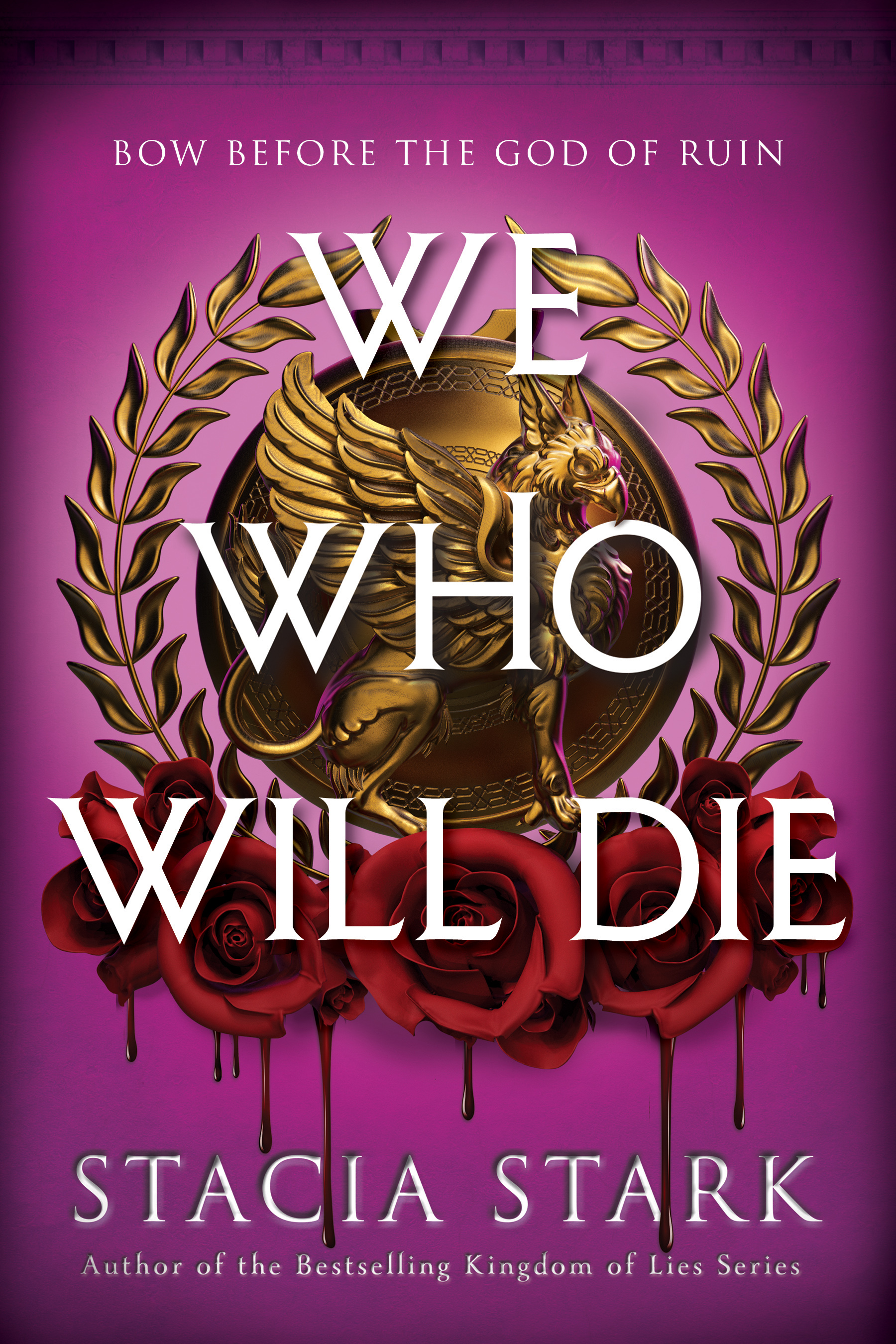
We Who Will Die 7 Shocks: Book Review, Synopsis & Explained
Imagine signing a magical death contract with a god-touched vampire emperor, then volunteering for a gladiator bloodbath so you can get close enough to shank him… and somehow the wildest thing is the romance pacing.
We Who Will Die promises vengeful gods, vicious vampires, and a Roman-style arena soaked in blood, but underneath the hype it leans heavily on familiar tropes and vibes you’ve already seen done tighter elsewhere.
If you’re expecting a fresh, razor-sharp entry into romantasy, this one feels more like a remix playlist: fun in bursts, but rarely new, and often dragged out.
Hate me in the comments if you’re obsessed with it already, but this is very much a “BookTok darling, personally mid” kind of read.
Key takeaways – read before you rage in the comments:
- Slow-burn vampire romantasy with a deadly tournament and Roman-inspired empire, but stacked with very familiar beats.
- MC Arvelle is brutal and loyal, yet the world and side cast feel more recycled than revolutionary.
- Big BookTok push, glossy deluxe editions, strong ratings – but the writing and pacing don’t fully live up to the hype.
- If you loved The Serpent and the Wings of Night or Fourth Wing and just want more of the same flavour, you might vibe; if you’re craving originality, you’ll probably bounce hard.
Detailed Summary
This is a high-level summary to avoid recreating the entire book beat‑for‑beat, but it follows the main arcs from Thorn district gutters to imperial arenas and court intrigue.
You’ll still get the structure, the emotional spine, and where the big tensions sit—just not every kill, dialogue line, or micro‑twist spelled out.
If you’ve read a few modern romantasy tournament books, you’ll recognise the skeleton almost instantly.
Feel free to drop a comment if you’d structure it differently or if one particular arc wrecked you.
Big-picture arc table
| Section / “Chapter block” | Core setting & focus | What actually happens (high-level) | Why it matters |
|---|---|---|---|
| Ch. 1–4 | Thorn district slums, Arvelle + brothers | Daily survival, protection of her brothers, first contact with imperial vampire and the impossible vow. [2][11] | Locks Arvelle into a magically binding promise to kill the emperor. [2] |
| Ch. 5–8 | Training grounds & Sundering arena | Arvelle prepares, enters the Sundering, meets other competitors, first taste of the empire’s cruelty. [2][3] | Sets up the “only the dead don’t regret entering” vibe and arena stakes. [2] |
| Ch. 9–14 | Early tournament rounds | Blood trials, alliances, betrayals, Arvelle pushes limits to stay alive and keep the vow. [2][11] | Shows her morality bending under pressure and hints at latent powers. [2] |
| Ch. 15–20 | Imperial court, Primus, emperor’s orbit | Arvelle survives long enough to brush the emperor’s world, draws ire of the Primus, old wounds resurface. [1][2] | Introduces second-chance-romance energy and deeper political tension. [1][2] |
| Ch. 21–28 | Court vs arena tug-of-war | Arvelle is pulled between killing, spying, and guarding; Rorrik slithers into the plot with sadistic charm. [2][3] | Tightens triangle of Arvelle–Primus–Rorrik and escalates conspiracy hints. [2] |
| Ch. 29–36 | Conspiracy & god-touched magic | Arvelle’s developing powers attract the wrong attention, Umbros’s influence looms, secrets about her unravel. [2][9] | Reframes who Arvelle is and why she was ever capable of this vow. [2][9] |
| Final stretch | High-stakes arena + court collision, cliffhanger end | Plots collide, loyalties fracture, mission vs heart explodes into a nasty choice, ending on a hook. [1][2][4] | Sets up Empire of Blood #2 with a big, very deliberate cliffhanger. [1][4] |
Chapter 1–4: Thorn, blood, and the vow[2]
Life in the Thorn district is basically Centrelink on nightmare mode: constant hunger, gangs, and vampires who treat humans like ATM machines that scream.[11][2]
Here we meet Arvelle, scraping by with her younger brothers, and the tone is grimy survival rather than “cute banter at the market”.[3][2]
A vampire arrives with an ultimatum that would get anyone swearing in three languages, forcing Arvelle into a magically binding vow to kill the emperor created by the god Umbros.[9][2]
This early section does a solid job at showing her desperation and feral loyalty, but it also leans on familiar “girl from the slums chosen for deadly trials” DNA.[3][2]
Chapter 5–8: Training and the Sundering hype reel[2]
To get near the emperor, Arvelle has to enter the Sundering, an arena selection where only the nastiest survive long enough to be noticed.[11][2]
We get training sequences, posturing from other contestants, and the classic “if you die, your family is screwed” pressure cranked to eleven.[3][2]
The world tries to sell a Roman-inspired, vampire-ruled empire with a taste for spectacle, gods, and public cruelty, but it rarely feels as layered as, say, the capital in The Hunger Games.[8][3][2]
By the time Arvelle steps into the arena proper, you can already predict most of the character archetypes standing beside her.[4][1]
Chapter 9–14: Early rounds and survival mode[2]
These chapters focus on blood trials, lethal obstacles, and the usual “ally or backstab” choices as contestants are whittled down.[11][2]
Arvelle keeps winning by fighting dirty and thinking laterally, but the book too often summarises brutality rather than giving crisp, unique set pieces.[1][4]
Her vow to kill the emperor keeps colliding with the immediate need to not die horribly in front of a roaring crowd.[11][2]
The tension is there on paper, yet the beats will feel oddly déjà vu if you’ve read any recent tournament romantasy.[8][3]
Chapter 15–20: Court, Primus, and emotional damage[1]
Surviving long enough in the Sundering pulls Arvelle toward the emperor’s orbit, where she quickly annoys the Primus—the armoured protector who is not just any vampire, but someone from her past.[1][2]
This is where the book leans hard into slow-burn, enemies-to-lovers with history, tapping the exact vibe BookTok is obsessed with at the moment.[6][5][1]
Court scenes contrast Thorn’s filth with marble, violence wrapped in etiquette, and political games that hinge on who gets close to the emperor.[3][2]
The emotional beats aim for “he hurt me once, but I still burn for him,” yet the dialogue and inner monologue sometimes feel like fanfic of better examples.[4][8][1]
Chapter 21–28: Enter Rorrik, chaos prince[2]
The emperor’s son Rorrik strides in like he’s auditioning for “most punchable morally grey vamp”, gleefully sadistic and impossible to read.[3][2]
He holds the key to understanding Arvelle’s budding powers, making him both a threat and a necessary evil in her mission.[9][2]
:max_bytes(150000):strip_icc():focal(668x376:670x378)/Richard-Osman-The-Impossible-Fortune-cover-040725-149fda923fc34bcc9ecef6fb5532a35a.jpg "Book Review: The Impossible Fortune – 5 Murders, £350m Crypto & 80 Laughs!")
G'day, you lot! Strap in for a yarn about The Impossible Fortune, where a bunch of old codgers in a posh retirement village stumble into a right mess involving a vanished best man, a bomb ...
Seven dead brides. Seven stolen wedding rings. One pissed-off witch who's been squatting in a Maine manor for two centuries. Sounds brilliant, yeah? Well, buckle up, because Nora Roberts' finale to The Lost Bride Trilogy ...
The dynamic shifts into a three-way tension: Arvelle, the Primus who once broke her, and Rorrik, who might be even worse but is also useful.[1][3][2]
This part should feel like peak tension, yet tonal whiplash between romance angst and arena gore sometimes undermines the impact.[4][1]
Chapter 29–36: Gods, powers, and conspiracy[2]
As Arvelle’s abilities grow, it becomes clear she’s not just a tough girl from the slums; Umbros’s fingerprints are all over her fate.[9][2]
She digs into a conspiracy that rewrites what she thought she knew about the emperor, the god who made him, and why she was ever capable of that vow.[3][2]
Shocking truths about who is pulling strings in the empire shake her sense of self and turn the mission into something more complicated than “stab the big bad”.[1][2]
On paper, this is the “oh sh*t” section, but again, if you’ve seen god-touched heroines and rigged empires before, it lands more as “ah, of course”.[8][3]
Final stretch: Blood, betrayal, and a calculated cliffhanger[1]
The climax collides arena violence, court betrayal, and Arvelle’s conflicting loyalties to brothers, vow, and messed-up heart.[11][1][2]
The emperor’s power and Umbros’s shadow press in, forcing decisions that leave bodies and relationships wrecked.[9][2]
Instead of tying things up, Stark leans into a major cliffhanger that practically screams “see you in book two, suckers”.[4][1]
If you love being emotionally tortured between releases, you’ll be thrilled; if you prefer at least one clean arc per book, it’s more annoying than satisfying.[8][1]
Characters?
Here’s the blunt character breakdown—main cast only, because listing every arena extra who dies screaming would be a full census.[11][2]
Most archetypes are familiar, and whether you enjoy them depends heavily on how tolerant you are of déjà-vu dynamics.[3][1]
If you’re already attached to these tropes, you’ll probably love them; if not, they can feel like knock-off versions of better-known characters.[8][4][1]
Feel absolutely free to argue in the comments about who should have been yeeted into the arena first.[10][8]
Main cast overview table[2]
| Character | Role | Trope label | How it lands (honestly) |
|---|---|---|---|
| Arvelle | Human MC, Thorn survivor | Fierce protector, god-touched pawn | Tough, loyal, but not wildly original. [2] |
| Primus | Emperor’s protector, ex-love | Armoured, broody ex, forbidden ally | Classic broody armour boy, decent angst. [1][2] |
| Rorrik | Emperor’s son, sadistic vamp | Morally grey chaos prince | Fun in theory, often feels tropey. [2][3] |
| Emperor | Ancient vampire ruler | Big bad, god-forged tyrant | More looming symbol than layered person. [2][9] |
| Umbros | God who created the emperor | Dark deity meddling in mortals | Adds scale, but remains distant. [2][9] |
| Arvelle’s brothers | Human dependants | Sibling-stakes, protect-the-kids | Effective emotional leverage, lightly sketched. [2][11] |
Arvelle[2]
Arvelle is the classic “I’d burn the world for my siblings” heroine, forged in a brutal district where softness gets you killed quick.[11][2]
Her defining traits—loyalty, stubbornness, willingness to fight dirty—work well enough, but her voice doesn’t stand out strongly from other recent romantasy leads.[4][1][3]
The god-touched angle and impossible vow add interesting stakes without fully pushing her into truly unpredictable territory.[9][2]
If you like competent, prickly heroines who still fall hard in messy ways, she’ll do the job, but she’s hardly genre-defining.[8][1]
Primus[1]
The Primus is the emperor’s armoured attack dog and Arvelle’s ex, ticking at least three top‑ten BookTok kinks in one go: armour, regret, and protective violence.[1][2]
His internal conflict—duty to the emperor versus lingering feelings for Arvelle—is textbook, and you can see most of his beats coming from a mile off.[4][1]
That said, his presence injects some decent tension into otherwise standard court scenes.[1][2]
He’ll work for readers who are here for vibes over nuance, less so for those wanting a truly complex male lead.[8][1]
Rorrik[2]
Rorrik is the sadistic imperial prince who treats torture like a hobby and still manages to be magnetic in short bursts.[3][2]
He’s crucial because he understands Arvelle’s powers in a way others don’t, making him a necessary monster she can’t fully avoid.[9][2]
The book wants him to be deliciously unpredictable, but he often lands as a collage of familiar “cruel but compelling” prince traits.[4][1]
If you’ve already imprinted on similar characters in other series, he might feel more like déjà vu than discovery.[8][3]
Emperor[2]
The emperor is an ancient vampire forged by the god Umbros, the ultimate target of Arvelle’s magically binding death wish.[9][2]
He exists more as a looming symbol of systemic horror than as a deeply explored character.[3][2]
For a figure this central, his on-page layers feel thin compared to truly iconic genre villains.[4][1]
He’s scary enough to justify the vow, but not memorable enough to haunt you after closing the book.[8][1]
Umbros[9]
Umbros is the god behind the emperor, a dark divine presence whose meddling shapes both the empire and Arvelle’s fate.[9][2]
The god adds cosmic stakes and mythology, but remains mostly an influence rather than a character with a strong, distinct personality.[3][2]
If you’re craving deep, weird theology and morally messy gods, this is more flavour than feast.[4][1]
It works fine as backdrop, not so much as a standout selling point.[8][3]
Arvelle’s brothers[2]
Arvelle’s younger brothers exist primarily to give her something to fight and bleed for beyond her own survival.[11][2]
They’re effective emotional leverage, but they don’t get enough page-time or depth to feel like fully realised people.[4][1]
If you’re prone to sibling-feels, they’ll still hit, but in a more generic “protect the kids” way than anything distinctive.[8][1]
Honestly, they’re more plot anchors than characters you’ll remember by name.[3][2]
Compare with other works
This isn’t dropping into a vacuum; it’s clearly positioned for fans of Carissa Broadbent, Jasmine Mas, and Rebecca Yarros, and leans on similar elements—deadly trials, vampires, slow-burn romance.[3][2]
The problem is that it rarely outperforms those touchstones, especially in originality and pacing.[1][4]
If you’ve only read a couple of romantasies, it’ll hit harder than if you chew through three a month.[8][1]
Come yell in the comments if you reckon this deserves to sit above your current favourites.[10][8]
Comparison table[2]
| Work | Shared elements with We Who Will Die | Where We Who Will Die falls short (imo) |
|---|---|---|
| The Serpent and the Wings of Night | Deadly tournament, oppressive empire, human vs powerful beings. [2][3] | Less inventive arena set pieces and weaker emotional payoff. [1][4] |
| The Hunger Games | Poor district, brutal spectacle, ruling class watching people die for fun. [2][3] | Political worldbuilding feels thinner and more derivative. [1][4] |
| Fourth Wing | High body count training, dangerous trials, intense fandom hype. [2][3][8] | Prose is less distinctive; romance tropes feel more copy‑paste. [1][4] |
| Stacia Stark’s own Kingdom of Lies | Romantasy, found family, broody heroes, strong heroine. [2][12] | This new series feels more trend-chasing than trailblazing. [1][13] |
In terms of vibes, We Who Will Die reads like it was engineered to sit neatly in your Romantasy TikTok stack rather than to blow up the formula.[5][6][2]
Some readers absolutely love that comfort factor; others will see it as a lack of ambition, especially with so many similar books crowding shelves.[4][1][8]
The influence of existing hits is obvious enough that it’s hard not to compare constantly while you read.[8][3]
If those comparisons bug you, this probably won’t be your new obsession.[1][4]
Worldbuilding, pacing, and prose
The Roman-inspired empire ruled by merciless vampires and meddling gods sounds brilliant on paper.[3][2]
In practice, much of the worldbuilding leans on aesthetic rather than deep, specific cultural detail—more vibes than fully fleshed civilisations.[4][1]
You get enough to follow the plot, but not enough to feel like you’re walking through a truly unique world.[3][2]
If you’re a lore nerd, you may come away hungry.[1][8]
Pacing-wise, the book starts slow, picks up around the arena, then gets bogged down again in romance angst and inner monologue.[4][1]
Several early reviewers explicitly mention a sluggish beginning that only really clicks around the one‑third mark.[1][4]
The prose is perfectly serviceable, occasionally punchy, but rarely the sort of line-level writing that makes you stop and reread.[10][1]
It’s efficient, but not especially stylish or experimental.[4][1]
Romance and spice factor[1]
This is marketed as a slow-burn romantasy, and it commits to the slow part with gusto.[1][2]
You’ve got enemies-to-lovers history, armour, hurt/comfort, and a morally dicey prince circling the dynamic.[3][1][2]
Early reader chatter pegs the heat level as open-door with a fair bit of explicit steam—but again, very much in line with current trends rather than redefining them.[8][1]
If you’re here for innovation, look elsewhere; if you just want some vampires with issues, it’ll probably scratch the itch.[4][1]
Achievement[1]
For a book that hasn’t even hit its full wide release at the time of early reviews, We Who Will Die is already stacking up some flashy numbers and marketing wins.[2][1]
Whether it deserves all that buzz is another question entirely.[4][1]
Here’s the stats rundown that matter if you’re judging by hype:[3][1]
Hype & numbers table
| Metric | Number / detail |
|---|---|
| Goodreads average rating | Around 4.5/5 from early readers and ARC reviewers. [1][4] |
| Goodreads engagement | 900+ reviews logged pre‑wide release. [4] |
| StoryGraph presence | Listed with romantasy, vampires, deadly trials tags. [3] |
| Page count | 432 pages in the HarperCollins edition. [2][14] |
| Release date | 30 December 2025 (HarperCollins / Avon imprint). [2][15] |
| Formats | Hardcover (including deluxe stencilled edition), ebook, audiobook with duet narration. [2][14][11] |
| Deluxe edition push | Stencilled edges, coloured endpapers, special jacket. [2][7] |
| Retailer support | Featured by major retailers like Barnes & Noble, Booktopia, Forbidden Planet. [2][14][15] |
| TikTok / BookTok traction | Multiple promo clips, teasers and “must-read romantasy” posts. [5][6][16][7][17] |
| Author profile | Stacia Stark is already an Amazon #1 bestseller with 900k+ Goodreads ratings across works. [2][12][13] |
Commercially and algorithmically, this thing is clearly built to succeed, and early metrics say it’s doing just that.[3][2][1]
From a pure craft standpoint, though, the numbers feel slightly inflated compared to what’s actually on the page.[4][1]
If you’re a reader who chases hype, you’ll probably grab it anyway; just temper expectations if you’ve seen this song-and-dance before.[8][1]
So… should you read it?
Leaning fully honest: this is not a bad book, but it’s nowhere near as special as the marketing and early ratings suggest.[2][1]
It’s a solidly competent entry in a very crowded subgenre, with a cool core concept that never quite breaks free from its influences.[3][2]
If you’re deep in romantasy, you’ll spot the seams; if you’re newer to the genre, you’ll probably have a better time.[8][4][1]
Here’s the blunt verdict list before you decide whether to yeet it into your TBR:[3][1]
- Read it if you want vampires + arena + slow-burn angst and don’t mind familiar tropes done decently.[2][3]
- Skip it if you’re craving sharp political worldbuilding, genuinely surprising twists, or groundbreaking character work.[4][1]
- It’s more “high-functioning popcorn” than “new obsession that ruins you for other books”.[10][1]
- Personal rating: about 2.5–3 stars out of 5—fine, entertaining in patches, but heavily overhyped.[8][4][1]
If you’ve read it or plan to, drop your unfiltered thoughts in the comments—tell whether the arena wrecked you or you DNF’d at 30%.[10][1]
And if this savage little review helped you dodge a disappointment (or pushed you into a new fave to rage‑defend), chuck a small donation or tap a few ads so more brutally honest book breakdowns keep coming
G'day, mates! If you're hunting for a dark fantasy romance that'll leave you bound in frustration, Jasmine Mas's Bonds of Hercules – the sequel to Blood of Hercules – delivers a dramatic gut-punch with its ...
G'day, you lot! Strap in for a yarn about The Impossible Fortune, where a bunch of old codgers in a posh retirement village stumble into a right mess involving a vanished best man, a bomb ...