Book Review: The Seven Rings Explained: 7 Brides, 1 Witch, 0 Scares?
Seven dead brides. Seven stolen wedding rings. One pissed-off witch who’s been squatting in a Maine manor for two centuries. Sounds brilliant, yeah? Well, buckle up, because Nora Roberts’ finale to The Lost Bride Trilogy is about as terrifying as a golden retriever in a Halloween costume.
This 400-page slog promised Gothic chills but delivered more interior decorating tips than actual horror. If you came for spine-tingling supernatural showdowns, prepare to wade through endless scenes of furniture cataloguing, meal descriptions, and the most anticlimactic ghost battle since Casper went friendly.
NOTEs:
- Why 7 murdered brides feel less scary than your nan’s tea party
- How the “terrifying” climax fits into literally one rushed chapter
- The repetitive furniture-hunting that’ll make you scream (but not from fear)
- Whether this 500-million-copy-selling author’s trilogy sticks the landing
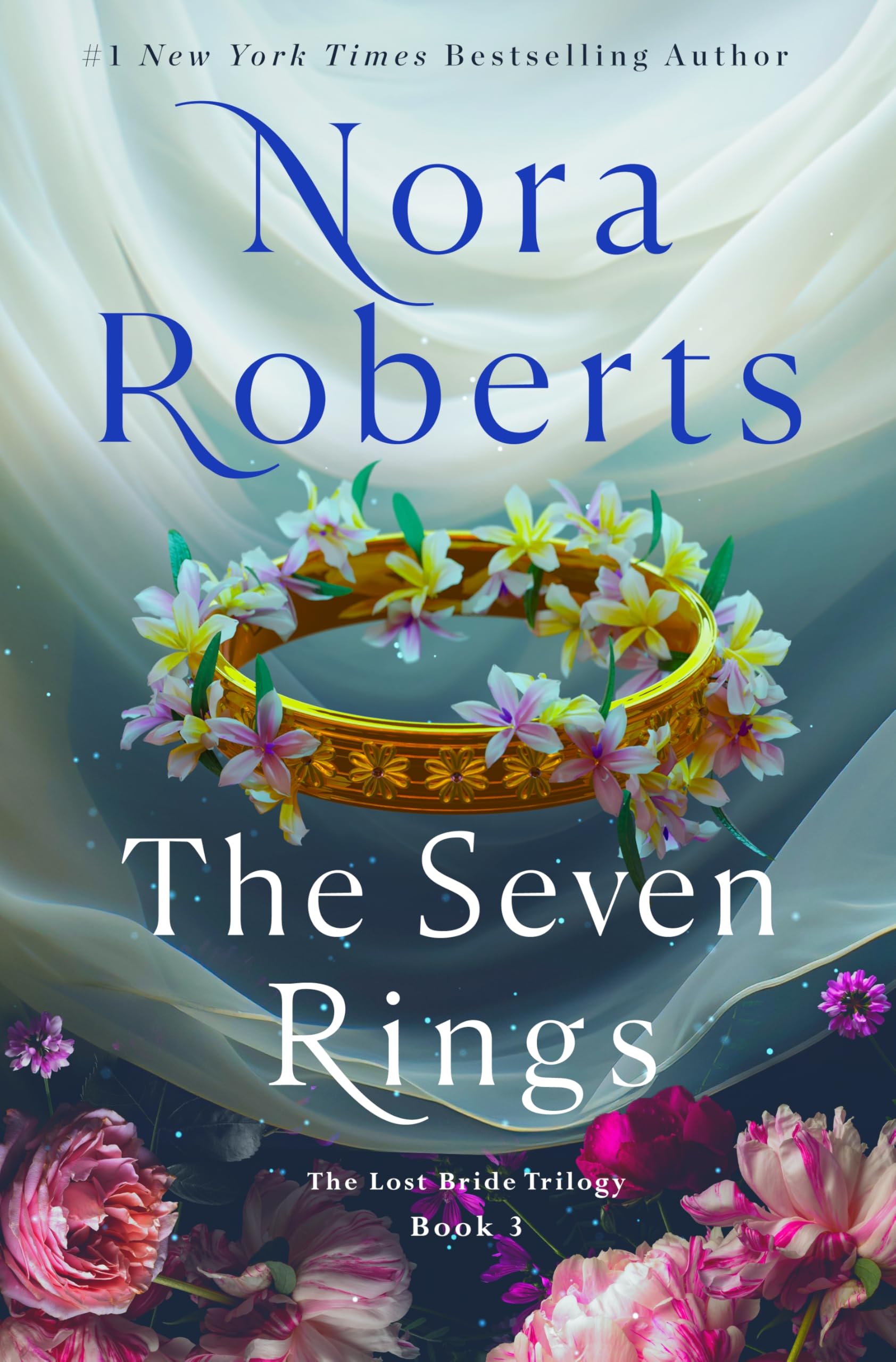
Detailed Summary
The Setup Nobody Asked For
Sonya MacTavish inherited Poole Manor back in book one, and by book three, she’s still banging on about breaking the family curse. The evil witch Hester Dobbs murdered seven Poole brides over two centuries, nicking their wedding rings to cement her power over the house. Sonya’s got the “gift of sight” (because of course she does), letting her and cousin Owen peek through a magic mirror to witness these historical murders.
Her boyfriend Trey (a lawyer who conveniently believes in ghosts now) and best mate Cleo (who cooks enough jambalaya to feed a small army) round out the Scooby gang. Together, they’re determined to find those seven rings, banish Hester, and reclaim the manor. Sounds ace, except it takes them 300+ pages of looking through bloody furniture to get anywhere.
The pacing is glacial. Roberts spends more time describing what everyone’s eating for dinner than building actual tension. Every chapter features detailed accounts of Cleo’s cooking, what wine they’re drinking, and how the dogs are doing. It’s cozy domestic fiction masquerading as paranormal suspense.
The Endless Furniture Safari
The bulk of this book—and I mean the absolute bulk—involves our foursome going room by room through Poole Manor, examining every piece of furniture for hidden rings. They open drawers. They check under cushions. They admire antique chairs. Riveting stuff, truly.
Between furniture hunts, we get flashback scenes through the magic mirror showing how each bride died. These should be the book’s highlights—seven brutal murders spanning centuries—but they’re weirdly sanitized. Hester Dobbs pushes brides down stairs, arranges spider attacks, and causes “accidents,” but it all feels toothless. There’s no visceral horror, no genuine dread.
Roberts tries to build Hester as this terrifying villain, but she mainly just slams doors and makes rooms cold. Ooh, scary. The witch occasionally manifests as a threatening shadow or sends a blackbird to attack, but these moments lack punch. For a spirit who’s supposedly murdered seven women, she’s surprisingly rubbish at finishing the job with Sonya.
Character Bloat and Ghost Helpers
The friendly ghosts are meant to add charm: little Jack (a 9-year-old boy with his dog), Molly (who cleans the house), and Clover (who plays music at convenient moments). They’re sweet, sure, but they also remove any real stakes. Hard to feel scared when you’ve got a housekeeping ghost doing your chores and a spectral DJ cueing up your emotional soundtrack.
Sonya and Trey’s relationship gets loads of page time—too much, honestly. He calls her “cutie” approximately 400 times (actual readers have complained), and their romance scenes feel copy-pasted from every other Roberts book. Zero chemistry, maximum cheese.
Cleo and Owen’s relationship develops in parallel, because apparently one couple isn’t enough. Both romances follow identical beats: doubt, attraction, declaration, repeat. The dual romance structure eats up chapters that should’ve been devoted to, you know, the actual curse-breaking plot.
The Climax That Wasn’t
After 350 pages of furniture fondling and meal descriptions, the actual confrontation with Hester happens in approximately one chapter. ONE. The buildup is endless, the payoff is instantaneous. They find the rings (hidden in predictable places), perform a ritual, and boom—Hester’s banished. No epic battle. No nail-biting tension. Just a quick magical whoosh and she’s gone.
The resolution feels rushed and unearned. Roberts spent so much time on domestic minutiae that the supernatural showdown gets shortchanged. Readers who slogged through hundreds of pages about antique restoration and Coke references (Cleo drinks an absurd amount of Coca-Cola) deserved a proper climax.
The epilogue wraps everything in a sickeningly sweet bow. Everyone’s happy, the manor’s beautiful, future weddings are planned. It’s pure saccharine—fine if you want a cozy ending, frustrating if you wanted the Gothic horror the premise promised.
Repetition, Repetition, Repetition
The book’s biggest sin? Saying the same things over and over. How many times do we need to hear about bringing “light and love” to the house? How many meals must be described in excruciating detail? How many scenes of characters discussing furniture arrangements can one trilogy sustain?
Roberts’ signature style—building emotional connections through daily routines—works in contemporary romance. In supernatural thriller territory, it’s a momentum killer. The abundance of slice-of-life scenes (mealtimes, dog walks, shopping trips) drains urgency from the curse-breaking mission.
Some readers love this cozy approach. Others (hi, that’s me) found it tedious. Your mileage will absolutely vary depending on whether you prioritize atmosphere over action. If you’re here for Gothic chills, prepare for disappointment. If you want supernatural-lite domestic drama, you’ll probably adore this.
Characters
Sonya MacTavish
Our protagonist inherited Poole Manor and the curse that comes with it. She’s a graphic designer with magical abilities, which sounds cool until you realize she mainly uses them to witness traumatic historical murders and feel sad about them. Sonya’s defining traits: stubborn, determined, and absolutely obsessed with restoring the manor to its former glory.
She’s competent and likeable enough, but lacks real edge. For someone facing down a centuries-old witch, she’s remarkably calm. Her biggest character arc involves accepting that she deserves love and happiness—standard romance novel fare. Roberts tries to make her compelling, but Sonya reads as generic Everywoman rather than a distinct personality.
Trey MacTavish
Sonya’s boyfriend and distant cousin (don’t worry, it’s distant enough to be non-creepy). He’s a lawyer who initially skeptical about ghosts before becoming a full believer. Trey’s main function is supportive boyfriend who occasionally does research and calls Sonya “cutie” until readers want to scream.
He’s protective without being controlling, successful without being arrogant—basically too perfect. No real flaws, no interesting internal conflicts. Just a Nice Guy who’s nice all the time. Multiple reviewers found him cringeworthy, and they’re not wrong. His dialogue feels lifted from every other Roberts male lead.
Cleo
Sonya’s best friend from New Orleans, a Creole artist with a killer Southern accent (at least in the audiobook). Cleo’s personality revolves entirely around: 1) cooking amazing food, 2) being sassy, 3) falling for Owen. She’s the designated Best Friend character who exists to support Sonya and provide comic relief.
Roberts gives her more personality than Trey, at least. Cleo’s got backbone and speaks her mind. But she’s still secondary to Sonya’s journey, never quite getting her own full storyline. Her kitchen witch abilities (literally cooking with intention) are underutilized.
Owen Poole
Sonya’s cousin and fellow “seer” who can witness the past through the magic mirror. He’s a ship builder and furniture maker—very handy when you need antique restoration. Owen’s the strong, silent type with hidden depths, which translates to “doesn’t say much but looks brooding.”
His romance with Cleo develops identically to Sonya and Trey’s, just with different names. He’s protective, she’s independent, they clash then fall in love. Rinse, repeat. Owen deserved more individual characterization beyond “hot craftsman boyfriend.”
Hester Dobbs
The villain, a centuries-old witch who murdered seven brides out of jealous rage. Hester wanted Arthur Poole for herself, so she cursed his bloodline when he rejected her. She’s meant to be terrifying—instead, she’s ineffective.
For a powerful witch, Hester sure fails a lot. She’s had TWO HUNDRED YEARS to perfect her murder techniques, yet Sonya survives every attack. The character needed to be genuinely threatening, but Roberts keeps her safely contained as a door-slamming nuisance until the rushed finale.
The Ghosts: Clover, Jack, Molly, and the Seven Brides
The friendly spirits add warmth but kill tension. Clover’s a flapper-era bride who DJs emotional moments with period-appropriate music. Jack’s a 9-year-old boy who plays with his ghostly dog and teaches tricks to the living dogs. Molly’s a former servant who cleans the house unprompted.
They’re sweet and Roberts writes them with genuine affection. The seven murdered brides get individual backstories revealed through mirror visions—these scenes are genuinely touching but lack horror impact. Hard to be scared when the ghosts are basically helpful roommates.
Compare With Other Works
Gothic Romance: The Rebecca Connection
Roberts clearly draws inspiration from Daphne du Maurier’s Rebecca—the massive inherited estate, the oppressive presence of a dead/undead woman, the new bride trying to claim her place. But where Rebecca masterfully builds atmospheric dread and psychological tension, The Seven Rings opts for cozy domesticity.
Du Maurier understood that Gothic romance thrives on ambiguity and suppressed menace. The unnamed narrator of Rebecca feels constantly threatened by the specter of Maxim’s first wife. Manderley itself becomes a character, oppressive and alive with secrets. Roberts attempts similar vibes with Poole Manor but undercuts them with excessive homeyness.
Rebecca keeps readers off-balance, never quite sure who to trust or what really happened. The Seven Rings telegraphs everything. You know Hester’s evil, you know Sonya will triumph, you know everyone gets their happy ending. Zero ambiguity means zero tension.
Modern Paranormal Romance: Where Are the Teeth?
Compared to contemporary paranormal romance by authors like Nalini Singh or Ilona Andrews, Roberts’ approach feels dated and toothless. Modern paranormal romance isn’t afraid to get dark, violent, and genuinely scary while maintaining romantic elements. Roberts plays it safe.
The best paranormal romance balances swoon-worthy relationships with actual stakes and danger. The Seven Rings frontloads romance and domesticity, treating the supernatural elements as window dressing. It’s Romance with ghost wallpaper, not true paranormal suspense.
Roberts’ Own Bibliography
Fans of Roberts’ Chronicles of The One trilogy (apocalyptic fantasy with actual stakes) or her J.D. Robb In Death series (futuristic murder mysteries) might find The Lost Bride Trilogy disappointingly tame. Those series showcase Roberts’ ability to write compelling suspense and danger.
This trilogy leans heavily on her cozy contemporary romance style—extensive meal descriptions, found family dynamics, small-town charm. That’s fine for straight romance, but it sabotages the Gothic horror premise. The book can’t decide if it’s haunted house thriller or Hallmark movie with ghosts.
Achievement
The Numbers Game
Nora Roberts isn’t called the Queen of Romance for nothing. With over 500 million books sold globally and a net worth of $420 million, she’s a publishing juggernaut. She’s published 250+ novels, with 124 titles hitting the New York Times Best Seller list and 29 debuting at number one.
Her works have spent a combined 948 weeks on the Times list, including 148 weeks at number one. Since 1999, every single Roberts novel has been a Times bestseller. These aren’t flukes—they’re sustained dominance.
The Lost Bride Trilogy continues her bestselling streak. Inheritance (book one) scored a 4.28 Goodreads rating with 66,877 ratings. The Mirror (book two) earned 4.19 with 38,876 ratings. The Seven Rings currently sits at 4.33 with 420+ ratings (pre-publication reviews).
Critical Reception: Mixed Bag
While sales are stellar, critical response to The Seven Rings is decidedly mixed. Goodreads reviews show a pattern: die-hard Roberts fans love it unconditionally, while readers expecting genuine horror feel cheated.
Common complaints include: pacing issues (the first half drags), excessive domestic detail (too much furniture talk), anticlimactic resolution (one-chapter finale after 300+ pages of buildup), and repetitive writing (how many times can you describe bringing light to the house?).
Positive reviews praise: character relationships (especially the found family dynamic), atmospheric setting (Maine coastal vibes), emotional depth (the brides’ backstories are touching), and Brittany Pressley’s excellent audiobook narration.
Series Performance
The trilogy shows declining ratings across books—Inheritance (4.28) to The Mirror (4.19) to The Seven Rings (4.33). Wait, that last one went UP? Pre-publication ratings often skew high because only approved early reviewers rate them. Expect that 4.33 to drop once general readers dive in.
Multiple reviewers noted the trilogy could’ve been a duology. The stretched-out plot and repetitive middle sections suggest Roberts (or her publisher) prioritized quantity over tight storytelling. Three books sell better than two, even if the story doesn’t justify the length.
What Actually Works
Audiobook Excellence
Narrator Brittany Pressley deserves major props. Her performance elevates the material, giving distinct voices to each character and nailing Cleo’s Southern accent. Multiple reviewers stated the audiobook version significantly improved their experience. If you’re determined to read this trilogy, go audio.
Found Family Feels
Roberts excels at writing warm, supportive relationships. The bond between Sonya, Cleo, Trey, and Owen feels genuine. Their group dynamic—two couples who are also best friends—works well. The chosen family theme resonates, even when the supernatural plot falters.
Historical Brides’ Stories
The glimpses into past eras—showing each bride’s life before Hester murdered them—provide the book’s most emotionally resonant moments. Roberts clearly researched different historical periods, and these sections have weight. They deserved more page time.
The Verdict
The Seven Rings exemplifies what happens when an author’s established style clashes with genre requirements. Roberts writes excellent contemporary romance with her signature blend of domestic detail and relationship development. But Gothic paranormal suspense demands different pacing, darker stakes, and genuine menace.
This book refuses to commit. It wants to be cozy and scary, romantic and horrifying, slow-burn and thrilling. You can’t have it all ways, and the result is a muddled mess that satisfies neither camp fully.
Die-hard Nora Roberts completists will read it regardless (and probably enjoy it because it’s pure Roberts). Paranormal romance fans expecting actual scares and solid worldbuilding should look elsewhere. Gothic horror enthusiasts will weep at the wasted potential.
The book isn’t bad—it’s just disappointingly safe. Seven murdered brides should equal genuine horror. Instead, we got a Hallmark haunted house special with better production values. If Roberts had either leaned fully into the horror OR dropped the supernatural pretense for straight romance, this could’ve worked. The halfway approach pleases no one completely.
Rating: 2.5/5 Stars
Too much furniture cataloguing, not enough witch-burning. Literally.
Right, that’s my take on this overstuffed, under-scary trilogy finale. Disagree? Think I’m being too harsh on Roberts? Reckon the cozy vibes are exactly what Gothic romance needs? Drop a comment below and tell me I’m wrong—I can take it. Or if you actually loved this book and think furniture descriptions are peak literature, I want to hear that too. Let’s have it out in the comments, yeah?

G'day, mates! As an Aussie bookworm who's devoured more fantasy epics than a dingo at a barbie, I'm diving into Samantha Shannon's latest gem, Among the Burning Flowers (The Roots of Chaos #0.2). This prequel ...
What if a steamy kink club in Paris couldn't save a book from feeling as flat as a day-old lamington? Sara Cate's The Good Girl Effect promises a sizzling mix of grief, bondage, and forbidden ...