Best Offer Wins Review: 11 Bidding Wars, 288 Pages—Too Long?
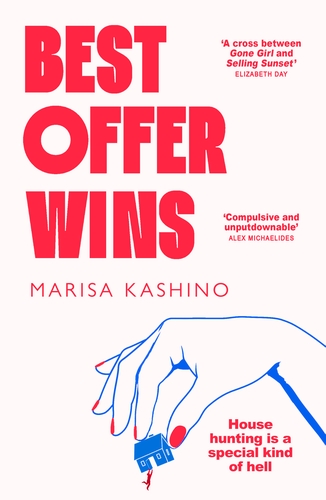
Margo Miyake loses 11 bidding wars across 18 months in Washington DC’s brutal housing market before completely losing her mind. This 37-year-old publicist turns stalker, trespasser, and worse—all for a house in Bethesda that might save her crumbling marriage and delayed baby plans. Marisa Kashino’s 288-page debut thriller scored a 4.1/5 on Goodreads and landed a Hulu adaptation before hitting shelves on November 25, 2025. But does unhinged equal entertaining, or just exhausting?
Stick around to discover:
- Why 288 pages feels like 400 when Margo won’t shut up
- The exact moment stalking crosses into “mate, call the cops” territory
- Whether that “jaw-dropping twist” actually earns the hype
- How this stacks against Gone Girl (spoiler: it doesn’t)
Detailed Summary
Part One: The Descent Begins
Margo Miyake shares a cramped apartment with her husband Ian in Washington DC, and she’s absolutely done with it. Eighteen months of house hunting have yielded exactly zero homes and eleven soul-crushing bidding war losses. Every open house brings cash offers she can’t match, every “perfect” property slips through her fingers, and her biological clock is ticking louder than a bomb. She desperately wants a house in the suburbs—specifically Bethesda, Maryland—where she can finally start a family and prove she’s “made it” despite lacking the generational wealth and connections that grease DC’s wheels.[2][4][7]
Then Margo gets a tip: the perfect house in the perfect neighborhood will hit the market in one month. Before the masses descend with their obscene all-cash offers, she decides to infiltrate the homeowners’ lives and secure an off-market deal. What starts as “harmless” research quickly spirals into full-blown obsession. Margo begins stalking the current owners, learning their routines, their preferences, their vulnerabilities. She justifies every boundary violation with increasingly desperate logic—a little reconnaissance never hurt anyone, right?[3][8][2]
The Escalation
Stalking morphs into trespassing as Margo crosses lines she swore she’d never approach. She shows up at the homeowners’ social events uninvited, manufactures “coincidental” encounters, and weaves elaborate lies to ingratiate herself into their circle. Her husband Ian grows increasingly uncomfortable with her tactics, but Margo dismisses his concerns. This house represents everything she’s been denied—stability, status, the life her wealthy friends already enjoy while she’s stuck in a shoebox. Her resentment festers: she’s worked ten times harder than everyone around her yet has nothing to show for it.[9][8][7][10]
The narrative unfolds through Margo’s first-person perspective, giving readers an uncomfortably intimate seat inside her deteriorating mental state. Her internal monologue veers from darkly funny observations about DC’s housing insanity to genuinely unsettling rationalizations for behavior that would land most people with restraining orders. Kashino, a former real estate journalist for Washingtonian magazine, peppers the story with authentic details about the Beltway market’s cutthroat competition—all-cash offers, waived contingencies, bidding wars that drive prices $100K over asking. The satire cuts deep, exposing how the American Dream has mutated into a nightmare of FOMO and class anxiety.[11][7][12][2][9]
Margo’s Schemes Intensify
Midway through, Margo hits a snag in her carefully constructed plan. The homeowners aren’t responding to her manipulations as expected, forcing her to double down on increasingly reckless strategies. Without spoiling specifics, her methods grow so unhinged that even readers who initially sympathized begin questioning whether they’re rooting for a protagonist or a straight-up villain. The pacing accelerates as consequences stack up—near-misses with discovery, Ian’s growing suspicion, and Margo’s own guilt wrestling with her overwhelming desire.[10][11][9]
Her professional life as a publicist suffers as the house obsession consumes every waking moment. Kashino explores how ambition curdles into avarice, how the housing crisis doesn’t just lock millennials out of homeownership but warps their psychology. Margo embodies a generation told they could have it all if they worked hard enough, only to discover the game was rigged from the start. Her anger feels justified; her actions emphatically do not.[4][7][2][11]
The Climax
The final act takes a darker turn than the satirical first half suggests. Just when Margo believes she’s secured her victory, the novel delivers its much-hyped twist. Reviews split on whether this ending works—some call it “jaw-dropping” and “shocking,” while others find it either predictable or tonally jarring after 250 pages of dark comedy. The resolution forces readers to confront uncomfortable questions about how far they’d go for their own dream house, and whether Margo’s journey was cautionary tale or aspirational fantasy.[13][14][15][3][9]
Kashino doesn’t offer easy answers or redemptive arcs. The book concludes with moral ambiguity that will either feel bracingly honest or frustratingly unresolved, depending on your tolerance for antiheroes who cross every line. One thing’s certain: you’ll never look at real estate listings the same way.[16][11][9]
Characters
Margo Miyake
The 37-year-old publicist driving this trainwreck is simultaneously relatable and repulsive. She’s whip-smart, funny, and skilled at her job—problem-solving and investigative research come naturally from her PR background. But she’s also entitled, self-absorbed, and willing to destroy others’ lives for her own gain. Readers note her “unbearable” nature and unhinged decision-making that worsens with every chapter. As an Asian American woman navigating DC’s old-money networks without family wealth or connections, Margo’s resentment carries legitimate weight. She’s watched mediocre white colleagues coast on privilege while she grinds constantly yet still can’t afford what they inherit. This class rage makes her initially sympathetic—until her actions venture into felony territory.[7][9][4][10]
Ian Miyake
Margo’s husband exists primarily as a sounding board and occasional voice of reason. He’s described as “exhausted” by Margo’s obsession, growing increasingly uncomfortable as her schemes escalate. Ian doesn’t “cover himself with glory” according to reviews, suggesting he enables or fails to adequately intervene in his wife’s spiral. The marriage subplot reveals cracks that predate the house hunt—delayed parenthood, financial stress, and fundamental disagreements about what constitutes acceptable behavior. Their relationship serves as collateral damage in Margo’s single-minded pursuit, raising questions about whether any house could salvage what’s already broken.[17][3][9][4]
The Homeowners
The current residents remain somewhat enigmatic by design—Kashino reveals them through Margo’s increasingly warped lens. As Margo infiltrates their lives, readers piece together their circumstances, their reasons for selling, and why Margo’s tactics may or may not succeed. Their characterization serves the plot’s needs rather than offering fully realized perspectives, which some readers found disappointing.[9]
| Character | Role | Key Trait | Reader Response |
|---|---|---|---|
| Margo Miyake | Protagonist | Obsessive, unhinged | Love-hate, mostly hate |
| Ian Miyake | Husband | Exhausted enabler | Underwhelming presence |
| Homeowners | Targets | Plot devices | Underdeveloped |
Plot Twists?
The Unreliable Narrator Trap
Margo narrates her own descent, which means readers only access reality through her distorted perspective. Kashino plays with this unreliability brilliantly at times—Margo’s justifications sound almost reasonable until you step back and realize she’s describing stalking and breaking-and-entering. The “harmless” reconnaissance she describes would absolutely land her in court. This narrative technique mirrors Gone Girl’s manipulative storytelling, though Kashino lacks Gillian Flynn’s surgical precision. Margo’s voice entertains with snarky observations about DC’s housing circus, but her constant rationalizations grow tiresome around page 150 when you realize she’s just going to keep escalating without meaningful self-awareness.[14][8][18][19][11][10][9]
The Midpoint Snag
Halfway through, Margo’s carefully laid plans hit an unexpected obstacle that forces improvisation. This snag pushes her past the point of plausible deniability—before, she could claim overenthusiastic research; after, she’s committed acts with legal consequences. Reviews suggest this turning point either hooks readers completely or becomes the moment they check out emotionally from Margo’s journey. The twist itself isn’t particularly shocking for seasoned thriller readers, but it does effectively raise the stakes.[10][9]
The Final Reveal
The book’s ending generated polarized reactions. Some readers praised the “jaw-dropping twist that closes the deal” and found themselves stunned by the final pages. Others felt the resolution either delivered exactly what they predicted or veered too dark after investing in Margo’s darkly comic voice. Without spoiling specifics, the ending refuses easy catharsis—Margo doesn’t get punished in traditional thriller fashion, nor does she learn meaningful lessons. This ambiguous conclusion will either feel refreshingly subversive or like Kashino chickened out of committing to full satire or full psychological horror.[15][11][14][9]
Compare With Other Works
Gone Girl (2012)
Alex Michaelides, author of The Silent Patient, blurbed that he hasn’t been “so gripped by a narrative voice” since Gone Girl. That’s generous marketing speak, not honest comparison. Gillian Flynn’s thriller revolutionized the unreliable narrator genre with Amy Dunne’s sociopathic brilliance—every twist felt earned, every manipulation surgically executed. Margo Miyake, by contrast, stumbles through her schemes with messy desperation rather than calculated cunning. Flynn balanced dark humor with genuine menace; Kashino tilts heavily toward comedy until she suddenly doesn’t, creating tonal whiplash. Gone Girl’s cultural impact stemmed from its scalpel-sharp dissection of marriage and media; Best Offer Wins offers timely commentary on housing but lacks that deeper psychological insight.[18][2][13][14][9]
Yellowface (2023)
The R.F. Kuang comparison holds more water. Both novels feature morally compromised Asian American protagonists whose ambition overrides ethics, both employ unreliable first-person narration, and both satirize contemporary issues (publishing vs. real estate). June Hayward’s theft of her dead friend’s manuscript parallels Margo’s boundary violations—both convince themselves their actions are justified because the system is rigged. Kuang’s prose cuts sharper, her satire lands harder, and her social commentary on cultural appropriation and publishing’s diversity performativity carries more weight than Kashino’s housing crisis critique. Where Yellowface genuinely unsettled readers with its exploration of racism and privilege, Best Offer Wins mostly just exhausts them with Margo’s relentless scheming.[20][21][11][14][9]
The Nest and Other Class Satires
Kashino’s exploration of class anxiety and millennial financial precarity echoes novels like Cynthia D’Aprix Sweeney’s The Nest, but without the ensemble cast to balance the neurosis. Margo’s resentment toward wealthy friends who effortlessly achieve what she can’t—homes, stability, babies—resonates with anyone priced out of homeownership. The satire works when Kashino skewers DC’s absurd housing market with specific details like all-cash offers and bidding wars that add $100K over asking. It falters when Margo’s internal monologue repeats the same grievances for 288 pages without evolution.[7][9]
| Element | Best Offer Wins | Gone Girl | Yellowface |
|---|---|---|---|
| Narrator | Desperate, messy | Calculating, brilliant | Ambitious, defensive |
| Pacing | Uneven, drags | Relentless, tight | Fast, propulsive |
| Satire | Housing market | Marriage, media | Publishing, race |
| Ending | Polarizing, ambiguous | Iconic, shocking | Dark, unsettling |
| Cultural impact | TBD | Massive | Significant |


Achievement
Marisa Kashino’s debut landed impressive accolades before publication, suggesting strong industry buzz but limited mainstream breakthrough. Celadon Books (a Macmillan imprint) preempted the manuscript in what would have been a competitive auction—publishers clearly saw commercial potential. Doubleday UK acquired British rights in a separate auction, indicating international interest. The Goodreads rating of 4.1/5 stars places it solidly in “good but not great” territory—respectable for a debut, but hardly the next Gone Girl phenomenon marketers promised.[22][23][24][6][1]
November 2025 Selection Honors:
- Good Housekeeping Book Club pick[16]
- Book of the Month selection (one of 5-7 featured titles)[23]
- Listed among “Most Anticipated Books of Fall 2025” on multiple sites[25][23]
Media Adaptation:
Hulu snagged series rights in July 2025 via competitive bidding, with Greta Lee (Past Lives) set to star and executive produce. Suzanne Heathcote (Killing Eve) will write the adaptation, with 20th Television producing. This pre-publication deal signals Hollywood’s faith in the premise’s screen potential, though plenty of optioned books never make it to production.[6][26]
Sales Data:
Hard numbers remain elusive—the book didn’t crack the November 12, 2025 IndieNext hardcover fiction bestseller list (which tracks independent bookstore sales). The New York Times bestseller lists for early November 2025 similarly omit Best Offer Wins, suggesting modest rather than blockbuster sales. For context, it’s selling in a crowded fall thriller market against heavy hitters like new books from John Grisham, Dan Brown, and Louise Penny.[27][28][29]
Critical Reception:
Trade publications offered measured praise—Publishers Weekly called it a book with “winning voice” that required minimal editorial work. The Bookseller noted Kashino “knows of what she writes” given her real estate journalism background. Social media buzz appears moderate rather than BookTok explosive—the novel hasn’t generated the viral TikTok moment that drives mass-market breakouts. With 42 million #BookTok posts generating billions of views and resurrecting backlist titles, Best Offer Wins needed that organic social push to transcend niche thriller status. So far, crickets.[12][30][31][32][22]
Why It Frustrates
The Pacing Problem
Multiple reviewers flagged inconsistent pacing and “too much rambling” as major flaws. At 288 pages, this should be a tight thriller you devour in one sitting. Instead, it drags through the middle third as Margo rehashes the same grievances and justifications without plot advancement. Kashino’s journalism background shows in dense descriptive passages that read like magazine features rather than propulsive fiction. The novel needed a ruthless editor to cut 50 pages of Margo’s internal spiraling.[5][9][7]
Margo Fatigue
“I wanted a break from Margo!! She was unbearable!” one Goodreads reviewer captured the core issue. First-person narration traps readers inside the protagonist’s head for every single scene—there’s no relief from Margo’s voice, no alternative perspectives to provide balance. By page 200, her schtick grows exhausting. Where Gone Girl gave readers alternating viewpoints and time periods, Best Offer Wins commits to a single unhinged narrator for 288 pages straight. It’s like being stuck at a dinner party with someone who won’t stop complaining about house hunting—accurate social satire, terrible reading experience.[11][9]
The Likability Trap
Kashino wants readers to simultaneously root for and recoil from Margo, but this tonal tightrope often collapses. The “you’ll root for her, even as you gasp in disbelief” marketing promise assumes readers will find Margo’s transgressions charming or relatable enough to excuse. Instead, many readers just found her exhausting and stopped caring whether she got the house or ended up in jail. The novel succeeds when it leans into full satire—Margo as embodiment of millennial housing desperation taken to absurd extremes. It flounders when it asks for genuine emotional investment in her marriage or baby plans.[2][3][4][11][9]
Derivative Comparisons
The Gone Girl and Yellowface comparisons ultimately hurt more than help. They set expectations Kashino can’t meet, positioning her debut against genre-defining novels rather than letting it succeed on modest terms. Best Offer Wins offers a perfectly serviceable thriller with timely social commentary—but it’s not revolutionary, not particularly original, and not worth the breathless “next Gone Girl!” hype. Kashino writes competently but not brilliantly; her satire lands but doesn’t cut deep; her protagonist intrigues but ultimately exhausts.[14][18][9]
The Verdict
If you loved: Unhinged female protagonists, housing market schadenfreude, or need validation that everyone house hunting in 2020-2025 went slightly mad.[33]
If you’ll hate it: You want tight plotting, earned twists, or protagonists who don’t repeat the same complaints for 280 pages.[9]
Kashino shows promise as a satirist, but this debut needed another revision before rushing to capitalize on housing crisis timeliness. Sometimes the best offer doesn’t actually win—and maybe Margo should’ve kept renting.[22]
Smash that donate button if this review saved you 288 pages of your life, or drop a comment below: Would you stalk someone for your dream house? Be someone for your dream house? Be honest.

What if I told you two heartbroken women, a psychic library cat, and 300+ pages of Alabama charm still couldn't make me care? The Forget-Me-Not Library by Heather Webber drops Juliet Nightingale—lightning strike survivor with ...
:max_bytes(150000):strip_icc():focal(719x365:721x367)/What-We-Can-Know-by-Ian-McEwan-020725-tout-ffd356f2b5f348c283f8530225900886.jpg "Book Review: What We Can Know – 7 Lies That Sink the Future")
A flooded Britain in 2119, where a lonely academic obsesses over a birthday poem that vanished in 2014 like a fart in a cyclone. Francis Blundy, some hotshot poet, recited 210 lines of verse to ...