Keeper of Lost Children Review: 5,000 Brown Babies Lost, Can 1 Woman Save Them?
Post-WWII Germany hides 5,000 to 7,000 mixed-race children born to Black American GIs and German mothers. Abandoned in orphanages, rejected by society, these “Brown Babies” faced erasure from history. Ethel Gathers, a journalist married to a US Army officer, sees them and refuses to look away—launching an adoption program that relocated over 500 children to America.
Three timelines collide: Ozzie Phillips falls for a German woman in 1948 and loses everything. Sophia Clark escapes poverty through a 1965 boarding school scholarship and discovers her identity isn’t what she thought. Ethel ties them together through adoption paperwork, military red tape, and sheer determination.
Key points
How 5,000 abandoned children became pawns in international racism
Why Germany stopped US adoptions in the 1950s (America’s segregation was too brutal)
The identity crisis that destroys Sophia when she learns the truth
Whether Sadeqa Johnson topped her Reese’s Book Club hit

Detailed Summary
Ozzie’s Timeline: 1948-1951
Ozzie Phillips enlists in the US Army in 1948, two weeks after President Truman signs the military desegregation order. He’s from Philadelphia, scored highest on aptitude tests, and dreams of Intelligence assignments. Reality hits fast—Black soldiers still get menial labour regardless of Truman’s decree.
Stationed in Mannheim, Germany, Ozzie meets Jelka, a German woman struggling in the rubble of post-war devastation. Her country’s destroyed, resources scarce, joy non-existent. They fall for each other—hard and fast. In Germany, interracial relationships don’t carry the death sentence they do in America. White German women don’t risk lynching their Black partners. It feels like freedom.
Jelka becomes pregnant. Ozzie wants marriage immediately. He fills out paperwork, follows military protocol, waits for approval. The Army transfers him without warning before permission comes through. He’s ripped away from Jelka and their unborn child, reassigned without explanation or recourse.
He tries everything—letters, official requests, going through command chains. The military stonewalls him. No information about Jelka. No confirmation if she had the baby. No way to contact her. He’s functionally disappeared from their lives by military decree.
Years pass. Ozzie carries the guilt like shrapnel—loving someone, creating life with them, then vanishing involuntarily. He returns to Philadelphia broken, wondering if his child exists and hates him for abandonment.
Ethel’s Timeline: 1950-1960s
Ethel Gathers arrives in Mannheim, Germany in 1950 as an Army officer’s wife. Her husband Bert holds rank, which means Ethel navigates the brutal social hierarchy of military wives—women who measure worth through husbands’ positions.
She’s childless. Years of trying, hoping, grieving miscarriages. The emptiness gnaws at her. One day walking through Mannheim’s rubble, she sees mixed-race children following a nun. Little faces—brown skin, tight curls, wide eyes that have seen too much rejection.
She follows them to an orphanage. Discovers thousands of children born to Black American soldiers and German mothers. The fathers got transferred or shipped home. German mothers faced unemployment, family rejection, societal shaming for having mixed-race babies. Many couldn’t keep them. The orphanages overflow.
Ethel sees purpose. She’s a journalist—she knows how to research, organize, advocate. She starts documenting these children, contacting Black families in America who might adopt, navigating bureaucracy that wasn’t designed to help Brown Babies.
She and Bert adopt children themselves—eventually 12 total. Their home becomes chaos and joy. But Ethel doesn’t stop there. She founds the Brown Babies Adoption Program, matching over 500 children with American families. Each adoption requires mountains of paperwork—birth certificates, travel documents, immigration approvals, home studies.
The work consumes her. Military brass resist—these children are embarrassing evidence of interracial relationships. German officials worry about sending children to segregated America. Ethel pushes through every obstacle with journalism skills and righteous fury.
By the late 1950s, Germany halts US adoptions. America’s racial violence is international news—lynchings, bombings, segregation. Germany integrates Brown Babies into schools before America does. The hypocrisy’s too loud. Germany redirects adoptions to Denmark instead.
Ethel’s program closes, but 500+ children found families because of her. The adoptees grow up American, many forbidden from speaking German in their new homes. Some never learn they’re adopted. Others spend decades searching for birth parents.
Sophia’s Timeline: 1965-1968
Sophia Clark is 15 years old, living on a Maryland farm that functions like slavery. Her parents work her and her siblings like unpaid labour—grueling hours, no tenderness, constant criticism. She dreams of smelling nice, wearing clothes that fit, escaping.
A scholarship offer arrives—prestigious boarding school suddenly accepting Black students through integration efforts. Sophia sees salvation. Her mother Ma Deary resents her for leaving, for wanting better, for succeeding where the family wanted her trapped.
At school, Sophia’s one of few Black students on a campus of white faces. She joins the basketball team, navigates racist microaggressions, fights for her place. Academically gifted but socially isolated.
She meets Max, a classmate whose adoption story fascinates her. He was a Brown Baby—born in Germany, adopted through Ethel Gathers’ program, brought to America as a child. He knows fragments of his origin but not the complete truth.
Sophia starts noticing things about herself. She doesn’t look like her siblings. Her features differ from her parents’. Ma Deary’s cruelty feels less like maternal harshness and more like something else—resentment toward a child that isn’t biologically hers.
Research begins. Sophia digs through Max’s adoption stories, searches for Ethel Gathers’ program records. The pieces align devastatingly. She’s not Sophia Clark by birth—she’s one of Ethel’s Brown Babies, adopted as a small child, raised by people who never told her.
The identity crisis shatters everything. Who is she? Who were her birth parents? Why did no one tell her? Was she stolen or saved? The distinction matters emotionally even if the outcome’s identical.
She tracks down Ethel Gathers, now older, still carrying the weight of 500+ adoptions. Ethel recognizes Sophia’s case—remembers her file. She provides what information exists, but adoption records from the 1950s are incomplete. Many biological parents never documented.
Sophia confronts Ma Deary and her father. They admit the adoption but frame it as rescue—giving her opportunities she wouldn’t have had in Germany. Sophia can’t reconcile this with the abuse and resentment she experienced. If they “saved” her, why did they treat her so poorly?
The book ends without neat resolution. Sophia graduates, armed with partial truth and permanent questions. She knows she’s German-born, knows Ethel facilitated her adoption, but her birth parents’ identities remain unknown. The erasure built into the Brown Baby program means many adoptees never get complete answers.
The Connections Revealed
The timelines converge through adoption paperwork. Ozzie and Jelka’s child—the baby he never met—went to Ethel’s orphanage. Ethel placed that child with an American family. That child could be one of several characters, including Sophia.
The book suggests but doesn’t definitively confirm biological connections. Some readers report frustration with ambiguity. Others appreciate that real adoptees often live with uncertainty—records destroyed, parents untraceable, identities permanently fragmented.
Ethel’s program saved lives but also severed connections. Children lost language, culture, biological family ties. The adoptive families varied—some loving, some abusive like Sophia’s. The program’s morality exists in grey space: necessary rescue or cultural erasure?
Characters
Ethel Gathers
Based on real-life journalist Mabel Grammer, Ethel’s the powerhouse who made the impossible happen. She’s childless, which could’ve made her bitter—instead she mothers 500+ through bureaucracy and determination.
Key Traits:
Journalist skills weaponized for good
Navigates military wife hierarchy without losing herself
Adopts 12 children personally while placing 500+ more
Faces systemic resistance with strategic persistence
Deals with infertility by redefining motherhood
Ozzie Phillips
The soldier who loved across racial lines and paid with permanent separation. His arc explores how military systems destroyed Black families through “neutral” policies like sudden transfers.
Character Arc:
Enlists hoping desegregation means equality (it doesn’t)
Falls for Jelka; experiences love without American racial terror
Loses everything through military bureaucracy
Carries guilt for involuntary abandonment
Represents thousands of Black GIs with German children they never knew
Sophia Clark
The boarding school scholarship student whose identity revelation destroys and rebuilds her. She’s academically brilliant, emotionally complex, justifiably angry.
Development:
Escapes farm servitude through intellect
Navigates white boarding school as Black integration pioneer
Other WorksVictorious Review: Does Victor Vale Survive the Finale?
Early review — based on advance copies and pre-publication material. The final edition may change. 544 pages. Three books. One friendship that has spent years turning itself into a weapon. Victorious is V. E. Schwab's ...
Book Review: Eldritch by Keri Lake – 8 Twisty Flops That’ll Bore Ya Silly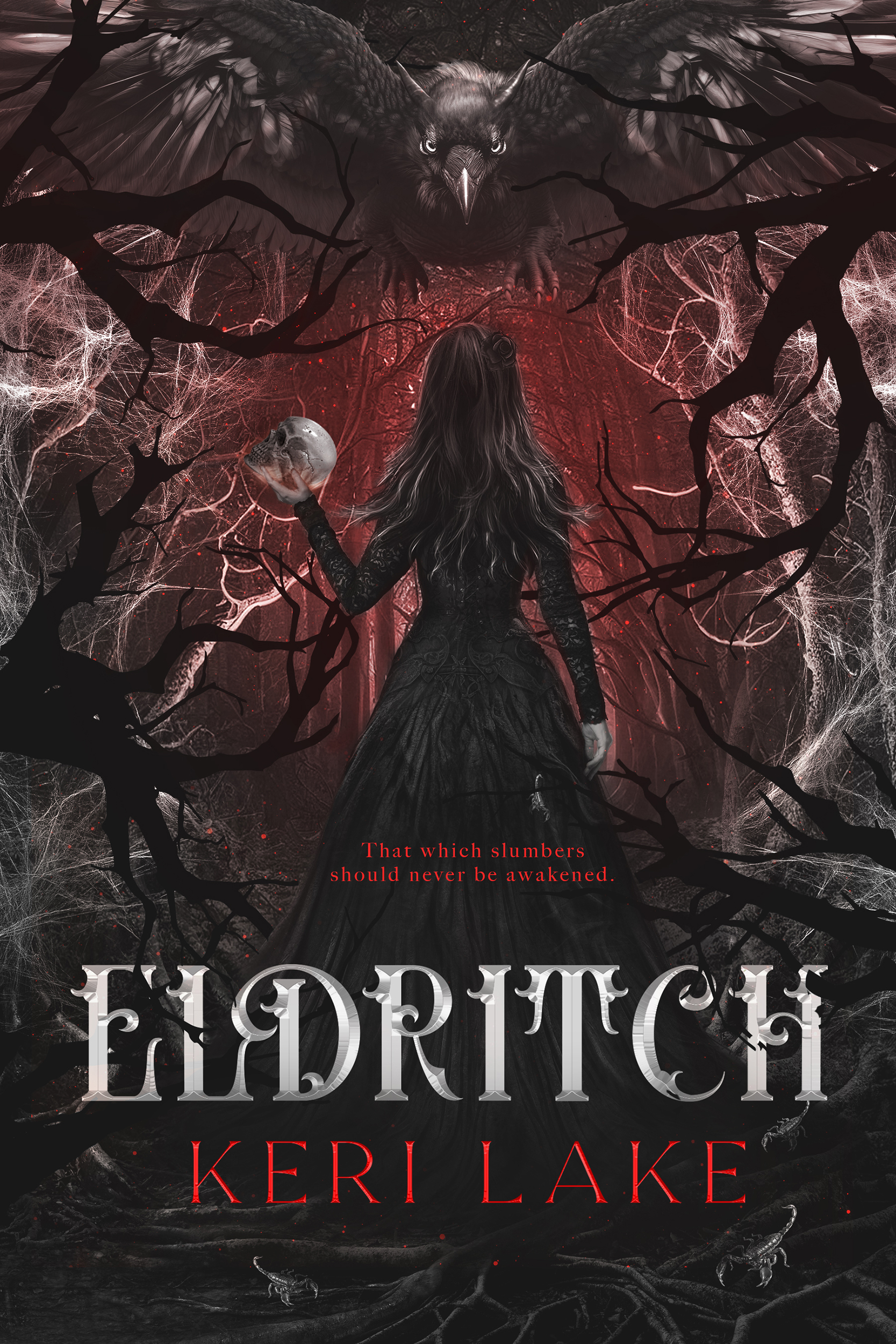
G'day, you lot of dark fantasy junkies! Imagine this: you're trudging through a foggy bog of flesh-munching monsters and cursed blokes, only to trip over plot holes bigger than the Sydney Harbour. What if the ...
Discovers adoption truth that recontextualizes her life
Confronts adoptive parents who “saved” but mistreated her
Ends with partial answers and permanent questions
Jelka
The German mother who loved Ozzie and lost him to military orders. Her character represents German women who faced impossible choices—keep children and face poverty/rejection, or surrender them to orphanages.
Role:
Post-war German struggling with devastation
Pregnant and abandoned (not by choice)
Represents hundreds of German mothers erased from Brown Baby narratives
| Character | Timeline | Central Conflict | Historical Representation |
|---|---|---|---|
| Ethel Gathers | 1950-1960s | Infertility → adoption activism | Real Mabel Grammer’s program |
| Ozzie Phillips | 1948-1951 | Military racism + forced separation | 500,000 Black WWII soldiers |
| Sophia Clark | 1965-1968 | Identity crisis after adoption reveal | 500+ Brown Baby adoptees |
| Jelka | 1948-1951 | Pregnant + abandoned by military order | German mothers erased from history |
Compare With Other Works
The House of Eve by Sadeqa Johnson: Johnson’s previous bestseller—Reese’s Book Club pick, instant NYT bestseller. Explored 1950s Philadelphia/DC, motherhood, race, class. Both books feature dual timelines, adoption themes, Black women navigating impossible systems. Keeper feels broader historically—spanning 20 years and two countries. House of Eve was tighter, more intimate.
Yellow Wife by Sadeqa Johnson: Johnson’s breakthrough novel about enslaved woman in Virginia. Darker, more brutal than Keeper. Both examine how systems destroy Black families. Yellow Wife focused on slavery; Keeper examines military and adoption systems.
The Vanishing Half by Brit Bennett: Both books explore identity, race, family secrets. Bennett’s twins pass for white; Johnson’s Sophia discovers she’s adopted. Both ask: Who are you when your origin story’s a lie?
The Nightingale by Kristin Hannah: WWII historical fiction bestseller. Both books illuminate forgotten wartime stories. Hannah focused on French resistance sisters; Johnson spotlights Brown Babies. Both authors excel at emotional character work grounded in research.
Achievement
| Metric | Number | Context |
|---|---|---|
| Goodreads Rating | 4.48/5 stars | Based on 567 ratings (Feb 2026) |
| The House of Eve Performance | NYT Bestseller | Reese’s Book Club March 2023 |
| The House of Eve Accolades | NAACP Image Award nominee | Best Book 2023 lists |
| Yellow Wife Status | Library of Virginia Literary Award | People’s Choice Winner |
| Author’s Career | 5 published novels | Hurston/Wright Foundation finalist 2022 |
| Brown Babies Historical Fact | 5,000-7,000 children | Born to Black GIs + German mothers |
| Mabel Grammer’s Real Program | 500+ adoptions | Plus 12 personal adoptions |
| Publication Date | February 10, 2026 | Recent release |
| Page Count | 464 pages | Publisher: 37 Ink/Simon & Schuster |
Early reviews call it “Johnson’s best book yet” and predict Best of 2026 lists. Multiple reviewers compare it favourably to To Kill a Mockingbird and The Help for emotional impact and social commentary.
What Works Brilliantly
The Unknown History: Most readers never heard of Brown Babies. The 5,000-7,000 number shocks. Germany halting adoptions due to American racial violence? That ironic reversal lands hard.
Three-Timeline Structure: Could’ve been messy—instead it’s seamless. Short chapters keep momentum. Each POV stands alone while building collective impact.
Ethel’s Complexity: She’s heroine and complicator simultaneously. Saved children AND severed their connections. Johnson doesn’t simplify the morality.
Sophia’s Anger: Her rage at adoptive parents who “saved” but abused her feels authentic. The book doesn’t demand gratitude from adoptees.
Historical Details: Song references, clothing styles, military protocols—meticulously researched without feeling like history textbook.
What Doesn’t Quite Land
Rushed Ending: Multiple reviewers note the resolution wraps up too quickly. After 400 pages of careful buildup, the final connections feel abbreviated.
Ambiguous Connections: Some readers want definitive answers about biological relationships. The intentional ambiguity frustrates those seeking neat closure.
Stilted Dialogue: Kirkus Reviews notes dialogue occasionally feels forced in its efforts to convey history. Characters sometimes lecture rather than converse.
Predictability: Readers guess connections early. Johnson builds suspense, but genre-savvy audiences see the reveals coming chapters ahead.
The Verdict
Keeper of Lost Children delivers powerful, necessary historical fiction that illuminates erased history. Johnson’s writing creates emotional resonance without manipulation—you cry because the situations are genuinely devastating, not because she’s pulling strings.
The Brown Babies story deserves widespread recognition. 5,000-7,000 children abandoned because of racism in two countries simultaneously—that’s staggering. Johnson humanizes statistics through Ozzie’s involuntary abandonment, Ethel’s bureaucratic battles, Sophia’s identity crisis.
It’s not perfect. The ending rushes. Some dialogue clunks. Connections telegraph early. But the emotional core remains solid—three characters searching for belonging in systems designed to deny it.
Rating: 4.5 out of 5 stars
Excellent historical fiction that educates and moves readers. Johnson’s on a quality streak—Yellow Wife was good, House of Eve was great, this is excellent. She’s mastered the craft of finding forgotten stories and bringing them to vivid, empathetic life.
Read if:
Historical fiction about overlooked history appeals
You loved The House of Eve or Yellow Wife
Multi-timeline narratives work for you
Adoption, identity, and race themes resonate
You want to learn while feeling emotions
Skip if:
You hate ambiguous endings
WWII fiction bores you
Slow-burn character development frustrates you
You need thriller pacing
Heavy themes about racism/abandonment aren’t what you need right now
Drop your thoughts below: Did you know about Brown Babies before this? Does the adoption program feel like rescue or erasure to you? And honestly—is Sadeqa Johnson now top-tier historical fiction or am I biased? Let’s discuss whether this makes Best of 2026 lists and if you’d read a sequel following Sophia’s search for birth parents!

G'day, mates – imagine a bloke fresh out of the loony bin, stumbling into a ghost romance that's equal parts sappy and spooky, with twists that hit like a rogue wave at Bondi. Nicholas Sparks ...
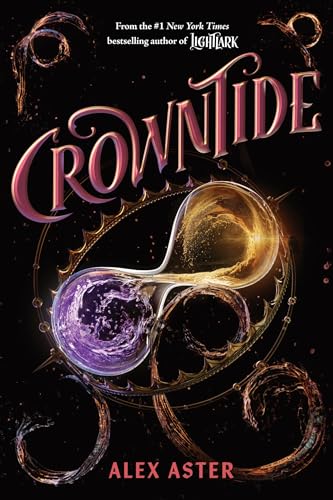
Isla Crown's back, and she's dragged herself—plus her two man-children kings—into another realm to fight her psycho ancestor. Spoiler: it's exactly as messy as it sounds. Crowntide, the fourth instalment in Alex Aster's Lightlark saga, ...