Book Review: The Strength of the Few Synopsis & Explain, Character Plots
Vis gets cloned across three parallel dimensions after winning the Iudicium, and honestly? That’s when this 736-page beast stops being clever and starts being exhausting. The ancient device beyond the Labyrinth rips him into three versions—each living in Res, Obiteum, and Luceum simultaneously—and while that sounds brilliant on paper, Islington stretches this concept so thin you can see through it.
The book throws 240,000 words at you expecting you’ll worship the complexity. You won’t.

Detailed Summary
Part One: Siamun’s Awakening
The book kicks off with Siamun, not Vis, which already feels like a bait-and-switch. He wakes up in Obiteum, an Egyptian-inspired nightmare where pyramids aren’t just buildings—they’re Will-sucking machines that power the entire civilization. Siamun discovers he’s actually one-third of Vis, replicated by the Labyrinth’s device at the end of book one.
The first six chapters dump information faster than you can process it. Questions about Will, Ka, Concurrence, gleaners, and the Cataclysms explode onto every page. Siamun navigates political intrigue with the Hierarchy’s upper echelons while trying to understand what happened to him and why he exists separately from his other selves.
He’s surrounded by schemers who speak in riddles, and the Egyptian-Roman fusion culture means you’re learning new terminology every three sentences. The world-building here is genuinely impressive but also genuinely exhausting—you need a glossary that doesn’t exist.
The pacing drags as Siamun attends endless political meetings. The courtroom drama and philosophical debates about power structures go on for dozens of pages. You keep waiting for action that rarely arrives in this section.
Part One: Vis in Res
Meanwhile, back in Res—the original world from The Will of the Many—Vis deals with the immediate aftermath of winning the Iudicium and losing everything that mattered. His friends are dead or scattered, and the Hierarchy he infiltrated now teeters on the edge of civil war.
This version of Vis is pure rage wrapped in calculated revenge. He’s not the strategic academy student anymore—he’s a weapon pointed at everyone who wronged him. The moral compass his friendships provided starts spinning wildly as grief clouds every decision.
The Roman-inspired political intrigue intensifies as factions within the Hierarchy turn on each other. Vis manipulates, lies, and kills his way through obstacles with a brutality that makes book one feel like a children’s story. The escalation is effective but relentless.
Action sequences finally arrive in Res, violent and graphic. Islington doesn’t shy away from showing the cost of Vis’s choices—bodies pile up, innocents die, and every victory feels pyrrhic. The desperation is palpable but borders on misery tourism.
Part One: Deaglan’s Displacement
Deaglan wakes up in Luceum, and this is where the book stumbles hard. His section feels like a completely different novel got accidentally bound into this one. The names are Irish and Celtic-inspired, the culture is entirely new, and you’re learning a third hierarchy system while still processing the first two.
Deaglan’s story is disjointed from Vis and Siamun’s narratives. He’s building relationships from scratch with characters you have zero attachment to. The pacing here is glacial compared to the other POVs—pages of character bonding that should matter but don’t because you’re desperate to get back to Res or Obiteum.
The themes of starting over, adulthood, and regret are hammered home with all the subtlety of a pyramid falling on your head. Islington wants you to feel Deaglan’s emotional journey, but the execution is tedious. You’re told he’s grieving, learning, growing—but you’re mostly just waiting.
The first act establishes that Deaglan’s world operates on different rules. Family bonds and friendship networks matter more here than raw power. It’s meant to be a contrast to the other two worlds, but it reads like filler content padding the word count.
Part Two: Convergence of Knowledge
Act Two shifts gears as each version of Vis starts uncovering pieces of a larger puzzle. Siamun learns about the Cataclysms—apocalyptic events that wipe out civilizations periodically—and discovers they’re not natural disasters but engineered genocides by those who achieve Concurrence.
Vis in Res investigates the Labyrinth’s true purpose while dodging assassination attempts. The conspiracy deepens as he realizes the Hierarchy’s founders knew about the multiverse split and designed their entire society to prevent—or perhaps cause—the next Cataclysm. The reveals are solid but arrive slowly.
Deaglan finally becomes relevant when his Celtic-inspired world reveals its own pyramid network. The three worlds aren’t just parallel—they’re connected through the Will network like neurons in a massive brain. This revelation happens around page 400, which is about 200 pages too late.
The middle section introduces too many new characters across three worlds. You’re juggling dozens of names, motivations, and political allegiances while Islington keeps adding more. Some characters are memorable; most blur together into forgettable politician archetypes who exist to deliver exposition.
Part Two: Political Maneuvering
Each Vis navigates increasingly dangerous political landscapes. Siamun plays the Hierarchy game in Obiteum, making alliances with people who’d kill him instantly if they knew his true identity. The tension is effective when Islington remembers to include it between philosophy lectures.
Vis in Res becomes increasingly ruthless. Watching him compromise his morals repeatedly gets old—you understand why he’s making terrible choices, but understanding doesn’t make them compelling to read about for 200 pages. The darkness becomes oppressive rather than dramatic.
Deaglan’s political storyline is the weakest link. His world’s conflicts feel small-scale compared to the impending multiversal apocalypse. You’re watching him navigate family drama while Res is literally on fire and Obiteum is unraveling ancient conspiracies.
The pacing across all three POVs becomes uneven. Some chapters are 40+ pages of dialogue about abstract concepts. Others are 10 pages of intense action. Islington needed a better editor to balance these sections and trim the philosophical fat.
Part Three: The Convergence
Act Three is where Islington finally delivers on the premise’s promise—and it’s genuinely spectacular. All three storylines crash together in ways that recontextualize everything you’ve read. The connections between worlds, the true nature of Will, and the purpose of the replication device all snap into focus.
The action explodes across all three dimensions simultaneously. Battles in Res, revelations in Obiteum, and emotional payoffs in Luceum happen in rapid succession. Islington cuts between POVs with increasing speed, building momentum that the first 500 pages desperately needed.
Characters you thought were minor players reveal themselves as crucial pieces of the conspiracy. Betrayals land with impact because the setup—though slow—was thorough. Allies die in graphic, permanent ways that raise the stakes significantly.
The violence in Act Three is brutal. Rivers of blood, destroyed monuments, mass casualties—Islington doesn’t pull punches. Reading this section in one sitting is possible and recommended; it’s the only part of the book with genuine page-turning urgency.
Part Three: Cataclysm Preparation
The Cataclysm threat becomes immediate rather than theoretical. Vis (all three versions) realizes stopping it requires sacrificing one of the three worlds. The ethical dilemma is interesting but rushed—Islington spent 500 pages on setup and gives the actual moral quandary about 80 pages.
Each Vis has formed attachments in his respective world. Choosing which reality deserves to survive means choosing which friends, allies, and innocents live or die. The emotional weight should be devastating; instead, it feels mechanical because Deaglan’s world was so underdeveloped you’re obviously sacrificing Luceum.
The final confrontation involves multiple factions from all three worlds converging on the Labyrinth. The action choreography is excellent—clear, visceral, and consequential. Characters fight, scheme, and die in ways that feel earned.
The ending is explosive but not conclusive. Major questions get answered while bigger mysteries emerge. It’s classic middle-book syndrome—satisfying enough to justify reading but frustrating because you’re obviously halfway through a much longer story.
Characters
| Character | World | Role | Analysis |
| Vis Telimus (Res) | Res | Protagonist | The original, now consumed by rage and revenge |
| Siamun | Obiteum | Protagonist | Vis’s replicated self, politically savvy |
| Deaglan | Luceum | Protagonist | Vis’s replicated self, emotionally focused |
| Ulciscor Telimus | Res | Mentor/Father | Limited presence, disappointing given his importance |
| Callidus | Res | Ally | Loyal friend who gets minimal screen time |
| Eidhin | Multiple | Mysterious | Significant role that connects multiple threads |
Vis Telimus (Res version) transforms from strategic academy student into a grief-fueled murder machine. His character arc is watching him cross every moral line while justifying it through loss. It’s effective but one-note—by page 300, you’ve seen this emotional register, and he doesn’t evolve beyond it until Act Three. The friendships that grounded him in book one are mostly dead or absent, removing his humanity’s anchor.
Siamun functions as the intellectual third of Vis’s personality. He’s the version that thinks, plans, and manipulates without the emotional weight dragging him down. Problem is, he’s too competent—he solves problems through clever dialogue rather than struggle, making his sections feel lower-stakes than they should be.
Deaglan gets the short end of the replication stick. He’s supposed to be the emotional, compassionate version of Vis, but mostly he’s just less interesting. His entire storyline in Luceum feels like Islington needed a third POV for structural reasons rather than narrative necessity.
Eidhin appears across multiple storylines with mysterious knowledge about the multiverse split. He’s interesting when present but criminally underused. His connection to the Celtic-inspired mythology in Deaglan’s world should matter more but gets lost in the shuffle.
Callidus returns from book one as Vis’s loyal friend in Res, but he’s relegated to side character status. He deserves better—the friendship between him and Vis was a highlight of The Will of the Many, and here it’s mostly referenced rather than shown.
Lanistia appears briefly but significantly in Res. Her scenes are sharp and purposeful, making you wish Islington had given her more page time instead of inventing dozens of new characters across Obiteum and Luceum.
The Hierarchy’s various politicians blend together into an indistinguishable mass of scheming bureaucrats. Obiteum has at least six different faction leaders you’re supposed to track; Res has another eight; Luceum adds more. Too many cooks ruin the political intrigue broth.
New characters in Obiteum are hit-or-miss. Some are memorably twisted—power-hungry officials who view human life as currency in Will transactions. Others exist solely to dump exposition about Egyptian-Roman fusion culture and pyramid networks.
New characters in Luceum suffer most from the pacing issues. Deaglan forms bonds with family members and friends, but you meet them around page 250 and barely spend time with them before Act Three demands you care about their fates. The emotional manipulation doesn’t work.
The villain situation is murky throughout. The Hierarchy itself is the antagonist, but it’s an institution rather than a person. Individual villains emerge in each world, but none are developed enough to feel like true threats until the final act.
Compare With Other Works
Red Rising by Pierce Brown shares obvious DNA with this series—both feature protagonists infiltrating hierarchical societies from the bottom, both use Roman-inspired world-building, both explore themes of oppression and revolution. But Red Rising moves at twice the speed with half the philosophical noodling. Darrow’s rage is focused and drives plot; Vis’s rage meanders through 240,000 words.
Brandon Sanderson’s Stormlight Archive comparisons are inevitable given the page count and multiple POV structure. But Islington lacks Sanderson’s clarity—Sanderson explains magic systems thoroughly; Islington expects you to intuit how Will works across three different dimensional rulebooks while new terminology bombards every chapter.
The Name of the Wind by Patrick Rothfuss gets name-dropped in marketing comparisons, which is baffling. Rothfuss writes beautiful prose; Islington writes serviceable prose. Kvothe’s story is engaging moment-to-moment; Vis’s story is engaging in aggregate once you’ve finished the entire book.

G'day, mates! Picture this: a dodgy small-town lawyer in rural Virginia snags what looks like a golden goose—an old widow with a fortune hidden up her sleeve. But before you can say "fair dinkum fraud," ...
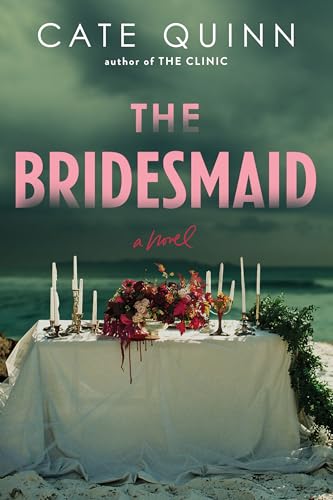
One dead bridesmaid hanging in a designer wedding dress. Three days locked in a panic room during a kidnapping. Five suspects who all went to the same dodgy boarding school. A three-day wedding circus on ...
Words of Radiance by Brandon Sanderson allegedly compares favorably according to some reviews. That’s generous. Words of Radiance juggled multiple POVs while maintaining momentum; The Strength of the Few grinds to a halt every time you hit a Deaglan chapter.
The Wall of Storms by Ken Liu shares the sequel challenge of expanding scope while maintaining quality. Ken Liu succeeded by deepening existing characters; Islington tries spreading thin across three dimensions and it shows.
Dark (Netflix series) is the most apt comparison—multiple timelines/dimensions, dense mythology, requires charts to track what’s happening. But Dark had 10-hour seasons; this is 736 pages. The density isn’t equally justified.
Achievement
| Metric | Number | Notes |
| Total Series Sales | 2,000,000+ copies | Includes Licanius Trilogy + Hierarchy series |
| Territories Sold | 18 | Global publishing rights |
| Page Count | 736 pages | Hardcover edition |
| Word Count | 240,000 words | Longer than most fantasy novels |
| Goodreads Rating | 4.7/5 stars | Based on early ARC reviews |
| Awards (Book 1) | 1 | Aurealis Award 2023 for Best Fantasy Novel |
| Languages Translated | 17+ | International reach |
The book sold publishing rights in 18 territories before release, proving publishers bet heavily on Islington’s reputation from The Licanius Trilogy (which sold over 1,000,000 copies alone).
The Will of the Many won the 2023 Aurealis Award for Best Fantasy Novel in Australia, giving this sequel significant expectations to meet. Critical reception suggests it mostly succeeds despite the middle-book syndrome.
James Islington’s total career sales exceed 2,000,000 copies across all his works, establishing him as a commercially successful fantasy author. The Hierarchy series specifically has generated massive pre-release buzz with thousands of Goodreads ratings months before publication.
The audiobook version released simultaneously with hardcover and ebook on November 11, 2025, indicating strong publisher confidence in multimedia sales potential.
Early reader reviews on Goodreads show 146+ ratings before official release, with majority 5-star reviews from ARC recipients. This suggests the book will likely debut on bestseller lists, though NYT Bestseller confirmation wasn’t available in research.
The 240,000-word count makes this one of 2025’s longest fantasy releases, competing with Brandon Sanderson’s typical doorstoppers for sheer ambition.
Pacing Problems
The book’s biggest flaw is its refusal to trust readers. Islington over-explains everything except what actually needs explanation. You’ll get five paragraphs about the political structure of Obiteum’s Hierarchy but vague handwaving about how Will actually transfers between dimensions.
Middle-book syndrome hits hard. This is clearly the second movement of a four-book symphony, meaning it’s all rising action with no resolution. You’re essentially reading 736 pages of setup for book three.
Deaglan’s sections needed either more development or complete removal. As structured, they’re the narrative equivalent of eating your vegetables before dessert—necessary for the ending to work but tedious to consume.
Final
When Islington lets the action flow, he’s exceptional. The final act’s battle sequences rival any fantasy series currently publishing. The violence has weight, consequences matter, and you genuinely fear for character survival.
The multiverse concept is genuinely original in fantasy literature. Other series have done alternate timelines, but the simultaneous existence of three versions of the protagonist navigating different societal structures is fresh.
The political intrigue in Res and Obiteum (when not bogged down in dialogue) is sharp. Islington understands power structures and shows how systems perpetuate themselves through institutional inertia.
Drop a comment below: Which world would you sacrifice if you were Vis—logical Obiteum, violent Res, or emotional Luceum? And would you actually finish this 736-page beast or bail at page 400 when Deaglan’s fifteenth family dinner scene arrives?

G'day, mates – buckle up for a yarn about Soul Searching by Lyla Sage, where a ghost-whispering sheila named Collins rolls back into her dusty Wyoming hometown, Sweetwater Peak, only to cop a faceful of ...

Margo Miyake loses 11 bidding wars across 18 months in Washington DC's brutal housing market before completely losing her mind. This 37-year-old publicist turns stalker, trespasser, and worse—all for a house in Bethesda that might ...