Cursed Daughters Review: 11 Parts, 3 Women, 1 Deadly Curse?
25-year-old Monife walks into the ocean to drown herself on page one. On the day they bury her, cousin Ebun gives birth to a daughter who looks exactly like the dead woman. The family instantly declares the baby is Monife reincarnated, trapping three generations of Nigerian women in a cycle where no man will ever call their house home.
Before you grab this 352-page saga thinking it’ll be another My Sister, the Serial Killer banger, let me stop you right there. Braithwaite’s follow-up is a messy, repetitive slog through generational trauma that can’t decide if it’s magical realism, family drama, or a PSA about toxic beliefs. The non-chronological structure across 11 parts feels like she threw the manuscript in the air and published wherever the pages landed.
Note:
- Why 11 fragmented chapters spanning 31 years creates more confusion than depth
- How three narrators telling the same curse story gets exhausting by page 150
- Whether the “instant bestseller” label is just clever marketing after her 500,000-copy debut
- Why the ending will either satisfy you completely or leave you screaming at the ambiguity
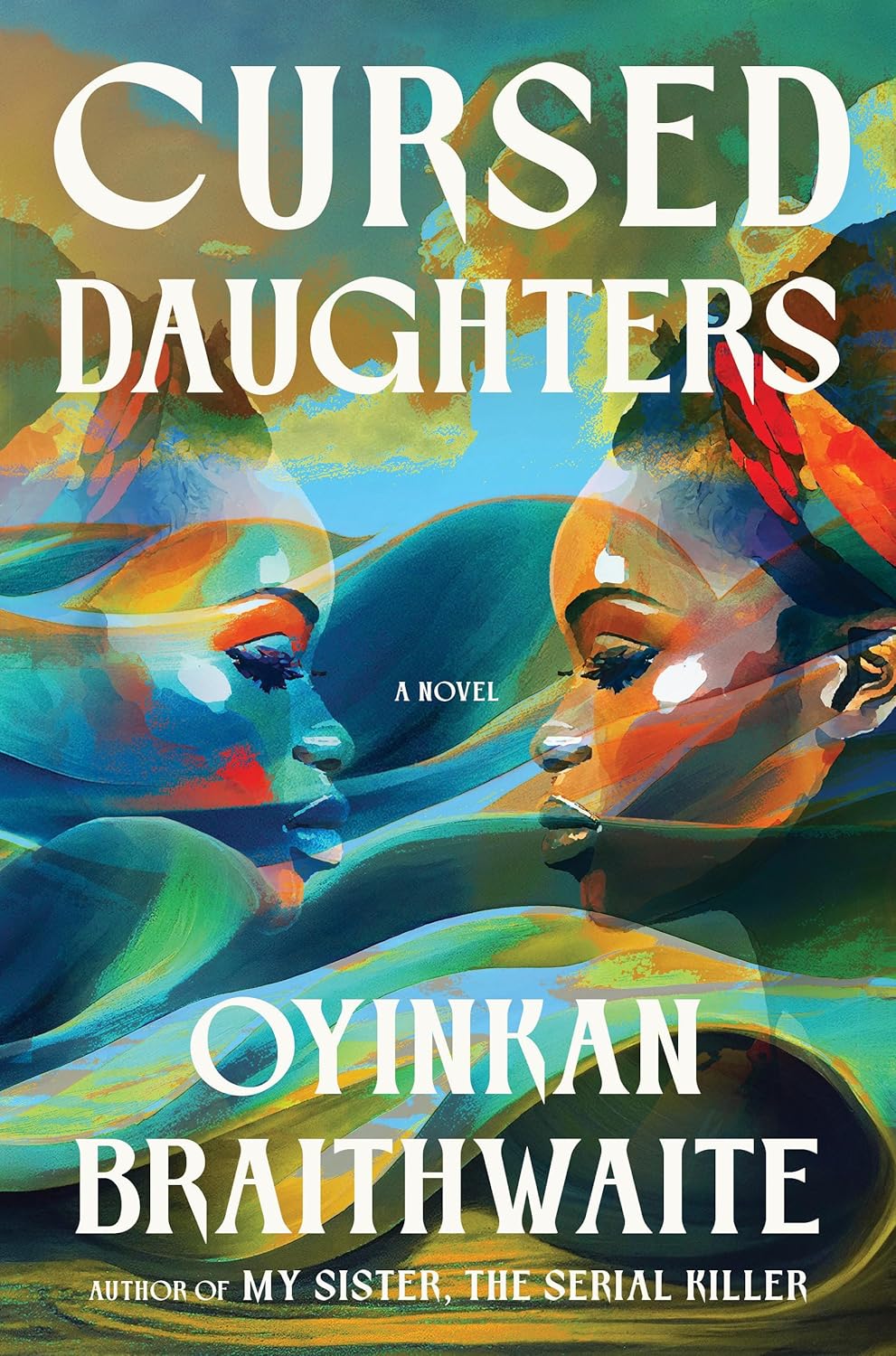
Detailed Summary
PART I: EBUN (2000)
Ebun stands at Monife’s funeral under a relentless sun that feels wrong for the occasion. She’s heavily pregnant, watching them lower her 25-year-old cousin into the ground at Ikoyi Cemetery while a nearby celebration for an old person’s funeral drums on. The pastor says “gone too soon” and Ebun thinks it’s the understatement of the century.
Her grief is interrupted by labor. Her water breaks right there at the Falodun family home, seven weeks early, in front of her aunt Bunmi (Monife’s mother) and the meddling Mama G. The women debate what to do while Ebun panics that she’ll lose the baby. She refuses to let Mama G, the juju woman, touch her despite the family’s insistence.
The birth is agonizing but successful. Ebun holds her premature daughter with thick, coily hair and large dark eyes. Her mother dances around the hospital room singing hymns, overwhelmed with joy. But that night, Ebun has a vivid nightmare where Monife’s ghost appears in the hospital ward, lifts the baby from the crib, and cradles her in silence.
When Ebun wakes, she finds her knees are actually grazed and there’s blood on the floor. Was it real? Was it a dream? The wall between the living and dead suddenly feels thinner than she’d like. She tries to convince herself it was just post-birth delirium mixed with grief.
PART I (continued): EBUN’S CHILDHOOD
Flashback to 11-year-old Ebun’s lonely existence before Monife arrived. Her mother would disappear for hours, leaving her with chores and no friends. She was a thin, melancholic child who couldn’t make friends and didn’t have the imagination for pretend ones. Then Aunt Bunmi showed up with 16-year-old Tolu and 15-year-old Monife, fleeing England after the husband got a new family.
Tolu was sullen and traumatized, locking himself in his room. But Monife was different—a candle in Ebun’s darkness. Mo turned finding Ebun into a game, creating elaborate hiding spots and inside jokes. Ebun imitated everything about Mo: her gravelly voice, cursive writing, effortless dancing, even the music she played.
But Monife had episodes of deep depression that would plunge the household into crisis. She’d stop eating, wander corridors like a ghost, consumed by insomnia and sadness. Then just as suddenly, she’d snap out of it, pulling Ebun into hugs and bursting into bathrooms to chat while Ebun tried to hide her changing pubescent body.
THE BEGINNING (Curse Origin Story)
Feranmi Falodun was a beautiful woman in the village—smooth skin, thick long hair, full mouth, skilled hands that earned money weaving baskets. Her father educated only her, hoping for a good bride price. But she fixated on a stranger who came to bury his father, a man from the city who smelled foreign and initially ignored her.
She crept into his room at night like a “seductive spirit” and overwhelmed him completely. When he tried to leave the next morning, the chief and a crowd blocked him, led by Feranmi. The village forced him to pay bride price: goats, yam, fish, palm oil, cash, everything. He married her, consummated it, then left, barely thinking of her between visits.
Five years later, his actual wife insisted on seeing this village house. She arrived to find Feranmi standing proud with twin children, refusing to hide or play servant. The husband fled to “greet the chief” while the two women fought violently, tearing clothes and scratching until they were naked and bleeding.
The first wife cursed Feranmi as they separated her: “No man will call your house home. And if they try, they will not have peace. Your daughters will pursue men and lose them. Your granddaughters will love in vain. Your great-granddaughters will labor for acknowledgment but fall short. Your descendants will suffer for man’s sake.” Feranmi laughed at the old woman, confident in herself and her daughters. But the husband never returned.
PART I (continued): THE NAMING CEREMONY
Seven days after birth, they hold the traditional naming ceremony. Ebun is exhausted, with engorged breasts and broken sleep, and they’ve sprung the ceremony on her before she could object. They’re in the courtyard under white tents, surrounded by half-brothers, her absent father and his wife, too many relatives asking where the baby’s father is.
The plate before her contains an Agama lizard head. She wants to refuse this fetish practice—most Christian families had abandoned such traditions—but her mother and aunt insist it’s essential for the grandchild’s health. Ebun cuts into the wiry lizard meat, chews quickly, swallows, fights the urge to vomit. She gets through it.
They serve honey (sweet life), kolanut (repel evil), bitter kola (long life), alligator pepper (fruitfulness), water (never thirsty), palm oil (smooth life), salt (extraordinary life), liquor and dried fish (survival). Then comes the name selection. Aunt Bunmi stands and drops money in the bowl.
“Motitunde,” she announces. “I have come again.” The guests understand what’s being said—the baby is Monife returned—but nobody protests. When it’s Ebun’s turn, she stands and declares her daughter’s name: Eniiyi. Not Monife. Not Motitunde. Just Eniiyi.
PART II: MONIFE (1994)
Nineteen-year-old Monife returns from university to find her home clouded in thick incense fog that makes her eyes water. She stands in the hallway debating whether to turn back to campus, but she prefers living at the Falodun house despite its museum-like clutter, creaky floors, and doors that swing open at night. This smell, though, is intolerable.
She marches to the west wing where the fog is thickest. Aunt Kemi hums “We Bring the Sacrifice of Praise” in the living room, pretending all is well. Monife arrives at her mother’s door, knocks hard. Silence. She opens it anyway to find furniture pushed aside, creating a void in the center of the dark room.
Her mother stands there naked except for a wrapper around her waist. Monife notes her mother’s toned body, the keloid on her arm, skin tag on her neck, beauty spot on stomach. Her mother’s eyes are glazed, whites tinted red from whatever substance she’s ingested. Around the room: a pot with a strange plant, a bowl of smoking herbs, misshapen stones.
Monife opens curtains and windows, stops the chanting stereo. She confronts her mother: this is the 74th attempt to use juju to lead her ex-husband back, even though he has a new young woman, two children under five, and has clearly moved on. Monife and Tolu have moved on. But their mother can’t.
“N50,000,” her mother admits when Monife demands to know the cost. Monife shrieks—her mother only earns N250,000 monthly, and she’s spent a fifth on this quack’s “weed special” disguised as spiritual herbs. Her mother insists it’s not marijuana, it’s herbs that “open the door to the spirit world” plus a plant to “clear his eyes” and stones to “locate and center him.”
Monife calls it the “419 special”—a scam. She begins collecting the stones while her mother, docile from the weed, doesn’t fight back. This is what the Falodun curse has done: turned capable women into desperate believers willing to throw money at any charlatan promising to bring a man back.
PART II (continued): MONIFE’S UNIVERSITY LIFE
More flashbacks reveal Monife at university batting away beer-bellied lecturers, enduring poorly funded classes and dorms. She travels from home daily rather than staying on campus because this isn’t the life she should be living. In her youth, she’d taken for granted she’d attend university in England, but her philandering father destroyed that future.
She’s popular at school, has friends, but every moment reminds her of the parallel life she could’ve had. The Falodun house with its six rooms—one for each of great-grandfather’s daughters, planned because even though he claimed not to believe in the curse, he prepared for it anyway. So many spinsters sought refuge there.
Monife falls in love with someone (details emerge slowly across chapters). The relationship becomes all-consuming. She believes she can break the curse through sheer will. But the family’s collective belief in the curse becomes a self-fulfilling prophecy. Every relationship struggle gets attributed to supernatural forces rather than normal human conflict.
PART III: ENIIYI (2023-2025)
Twenty-three-year-old Eniiyi studies genetics, approaching the family curse from a scientific perspective. She’s heard the stories her entire life: she’s Monife reincarnated because she was born the day Mo died and looks exactly like her. She has Mo’s wide-set downturned eyes, long narrow nose, wide forehead. Even her scar matches one Mo had.
Eniiyi doesn’t believe in reincarnation or curses. She’s her own person. But the family’s insistence has shaped her entire life. Aunt Bunmi treats her like a second chance at motherhood, controlling and obsessive. Ebun struggles between protecting her daughter’s autonomy and respecting her older sister. The pressure is suffocating.
She has a friend Funsho who clearly wants more than friendship, but Eniiyi keeps him at arm’s length. She’s hesitant about her own desires, unsure if they’re genuinely hers or echoes of Monife’s patterns. When she acts confident and craves attention, she worries it’s “unlike her”—but is that really true, or has she just internalized the family’s narrative?
Then she saves a handsome boy from drowning. Despite every warning, every family story about the curse, she falls in love with him. Hard. This is exactly how Monife’s story began spiraling. Eniiyi can no longer run from her family’s history. The choice is hers: believe in the curse and let it define her, or break the pattern.
PARTS IV-XI: THE SPIRAL
The remaining chapters jump between 1994-2025, filling gaps in all three women’s stories. We see Monife’s relationship disintegrate in ways that feel curse-related but could just be bad luck and poor choices. We watch Ebun raise Eniiyi while fighting Aunt Bunmi for control, never quite grieving Monife properly because her daughter’s face is a constant reminder.
We see Eniiyi’s relationship face the same obstacles previous generations faced. Men leaving. Communication breaking down. Outside pressures mounting. Is it the curse? Is it Nigeria’s patriarchal culture? Is it generational trauma passed mother to daughter through learned behaviors and low expectations? The book refuses to give a clear answer.
Ebun’s mother Kemi’s backstory reveals she was a “love child” herself—another pattern of men refusing commitment. Ebun’s brothers barely appear in the story because the focus stays on the cursed daughters. The men in this family drift in and out like smoke, never anchoring.
Christianity, juju, and science clash repeatedly. The family attends church on Sundays but consults babalawos during the week, seeing no contradiction. Eniiyi’s genetics studies represent modernity trying to impose rational explanations on inherited pain, but can science cure a curse?
By the final chapters, timelines converge. Secrets emerge about the night Monife died. Eniiyi must decide whether to repeat her aunt’s choices or forge a different path. The ending is deliberately ambiguous—some readers call it “satisfying” while others find it maddeningly unclear whether the curse is real or just a story the family tells itself.
Characters?
| Character | Role | Key Traits | Arc |
| Monife | Cousin/aunt | Charismatic, depressive, doomed | Dies at 25 by drowning; her ghost haunts the narrative literally and figuratively |
| Ebun | Cousin/mother | Melancholic, passive, grieving | Transforms from Mo’s shadow to Eniiyi’s protector; never escapes the curse’s orbit |
| Eniiyi | Daughter | Rational, scientific, conflicted | Fights to claim her own identity while looking exactly like a dead woman |
| Aunt Bunmi | Monife’s mother | Controlling, grief-stricken, delusional | Treats Eniiyi as Monife 2.0; can’t let go of her dead daughter |
| Aunt Kemi | Ebun’s mother | Flamboyant, superstitious, codependent | Spends half her salary on juju trying to reclaim men who’ve left |
| Tolu | Monife’s brother | Sullen, traumatized, absent | Escapes the family entirely; refuses to engage with Ebun after Mo dies |
| Mama G | Family juju woman | Manipulative, opportunistic | Profits from the family’s curse belief system |
| Funsho | Eniiyi’s friend | Patient, interested, sidelined | Represents a safe option Eniiyi can’t fully embrace |
| The Drowned Boy | Eniiyi’s love interest | Handsome, triggering | Sets Eniiyi on the same path that killed Monife |

Monife is the most compelling character precisely because she’s dead. Her presence saturates every page through other people’s memories, Eniiyi’s face, and that prologue drowning. But Braithwaite never lets us fully inhabit her perspective during the critical moments. We get 1994-1999 Monife, but the 2000 spiral into suicide happens off-page. That’s a massive narrative cop-out.
Ebun frustrates because she’s perpetually reactive. She doesn’t stand up to Aunt Bunmi at the naming ceremony. She doesn’t protect Eniiyi from the reincarnation narrative. She spends 25 years being sad about Monife while raising Monife’s “replacement.” Where’s her agency? Where’s her rage? She’s got valid trauma but the character never quite comes alive on the page.
Eniiyi should be the breakout character—the one with modern tools to dismantle generational curses through genetics and rational thought. Instead, she’s wishy-washy, letting the family steamroll her boundaries while claiming not to believe in their nonsense. If you don’t believe in the curse, girl, why are you acting like you do? The cognitive dissonance is the point, but it makes her exhausting to follow.
Aunt Bunmi is genuinely tragic. She loses her daughter and immediately colonizes her niece’s baby, declaring it Monife reborn. She’s grief-stricken to the point of delusion, and the family enables it. But again—we never get her POV, so she remains a looming presence rather than a fully realized character. Wasted potential.
The male characters are deliberate absences, which fits the thematic point (men leave, the curse says so) but makes for thin reading. Tolu vanishes after Monife’s funeral and sends “apologies” to avoid Eniiyi’s naming ceremony. The fathers are philanderers or corpses. The love interests are plot devices. It’s thematically coherent but dramatically inert.
Plot Twists?
The Baby Born on a Burial Day
The opening gambit is strong: Monife drowns, they bury her, Ebun goes into premature labor at the funeral and gives birth the same day. The baby looks exactly like dead Monife. It’s a hell of a hook. But the book immediately tells you this is happening, so there’s no twist—just mounting dread as the family decides this is reincarnation rather than genetics.
The problem? Braithwaite spends the next 300 pages having characters repeat “Eniiyi looks like Mo” and “maybe she IS Mo” without adding new information. By page 150, we get it. The repetition that worked brilliantly in My Sister, the Serial Killer‘s tight 240 pages becomes exhausting across 352 pages.
The Dream That Wasn’t a Dream
When Ebun dreams of Monife’s ghost holding the newborn, she wakes to find actual physical evidence: grazed knees, blood on the floor. Was it real? The book says “the wall between living and dead was impermeable” but also shows that maybe it isn’t. This ambiguity could be delicious but instead feels like Braithwaite hedging her bets, unwilling to commit to full magical realism or full psychological realism.
The Curse Origin Story
Discovering Feranmi Falodun seduced a married man, got caught, and was cursed by the first wife is textbook generational trauma setup. But here’s the thing: the “curse” is just consequences. Feranmi broke up a marriage, got publicly humiliated, and the husband abandoned his second family. Of course future generations struggled with men—they grew up watching this pattern, internalizing these beliefs.
That’s actually the more interesting reading: the curse is real because they believe it’s real, a self-fulfilling prophecy maintained through collective family psychosis. But Braithwaite won’t pick a lane. She wants it both ways: metaphorical AND literal curse. Choose one, Oyinkan.
Monife’s Actual Death Circumstances
We know from page one that Monife walks into the ocean. But WHY? The book doles out her romantic disappointment across multiple chapters, never quite showing us the specific heartbreak that pushed her over the edge. When it’s finally revealed (buried somewhere between Parts VI-IX), it’s anticlimactic. A man left her. Like men left her mother. Like men will leave Eniiyi. The curse strikes again, except… men leave women all the time without supernatural intervention.
Eniiyi Saves a Boy From Drowning
The parallel to Monife is obvious—Eniiyi literally pulls a drowning person from water, the opposite of Monife’s death. She falls for him. History repeats. But does it? The ending is so ambiguous we don’t know if Eniiyi breaks the cycle or perpetuates it. Some readers find this profound. I find it unsatisfying after 350 pages.
The Missing Photographs
Aunt Bunmi removes all photos of Monife from the house immediately after the funeral, which is psychologically fascinating—erasing the dead to make room for the “reincarnation.” But this act of violence never gets properly confronted. Ebun is about to rage at her aunt when her water breaks, and the moment is lost. The photos never come back up in a meaningful way. Setup without payoff.
Compare With Other Works
- My Sister, the Serial Killer (Braithwaite’s debut): That book was a lean, mean 240-page satirical thriller about a woman covering up her sister’s murders. The voice was distinctive, the pacing impeccable, the dark humor perfectly calibrated. Cursed Daughters has none of that propulsive energy. It’s 352 meandering pages of sadness with occasional funny lines that don’t land because the tone is too heavy. Braithwaite proves she can’t replicate her debut’s magic by changing genres entirely.
- The Vanishing Half by Brit Bennett: Both tackle generational trauma, colorism, and inherited identity through multiple timelines. But Bennett’s prose is elegant, her characters fully rendered, her themes integrated seamlessly into plot. Cursed Daughters feels like a thematic essay disguised as a novel—characters exist to illustrate points about curses/belief/trauma rather than feeling like real people.
- Little Eve by Catriona Ward: Another book about women, curses, and atmospheric dread. Ward commits fully to the horror elements while maintaining literary prose. Braithwaite wants prestige literary fiction cred but also magical realism but also family drama, and she doesn’t excel at any of them.
- Homegoing by Yaa Gyasi: Multi-generational family saga across centuries with each chapter a different descendant’s story. Gyasi makes each chapter work as a standalone piece while building cumulative power. Braithwaite’s 11 parts feel fragmented and repetitive because they cover the same emotional territory (woman loses man, blames curse) without meaningful variation.
- Beloved by Toni Morrison: If you’re going to do ghost stories and generational trauma, you’re competing with Morrison. Cursed Daughters is not in the same universe of achievement. Morrison earns her ambiguity and supernatural elements through devastating historical specificity and prose that sings. Braithwaite’s ghosts and curses feel half-committed, her prose serviceable but rarely transcendent.
The comparison that damns Braithwaite most is her own debut. My Sister, the Serial Killer sold close to 500,000 copies, got longlisted for the Booker, and was genuinely original. Cursed Daughters feels like every other multigenerational trauma novel published in the last five years, just with Nigerian juju instead of Latin American spirits or Asian ghosts.
Achievement
Sales & Rankings:
- Labeled “INSTANT BESTSELLER” by Atlantic Books and promoted as “the twisty, dark heartbreaker of 2025”
- Reached Sunday Times bestseller list upon publication
- Released November 4, 2025, by Atlantic Books (352 pages)
- Her debut My Sister, the Serial Killer sold close to 500,000 copies, was longlisted for the Booker Prize, and won the Crime and Thriller Book of the Year
Critical Reception:
- Featured in New York Times “23 Books Coming in November” for November 2025
- Goodreads ratings showing divisive reception (some 4.5-5 stars, others wishing they could give 0 stars)
- NPR interview with Ayesha Rascoe discussing the novel’s themes
- Kirkus Reviews verdict: “Is this a tragedy or a comedy? Though it ends up uneasily in the middle, it’s well-written and juicy”
Format & Distribution:
- Available in hardback, ebook, and audiobook formats
- Published simultaneously by Doubleday (US), Atlantic Books (UK), and international publishers
- Audiobook narrated with “lovely narration” according to early reviewers
- NetGalley ARC distribution to reviewers months before publication
Industry Positioning:
- Atlantic Books editor James Roxburgh stated his “publishing obituary would probably read ‘tall man, acquired My Sister, the Serial Killer'” and called this “a huge step up from Oyin”
- Marketed as direct follow-up to her 2018 phenomenon debut
- Blurbs from Abi Daré, Ayòbámi Adébáyò, and Jennie Godfrey calling it “impossible to put down” and “haunting”
The Reality: The “instant bestseller” label is doing heavy lifting here. When your debut sells 500,000 copies and gets Booker longlisted, your publisher will move heaven and earth to make the follow-up succeed. Atlantic Books clearly had big marketing budgets and placement deals. Sunday Times bestseller in week one means strong pre-orders from the debut’s fanbase, not necessarily organic reader enthusiasm.
The Goodreads ratings tell the real story: wildly divided readership. People who loved the debut’s satirical bite are disappointed by this earnest family drama. People who wanted literary fiction about generational trauma find it repetitive and unfocused. The book is succeeding commercially on Braithwaite’s name recognition while reviews suggest readers feel ambivalent at best, hostile at worst.
Writing Style & Structure
The 11-part structure jumping between 1994-2025 and three POVs should create mosaic complexity but instead creates confusion. You’re constantly reorienting yourself: whose perspective? what year? how does this connect? Braithwaite withholds information not for dramatic effect but because she hasn’t figured out how to weave exposition naturally into the narrative.
The prose is fine. Serviceable. Occasionally a line sparkles: “Mo was a candle in the perpetual dimness that had been Ebun’s existence.” But mostly it’s functional scene description and dialogue without the distinctive voice that made My Sister, the Serial Killer sing. Where’s the dark humor? Where’s the satirical edge? Buried under earnest examination of generational trauma.
The pacing is glacial. It takes 100+ pages to establish what the cover copy tells you: family curse, baby looks like dead cousin, question of reincarnation. Another 100 pages to add minimal new information. By page 250 you’re still waiting for something significant to happen beyond people discussing whether the curse is real.
Themes & Depth
Generational Trauma: The book’s strongest theme. How do families pass down pain, fear, and limiting beliefs? How do daughters inherit their mothers’ romantic failures not through genetics but through observation and internalized narrative? Braithwaite understands this intellectually, but the execution is repetitive rather than deepening.
Self-Fulfilling Prophecy: If you believe you’re cursed, you’ll unconsciously sabotage relationships, interpret normal conflicts as supernatural intervention, and create the very outcome you fear. This is the richest reading of the curse, and Braithwaite explores it through Eniiyi’s scientific perspective. But she undercuts her own theme by leaving ambiguous whether the curse is “real,” which dilutes the psychological insight.
Faith, Juju, and Science: The family’s Christianity mixed with juju practices reveals Nigerian religious syncretism. Eniiyi’s genetics studies represent rational modernity. But these worldviews never truly clash or synthesize—they just coexist uncomfortably, much like the book’s tonal inconsistencies.
Female Agency vs. Fate: Can Eniiyi choose her own destiny or is she doomed to repeat Monife’s mistakes? The book asks this question 500 times without answering it, which is either profound meditation or narrative cowardice depending on your tolerance for ambiguity.
The Verdict
Rating: 2.5/5 stars. Technically competent but dramatically inert, thematically interesting but structurally flawed, occasionally insightful but mostly exhausting. Braithwaite has talent, but she needed a stronger editor willing to cut 100 pages and force her to make decisive choices about what story she’s actually telling. As it stands, Cursed Daughters is a noble failure that proves debut brilliance doesn’t guarantee sequel success.
Share this with your book club if they’re debating whether to read it—save them the 10-hour commitment and let them argue about my take instead. Cheers!

In Your Dreams is a small-town, friends-to-lovers, chef‑meets‑farmer romance set in Rome, Kentucky, where burned‑out chef Madison Walker returns home to open a farm‑to‑table restaurant with her brother’s best friend, James Huxley.[1][2] It’s ideal for ...

What if I told you two heartbroken women, a psychic library cat, and 300+ pages of Alabama charm still couldn't make me care? The Forget-Me-Not Library by Heather Webber drops Juliet Nightingale—lightning strike survivor with ...