What She Saw Review: 4 Women, 30 Years, 351 Pages of Drag
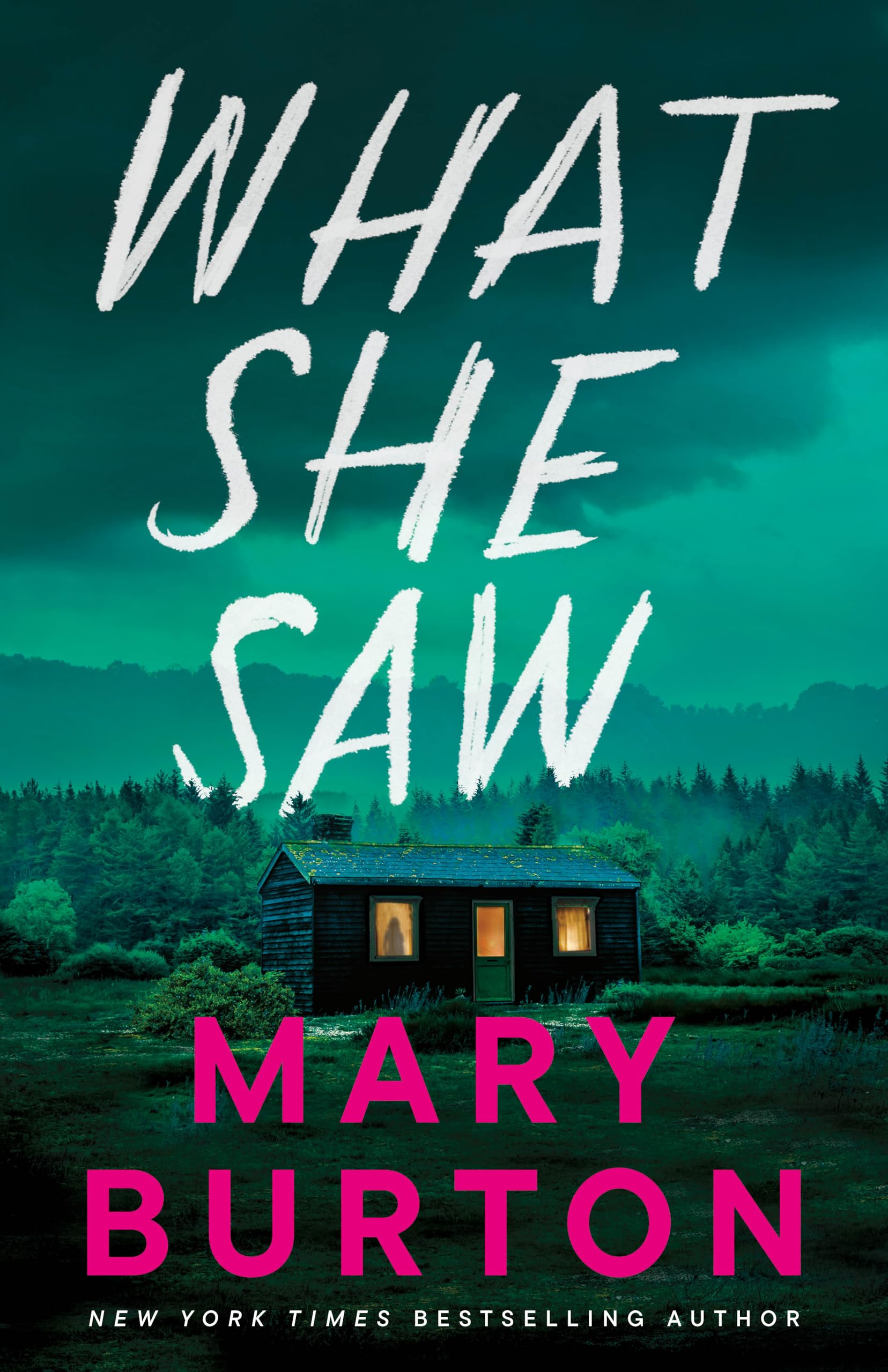
Thirty years ago, four women vanished without a trace during a mountain music festival in rural Virginia. Bodies? Never found. Justice? Questionable. The convicted promoter sits in prison swearing he’s innocent, and cold case reporter Sloane Grayson—whose mum was one of the victims—rocks up to this tiny town demanding answers nobody wants to give. Sounds gripping, yeah? Well, buckle up because this 351-page slog will test every ounce of your patience.
Stick around to uncover:
- Why 4 missing women and 30 years couldn’t save this thriller from mediocrity
- How a potentially brilliant dual timeline turned into a repetitive mess
- The real reason Sloane’s “sociopathic” personality tanks the entire story
- Whether Mary Burton’s reputation as a bestseller still holds water
Detailed Summary
Opening: The Convicted Man’s Perspective
The novel kicks off in prison where our supposed killer reflects on his life behind bars, appreciating “the little things” after decades of incarceration. He’s dying of cancer, up for compassionate release, and maintains his innocence about the 1994 Mountain Music Festival murders. Four women disappeared that rainy weekend, and he took the fall despite zero bodies ever surfacing. This prologue had potential—a wrongly accused man’s final plea?—but Burton rushes through it like she’s got a dental appointment to catch. We barely understand who this bloke is before we’re yanked into the present day.
The setup screams “wrongful conviction thriller,” but the execution lands with all the grace of a drunk kangaroo. Burton introduces too many players too quickly, making it nearly impossible to track who’s who or why we should care. The pacing drags immediately, bogged down by excessive detail about prison routines that add precisely nothing to the mystery.
Present Day: Sloane Arrives in Dawson, Virginia
Enter Sloane Grayson, our protagonist and professional cold case reporter. She’s rolled into Dawson—a small mountain town in the Blue Ridge Mountains—with one mission: find her mother’s body and solve the 30-year-old mystery. Sloane was only a baby when her mum vanished, raised by her grandmother who recently passed, leaving her with deceased Sheriff CJ Taggart’s case notes as a parting gift. Sounds emotionally charged, right? Except Sloane has about as much emotional depth as a cardboard cutout.
She sets up shop in the late sheriff’s cabin—isolated in the woods because apparently that’s not a horror movie cliche waiting to happen. The townspeople are hostile, which makes sense given she’s dredging up their worst collective trauma for a book deal. But here’s where Burton’s writing stumbles: instead of building tension through these confrontations, we get repetitive scenes of Sloane asking questions, people refusing to answer, rinse and repeat for chapters on end.
The first 30% of this book feels like wading through molasses. Burton dumps information about the four victims—Sloane’s mother, plus three other young women—but provides so little character development that they remain nameless casualties rather than real people worth mourning. How are we supposed to care about finding their bodies when we barely know who they were?
Dual Timeline: 1994 Sheriff Taggart Chapters
Here’s where Burton attempts something clever: alternating chapters between present-day Sloane and 1994 Sheriff CJ Taggart working the original case. In theory, this dual timeline should create dramatic irony—we see the investigation unfold in real time while Sloane pieces together clues decades later. In practice, it’s a narrative device that highlights just how little actual investigating happens in either timeline.
Taggart’s chapters show him working security at the Mountain Music Festival, a poorly managed event drenched in rain where organization goes to die. Four women—including Sloane’s mother—disappear on the final night. Taggart interviews witnesses, examines the muddy festival grounds, and chases leads that go nowhere. The problem? Burton makes these chapters feel like police report transcriptions rather than compelling storytelling. We watch Taggart methodically tick boxes on his investigation checklist without any real tension or breakthrough moments.
The 1994 sections should be the novel’s backbone, showing us crucial details that present-day characters missed. Instead, they repeat information we already know from Sloane’s research, creating a frustrating loop where both timelines tread water. Burton’s decision to make Taggart’s POV so procedural strips away any emotional weight from the disappearances.
Middle Section: Sloane’s Investigation Goes Nowhere Fast
Right, so Sloane starts interviewing everyone connected to the case: victims’ families, festival attendees, local business owners, law enforcement. Burton introduces dozens of side characters in rapid succession—so many that you’ll need a flowchart to track them all. Each interview follows the same tedious pattern: Sloane asks probing questions, the interviewee acts defensive or secretive, Sloane leaves with minimal new information. Repeat forty bloody times.
The middle 40% of this book is where most readers will contemplate DNF-ing (Did Not Finish, for the uninitiated). Burton pads these chapters with excessive description of Sloane driving to locations, making coffee, checking her notes, and having internal monologues that reveal nothing substantive about the case. The investigation stalls completely, stuck in a holding pattern of revisiting the same evidence from slightly different angles.
What’s worse, Burton introduces a romantic subplot between Sloane and Grant—a private investigator and retired cop who inexplicably decides to help her. Their chemistry is nonexistent, the sexual tension forced, and the couple of “light sex scenes” (as one reviewer aptly noted) feel tacked on to meet some genre requirement. In a thriller about finding four murdered women, nobody asked for tepid romance that contributes absolutely zero to the plot.
The Accomplice Theory
Around the halfway mark, Burton finally introduces a compelling angle: Sloane suspects the convicted promoter didn’t act alone. Someone helped him kill and hide four women, and that accomplice is still free, possibly still living in Dawson. This revelation should inject urgency into the narrative, but Burton fumbles it spectacularly by refusing to narrow the suspect pool.
Everyone becomes suspicious—townspeople who were at the festival, law enforcement who investigated, family members with secrets—but Burton provides so few actual clues that readers can’t meaningfully participate in solving the mystery. Good thrillers drop breadcrumbs that clever readers can follow; this book drops boulders of misdirection that obscure everything. When the accomplice is finally revealed near the end, it feels pulled from thin air rather than earned through careful plotting.
The accomplice theory also highlights Burton’s tendency to circle back on information we’ve already processed. Sloane reviews the same evidence repeatedly, has the same conversations with slight variations, and second-guesses conclusions we reached chapters ago. It’s narrative wheel-spinning disguised as investigation.
Escalating Threats and Danger
As Sloane digs deeper, mysterious threats emerge. Someone vandalizes her car, leaves threatening notes, and eventually escalates to physical danger. Burton clearly intends these incidents to ratchet up tension and prove Sloane’s onto something explosive. Instead, they feel perfunctory—obligatory thriller beats checked off a list rather than organic escalations.
The threats lack creativity and teeth. A slashed tire here, a cryptic warning there, but nothing that genuinely makes you fear for Sloane’s safety. Part of the problem is Sloane herself, who responds to danger with such cold detachment that even Burton seems unsure if readers should root for her survival. More on Sloane’s disastrous characterization later, but her emotional flatness sucks tension from every supposedly scary moment.
Burton also makes the rookie mistake of having Sloane continue staying alone in that isolated cabin despite mounting evidence that someone wants her dead. It’s not brave; it’s stupid, and the novel treats it as admirable determination rather than reckless plot contrivance.
Past Timeline: Taggart’s Dead Ends
Back in 1994, Taggart’s investigation reaches similar dead ends. He identifies the promoter as the prime suspect, builds a circumstantial case, and secures a conviction despite never finding bodies. Burton shows us Taggart cutting corners, ignoring potential alternate theories, and rushing to close the case. This should create fascinating commentary on flawed investigations and tunnel vision in law enforcement.
But Burton’s execution is so heavy-handed that Taggart comes across as either incompetent or corrupt, with no nuance between. We’re clearly meant to question his conclusions, yet the narrative never commits to exploring why he made those choices. Was he pressured by higher-ups? Protecting someone? Simply exhausted and eager to move on? Burton provides no satisfying answers, leaving Taggart’s character as underdeveloped as everyone else.
The 1994 timeline concludes with the promoter’s conviction, leaving readers with the same questions Sloane has thirty years later. It’s a narrative choice that could be profound—highlighting how little has changed—but instead feels like 100+ pages of filler that could’ve been summarized in a prologue.
Climax: Bodies and Revelations
In the final quarter, Sloane finally locates where the bodies are buried. The discovery should be the emotional and investigative payoff for 300+ pages of buildup. Burton rushes through it with surprising brevity, treating the moment like a checkbox rather than the cathartic resolution it deserves. We get minimal detail about the recovery process, forensic analysis, or what the bodies reveal about the murders.
The accomplice is unmasked through a combination of Sloane’s deductions and convenient confession. Burton stages a confrontation that aims for edge-of-your-seat thriller territory but lands somewhere around mild unease. The accomplice’s motivations are explained through hasty exposition rather than earned revelation, and their identity—while technically a “twist”—satisfies no one because Burton planted no genuine clues to support it.
Several reviewers mentioned being “shocked” by the ending, but shock for shock’s sake without logical foundation is just cheap trickery. A truly great mystery makes you smack your forehead and think, “Of course! The clues were there all along!” This ending makes you think, “Wait, when was that person even a serious suspect?”
Resolution: Justice and Closure
The book wraps up with the accomplice facing justice and Sloane achieving closure about her mother’s fate. Burton attempts a touching moment where Sloane finally processes decades of unresolved grief, but given that she’s spent the entire novel acting like an emotionless robot, this sudden display of feeling rings hollow. Character development that appears in the final 10 pages isn’t development; it’s authorial panic.
The resolution also ties up loose ends with remarkable efficiency, rushing through fallout that deserved more attention. What happens to the convicted promoter now that the truth is revealed? How does the town reckon with harboring an accomplice for thirty years? What about the other victims’ families? Burton glosses over these questions in favor of a neat, tidy ending that underserves the novel’s premise.
The final chapter aims for profound but lands at pedestrian, with Sloane reflecting on justice, truth, and her own journey. If you’ve made it this far, congratulations—you survived the slog. Whether the destination was worth the journey is another question entirely.
Characters
Sloane Grayson
Our protagonist, cold case reporter, and arguably the novel’s biggest liability. Multiple reviewers described Sloane as “sociopathic” or “unlikeable,” and they’re not wrong. Burton seems to have aimed for “emotionally detached professional” but overshot into “person you’d cross the street to avoid.” Sloane approaches her mother’s murder with the emotional investment of someone researching tax policy.
She’s meant to be driven, brilliant, and relentless—a reporter who won’t stop until she uncovers the truth. What we actually get is a cold, arrogant character who treats everyone around her like inconvenient obstacles. Her lack of empathy isn’t positioned as a flaw to overcome but as a quirky personality trait that makes her “good at her job.” Except it doesn’t—it just makes her insufferable.
Sloane supposedly struggles with being raised without a mother, but Burton never convincingly shows this emotional damage. She tells us Sloane is haunted by questions about her mum, but Sloane’s actions and internal monologue suggest she cares more about publishing a bestselling book than actual closure. This disconnect between what Burton wants us to feel about Sloane and what the text actually conveys creates a protagonist you can’t root for.
The romantic subplot with Grant exposes Sloane’s characterization problems even further. She has zero chemistry with him, seemingly engaging in romance because the genre demands it rather than any organic attraction. Her emotional walls and trust issues could be interesting if Burton explored them with depth, but instead they’re mentioned in passing before sex scenes that feel obligatory rather than meaningful.
Grant
Private investigator, retired cop, and Sloane’s love interest who materializes to help her investigation for reasons that remain unclear. Grant is the definition of a stock character—the helpful male side character who exists to support the female protagonist while having minimal personality of his own. He’s generically handsome, generically competent, and generically attracted to Sloane despite her giving him absolutely nothing to work with emotionally.
Burton provides scant backstory for Grant. He’s retired from law enforcement (why?), now works as a PI (doing what?), and decides to dedicate significant time to Sloane’s investigation (because?). These questions go unanswered, leaving Grant as a plot device rather than a character. His main function is providing Sloane with access to resources and contacts she couldn’t obtain alone, making him essentially a walking database with abs.
The romance between Grant and Sloane lacks any spark or development. They go from professional acquaintances to bed partners with minimal buildup, and their relationship contributes nothing to the plot. Removing Grant entirely and making Sloane work solo would’ve strengthened the narrative by forcing her to overcome obstacles through her own ingenuity rather than leaning on her convenient cop boyfriend.
Sheriff CJ Taggart
The deceased sheriff who originally investigated the 1994 disappearances and whose POV dominates the past timeline chapters. Taggart is meant to be a complex figure—a lawman who maybe got it wrong, whose investigation Sloane must now scrutinize. Burton has an opportunity here to explore the psychology of a detective under pressure, making difficult calls with incomplete information.
Instead, Taggart reads as either incompetent or willfully blind, neither of which makes for compelling reading. His chapters show him plodding through investigation steps with all the excitement of filling out paperwork. We get minimal insight into his thought processes, personal life, or the pressure he faced to solve this case. He’s a functional narrator who moves the 1994 plot forward without ever becoming interesting.
Taggart’s decision to pass his case notes to Sloane via her grandmother before dying is meant to be significant—perhaps he knew his investigation was flawed and wanted someone to find the truth. But Burton never commits to this interpretation, leaving Taggart’s motivations as murky as everything else in this novel. Was he a good cop who made mistakes or a bad cop who railroaded an innocent man? The book refuses to decide.
The Convicted Promoter
The music festival promoter convicted of murdering four women despite bodies never being found. He sits in prison maintaining his innocence, dying of cancer, up for compassionate release. This character should be central to the mystery—is he a killer claiming innocence or a wrongly convicted man? Burton introduces him in the prologue and during a single prison visit from Sloane, then largely forgets he exists.
We get almost no insight into his character beyond “says he didn’t do it.” What was he like before the conviction? How has prison changed him? Does he have theories about who actually killed the women? Burton provides none of this development, reducing a potentially fascinating character to a plot point. His ultimate fate—revealed late in the book—feels rushed and unsatisfying, another casualty of Burton’s inability to develop secondary characters.
The Four Missing Women
Sloane’s mother and three other young women who disappeared from the festival. These four should be the emotional heart of the novel—the victims whose stories demand justice. Instead, they’re barely characterized beyond basic details. Burton gives us their names, ages, and sketchy backgrounds but never makes them feel like real people.
Sloane’s mother especially deserved more development. This is the woman whose murder shapes our protagonist’s entire life, yet we learn almost nothing about her personality, dreams, or relationship with Sloane’s father. Burton includes occasional flashbacks or second-hand stories, but they’re too sparse and superficial to create emotional investment.
The other three women fare even worse, remaining essentially interchangeable victims. Their families appear briefly to provide information then disappear from the narrative. When the bodies are finally found, there’s no real sense of closure for these women or their loved ones—just plot resolution.
Various Townspeople and Suspects
Burton populates Dawson with dozens of townspeople who range from unhelpful to hostile regarding Sloane’s investigation. There’s the current sheriff, various locals who attended the festival, family members of victims, and random citizens with opinions about dredging up the past. The problem? They’re all utterly forgettable.
Burton introduces so many side characters so quickly that they blur together into an indistinct mass of suspicious mountain folk. None receive enough page time or development to become memorable, yet they eat up chapters with repetitive conversations that advance nothing. You’ll constantly flip back to earlier pages trying to remember who’s who and why they matter.
The accomplice, hidden among these characters, should stand out in retrospect once revealed. Instead, they’re so underdeveloped throughout that the reveal lands with a thud. Burton’s failure to properly characterize her suspect pool means the mystery solution feels arbitrary rather than earned.
Plot Analysis
Burton’s central premise—reporter investigates mother’s decades-old murder—has serious potential. Cold cases offer natural suspense: old evidence, faded memories, witnesses who’ve died or disappeared, and the question of whether justice delayed is justice denied. Add the personal stakes of the protagonist seeking answers about her own mother, and you should have thriller gold.
So where does What She Saw go wrong? The plot structure itself is sound—dual timelines showing past investigation and present reinvestigation, building toward revelation of the truth. But Burton’s execution transforms what should be propulsive into plodding. The novel suffers from severe pacing issues, with the middle section becoming a repetitive slog of failed interviews and dead-end leads.
Thrillers live or die on maintaining tension, but Burton lets tension dissipate completely during the bloated midsection. Sloane makes minimal progress for 200 pages, creating a flatline where there should be rising action. The threats against her feel half-hearted, more annoying than genuinely dangerous. Burton seems unsure whether she’s writing a procedural investigation thriller or a psychological suspense novel, so she attempts both and succeeds at neither.
The dual timeline device works sporadically but often feels redundant. Taggart’s 1994 chapters should provide information that recontextualizes Sloane’s investigation, creating dramatic irony and “aha!” moments. Instead, they mostly confirm what Sloane already discovered, repeating plot points without adding meaningful new dimensions. Burton needed to either commit fully to making the past timeline revelatory or trim it significantly.
The mystery’s solution—the identity of the accomplice and location of bodies—arrives through a combination of Sloane’s detective work and convenient confession. Strong mysteries make readers feel clever for solving them alongside the protagonist, or brilliantly misdirected by red herrings. This novel does neither. The accomplice reveal feels pulled from thin air because Burton provided no fair clues pointing to them, while the red herrings are so obvious they insult reader intelligence.
Burton also fumbles the emotional payload of discovering the bodies. After 300+ pages building to this moment, she rushes through it with surprising brevity. There’s minimal description of the recovery, forensic revelations from examining the remains, or emotional impact on Sloane and the victims’ families. It’s a letdown of epic proportions—the climax we’ve been waiting for treated as just another plot beat to check off.
The romance subplot deserves special mention for being utterly superfluous. Grant adds nothing essential to the plot that couldn’t be achieved through other means. His relationship with Sloane contributes zero character development for either party. The sex scenes—described by multiple reviewers as “light” and “unnecessary”—interrupt the thriller momentum without providing any romantic satisfaction. Burton should’ve either committed to a full romantic suspense novel with genuine heat and emotional connection, or cut the romance entirely and strengthened the thriller elements.
Thematically, the novel gestures toward interesting ideas: wrongful conviction, small-town secrets, the long shadow of unsolved crimes, and how trauma ripples across decades. Burton never develops these themes with any depth or sophistication. They remain surface-level nods rather than substantive exploration. A stronger writer would’ve used the dual timeline to show how the 1994 tragedy shaped the town and characters across thirty years, creating a rich tapestry of cause and effect. Burton settles for showing that people are still upset about it.
The conclusion wraps up too neatly, rushing through consequences that deserved exploration. What happens to the wrongly convicted promoter? How does the town process learning an accomplice lived among them for thirty years? Do the victims’ families find peace or just more pain? Burton provides cursory answers at best, eager to tie up loose ends and finish rather than sit with the messy emotional aftermath of these revelations.
Compare With Other Works
Mary Burton is frequently compared to thriller heavy-hitters like Lisa Jackson, Lisa Gardner, and James Patterson. Library Journal made these comparisons, Fresh Fiction echoed them, and Burton’s marketing leans into them heavily. Based on What She Saw, those comparisons are generous at best and misleading at worst.
Lisa Jackson excels at complex, multi-layered mysteries with killer twists you don’t see coming but make perfect sense in retrospect. Her novels balance psychological depth with propulsive plotting, creating page-turners that also explore character. What She Saw lacks Jackson’s plotting sophistication—the twist here feels unearned rather than brilliantly concealed. It also lacks her character work; Jackson makes you care about her protagonists while Burton creates an unlikeable robot.
Lisa Gardner builds unbearable tension and creates flawed, fascinating protagonists readers root for despite their imperfections. Her novels make your heart race while also making you think about justice, trauma, and morality. What She Saw never achieves Gardner’s tension—the pacing is too sluggish, the threats too tepid. And while Gardner’s protagonists are complex and compelling, Sloane is just cold and off-putting.
The James Patterson comparison is perhaps most baffling. Patterson’s trademark is breakneck pacing with short, punchy chapters that make his books nearly impossible to put down. Love or hate his writing style, the man understands momentum. What She Saw is the opposite—slow, bloated, with chapters that meander rather than propel. If Burton studied Patterson’s pacing, she learned absolutely nothing.
More apt comparisons might be to mid-tier procedural thrillers that check genre boxes without excellence—serviceable but forgettable. Think of authors like Karin Slaughter’s weaker entries or Tess Gerritsen’s less successful novels. Competent technical writing but lacking the spark that makes a thriller truly gripping.
Within Burton’s own oeuvre, reviewers consistently cite her Criminal Profiler series—especially Cut and Run—as superior to What She Saw. Those earlier novels apparently showcase better pacing, more likeable protagonists, and tighter plotting. What She Saw reads like a regression, suggesting Burton either rushed this one or has lost the edge that made her earlier work compelling.
Compared to other recent cold case thrillers, What She Saw falls short of standouts like Megan Miranda’s Such a Quiet Place or Karin Slaughter’s The Silent Wife. Those novels use cold cases to explore how secrets corrode communities and how the past never really stays buried. They balance mystery with character work, creating emotionally satisfying thrillers. What She Saw is mechanically a cold case thriller but lacks the soul that elevates the genre’s best examples.
The dual timeline structure invites comparison to novels like The Silent Patient or Before I Go to Sleep, both of which use shifting timeframes to build suspense and gradually reveal truth. Those novels make each timeline essential, with revelations in one recontextualizing the other. Burton’s dual timeline often feels redundant rather than revelatory, suggesting she chose the structure without fully understanding how to exploit its strengths.
Achievement
Let’s talk numbers, because Mary Burton’s resume and What She Saw’s reception tell two very different stories.
Author Credentials:
- New York Times bestselling author
- USA Today bestselling author
- Routinely featured in Amazon’s Top 10 Author Rankings for suspense, romantic suspense, and thrillers
- 2019 Montlake Romance Diamond Award winner (signifying one million readers reached)
- 45 published novels as Mary Burton plus works as Mary Ellen Taylor
- Library Journal comparisons to Lisa Jackson and Lisa Gardner
- Fresh Fiction comparisons to James Patterson

G'day, mates. Picture this: a posh sheila named Juliette from a dodgy powerful family bumps into a shadowy bloke called Roman, who's secretly the heir to their arch-rivals. Sparks fly in the dark, but daylight ...
Picture this: a bloke trapped in a castle with a creepy old count who crawls down walls like a bloody gecko, three randy vampire ladies, and absolutely no way out except climbing down a cliff. ...
Those are impressive credentials that explain why readers picked up What She Saw with high expectations. Burton has proven she can write bestselling thrillers. So what happened here?
What She Saw Performance:
- Goodreads rating: 4.2 out of 5 stars (based on 476 reviews as of late 2024)
- Published November 1, 2025 by Montlake (Amazon Publishing)
- Selected as Amazon October First Reads (Prime members could download free)
- 351 pages
That 4.2 Goodreads rating seems solid until you dig into actual reviews. The ratings appear inflated by Burton’s fan base who’d rate her grocery list 5 stars and casual readers who don’t leave reviews unless they loved something. Critical reviews expose significant problems, with readers describing it as “dull,” “boring beyond belief,” “slow,” and featuring “unlikeable characters.”
The Amazon First Reads selection suggests strong publisher confidence, pushing the book to millions of Prime members. But this exposure becomes a double-edged sword—more readers means more people discovering that Burton’s latest doesn’t live up to her reputation. The promotional boost might’ve actually hurt by ensuring wider disappointment.
Sales numbers aren’t publicly available, but Burton’s consistent presence in Amazon’s top thriller rankings suggests she moves books. However, What She Saw doesn’t appear to have broken out as a major hit despite the promotional push. It’s not dominating bestseller lists or generating the buzz of a thriller breakout. It’s performing acceptably for an established author but not exceeding expectations.
Compare this to Burton’s earlier success: Cut and Run was nominated for Romance Writers of America’s RITA Award for Romantic Suspense. Her recent titles like Never Look Back and Burn You Twice consistently ranked high on Kindle Bestseller lists. What She Saw appears to be coasting on Burton’s established readership rather than attracting new fans or generating organic buzz.
The critical reception from book bloggers and reviewers has been mixed-to-negative among those willing to be honest. Many reviews read as obligatory positivity from people who received ARCs (Advanced Reader Copies) and feel pressure to be kind. The negative reviews are scathing—calling it the “book equivalent of old man river” for its slow pace and criticizing virtually every element.
No major awards or recognition have been announced for What She Saw, nor does it seem likely to receive any. It’s not generating the word-of-mouth that makes thrillers blow up. Social media buzz is minimal compared to recent thriller hits like The Woman in the Window or The Silent Patient which dominated conversations.
Burton’s 45 published novels suggest she’s prolific, but What She Saw raises questions about whether quantity has impacted quality. Pumping out multiple books per year works for James Patterson (who has co-writers), but for authors writing solo, that pace often leads to rushed, undercooked novels. What She Saw reads like it needed several more revision passes before publication.
Writing Style and Technical Execution
Burton’s prose is functional but uninspired. She writes clearly without grammatical errors, but clarity alone doesn’t make for engaging thriller writing. The sentences are often short and choppy—one reviewer specifically complained about this, finding the staccato rhythm exhausting. While short sentences can create urgency in action scenes, Burton overuses them throughout, making even expository passages feel oddly jumpy.
The excessive detail about mundane actions bogs down pacing. We get play-by-play of Sloane making coffee, driving to locations, checking her notes, and other trivial activities that don’t advance plot or character. These moments should be summarized in a phrase or cut entirely, but Burton lingers on them, creating narrative drag.
Dialogue ranges from serviceable to wooden. Characters rarely speak with distinct voices—everyone sounds vaguely similar, making conversations blur together. The exposition-heavy dialogue where characters explain things both parties already know (for readers’ benefit) is particularly clunky. Skilled writers hide exposition in natural conversation; Burton just has characters recite information.
The dual timeline structure is technically competent but lacks finesse. Burton signals timeline shifts clearly (chapter headers, contextual clues), so readers don’t get lost. But the back-and-forth never achieves the synergistic effect of great dual-timeline narratives where each timeline illuminates the other. They exist in parallel without enough intersection or revelatory connection.
What Actually Works
In fairness, a few elements show promise. The core premise remains solid—returning to investigate your mother’s murder is inherently compelling. The setting of a small Virginia mountain town provides atmosphere that Burton occasionally captures well. The dual timeline structure, while imperfectly executed, isn’t a terrible choice for this story.
Some readers genuinely enjoyed the book, as Goodreads reviews show. If you like methodical procedural investigations and don’t mind slow pacing, you might find value here. If emotionally detached protagonists don’t bother you, Sloane might work better. If you’re a Burton completist determined to read everything she publishes, you’ll want this for your collection.
The twist, while poorly set up, apparently surprised many readers. If unpredictability matters more to you than fair cluing, you might appreciate the ending. And hey, at 351 pages, it’s not a massive time commitment—you can finish it in a few sittings even if you’re hate-reading.
Final Verdict
Right, what did YOU think? Drop a comment below if you’ve suffered through this one—did you make it to the end or did you DNF? Was Sloane as insufferable for you as she was for me? And seriously, what was the point of Grant? Let’s talk about it. And if you want to support more brutally honest reviews, chuck us a donation or click those ads—it keeps this review site running and ensures we keep calling out mediocre thrillers!

Picture a pampered princess rocking up to brutal knight school with zero combat skills, chasing a bloke who dumped her, armed only with sewing needles and delusions. That's the cringe-worthy setup of The Princess Knight ...
G'day, you lot! Imagine stumbling upon a chopped-up body in a dodgy silver shop vault, right next to Freemasons' Hall, and the coppers reckon it's some old armed robber – but nah, it's way more ...