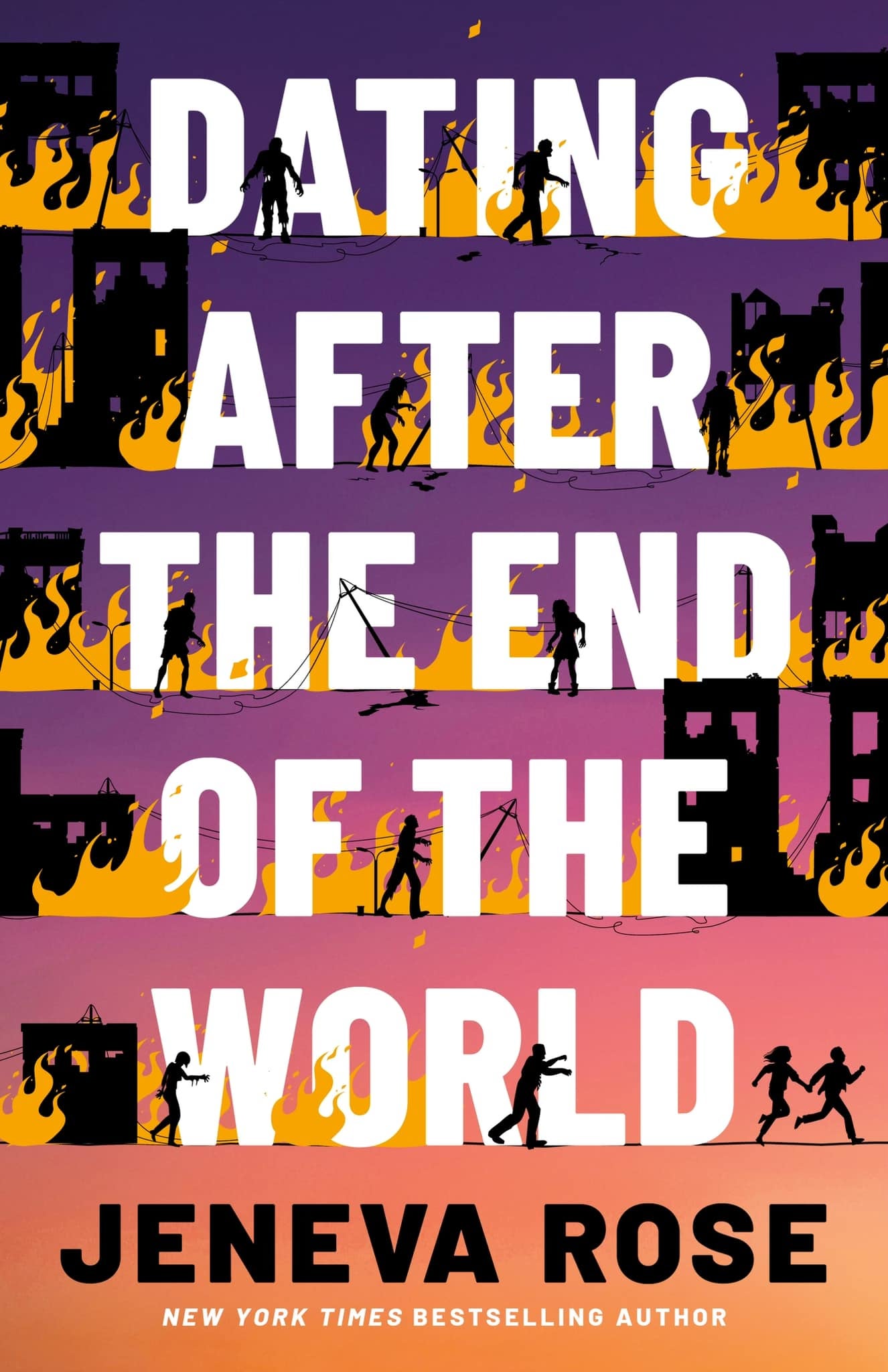
Book Review: Dating After the End of the World Explain and Summary – 5 Fails
Picture this: zombies munching brains, a high school bully turned survival buddy, and romance blooming in an apocalypse. Sounds mint, yeah? Except Jeneva Rose’s Dating After the End of the World is a cringe-fest that crashes harder than a zombie horde on
pavement. This 303-page slog throws together enemies-to-lovers, doomsday prep, and undead chaos but delivers a predictable mess with paper-thin characters and romance so forced you’ll wanna chuck it at the biters. Buckle up for why this October 2025 release is a hard pass, mate.
Detailed Summary
Chapter 1-3: Casey’s Childhood Hell and the Apocalypse Kicks Off
Casey Pearson spent her entire childhood being humiliated because her dad, a hardcore doomsday prepper, turned their home into a bunker fortress. Kids at school called her “Doomsday” and “Head Case Casey,” with Blake Morrison leading the charge as her relentless bully.
By eighteen, she’d had a gutful and bolted to medical school, vowing never to return to that nightmare compound. Fast forward a decade—Casey’s now a doctor in Chicago, engaged to fellow physician Nate, living her best non-prepper life.
Then the world goes tits up during her hospital shift. A mysterious flu-like virus spreads like wildfire, turning patients into zombie-like creatures called “biters.”
People lose their memories or go full undead, and chaos erupts in the streets. To make it worse, non-infected humans start killing each other like it’s The Purge, adding human monsters to the zombie problem.
Nate, her fiancé, ditches Casey mid-attack like the coward he is, leaving her to fight off biters solo with whatever medical supplies she can grab. With nowhere safe to go and the city collapsing, Casey realizes her dad’s paranoid prepping might actually save her arse.
She loads up her car and makes the dangerous journey back to her childhood compound, dodging zombies and murderous survivors along the way. The drive is tense, filled with near-death encounters and Casey’s internal dread about seeing her estranged father again.
Chapter 4-6: Blake’s Back and It’s Awkward as Hell
Casey arrives at the compound expecting just her dad, but surprise—Blake Morrison, her high school tormentor, has moved in and become her dad’s best mate. Blake’s now a former Navy SEAL, all grown up and annoyingly handsome, running drills and acting like he owns the place.
To add insult to injury, Blake’s sleeping in Casey’s childhood bedroom because the compound’s packed with other survivors. Casey’s forced to bunk with him, sharing tight quarters that make her blood boil.
Blake hasn’t dropped the cruel nicknames—he still calls her “Doomsday” and “Head Case,” which her dad brushes off as “banter.” Casey’s furious that her father trusts this bloke who made her teenage years hell.
The compound houses several other families, including Casey’s childhood friend Tessa, who’s now married with kids and thrilled to see her. There’s also a maternal figure named Linda, a love-obsessed girl named Jenna, and a few other survivors who barely register as characters.
Blake and Casey bicker constantly, their forced proximity sparking heated arguments. He criticizes her fighting skills despite her medical training, and she fires back about his toxic personality.
The group runs daily drills—weapons training, zombie defense strategies, and supply runs. Casey struggles to keep up, her throwing stars technique rusty after years away.
Blake watches her train with a smirk, offering condescending tips that make her want to stab him with her shuriken. The tension’s thick, but it’s more annoyance than chemistry at this point.
Chapter 7-10: Flashbacks Reveal Blake’s Bullying Backstory
The narrative jumps back to high school, showing how Blake relentlessly mocked Casey for her prepper lifestyle. He’d make jokes about her bunker, her MRE lunches, and her survivalist dad in front of the whole school.
But then senior year, something shifted—Blake stopped the bullying and actually started being nice to Casey. They bonded over late-night conversations, and Casey fell hard for him.
Prom night, they shared a magical moment, and Casey thought maybe he’d changed. Except the next week, Blake humiliated her in front of everyone at a party, revealing he’d only been nice on a dare from his mates.
Casey was crushed, her trust shattered, which is why she harbors such rage toward him now. Back in the present, Casey confronts Blake about the past, but he’s evasive and defensive.
He claims he was a stupid kid, but his behavior hasn’t really improved—he’s still calling her names and acting superior. The group faces their first major zombie attack, with biters swarming the compound’s perimeter.
Casey freezes mid-fight, her trauma from the hospital overwhelming her. Blake swoops in to save her, killing the biters with brutal efficiency.
She’s pissed that she needed rescuing, determined to prove she’s capable. The attack reveals cracks in the group’s defenses, and Casey’s dad organizes a meeting to strategize improvements.
Chapter 11-14: Supply Runs, Betrayals, and Forced Romance
The compound runs low on medical supplies, so Casey volunteers for a dangerous run into town. Blake insists on joining her, claiming it’s too risky for her to go alone, which infuriates Casey.
Their supply run goes sideways when they encounter a group of hostile survivors trying to steal their truck. A shootout ensues, with Casey and Blake fighting side-by-side against the raiders.
During the chaos, Casey sees Blake’s protective instincts kick in—he shields her from gunfire multiple times. Back at the compound, Casey starts noticing Blake’s softer side when he’s not being a dickhead.
He helps Tessa’s kids with homework, fixes broken equipment without complaint, and bonds with Casey’s dad over hunting trips. Casey’s conflicted—she wants to hate him, but his actions suggest he’s changed.
A major betrayal rocks the group when one of the survivors, revealed to be a plant from a rival faction, steals supplies and nearly gets everyone killed. The traitor’s identity is telegraphed chapters earlier, making the “twist” laughably obvious.
Casey’s dad is devastated by the betrayal, and the group’s trust fractures. Blake steps up as a leader, organizing patrols and security improvements.
Casey finds herself attracted to his competence, which makes her angrier at herself. They share a moment during a late-night watch shift, with Blake opening up about his time in the military and his regrets about high school.
Casey softens slightly, but she’s not ready to forgive him yet. The chapter ends with a massive biter horde approaching, forcing the group to barricade themselves inside.
Chapter 15-18: The Horde Attack and Casey’s Dad’s Death
The biter horde is the largest yet, with hundreds of zombies slamming against the compound’s walls. Everyone fights desperately, throwing stars flying, bullets spraying, and hand-to-hand combat breaking out when biters breach the gates.
Casey proves herself in battle, taking down multiple zombies with precision throws. Blake fights beside her, their teamwork surprisingly effective despite their animosity.
During the chaos, Casey’s dad is bitten while saving a child. Casey watches in horror as he transforms, the virus working faster than expected.
Before he fully turns, he tells Casey he’s proud of her and that the compound is hers now. It’s meant to be emotional, and some readers cried, but the scene feels rushed and underdeveloped.
Casey’s forced to put her dad down before he becomes a biter, a traumatic moment that Blake helps her through. In the aftermath, Casey grieves while the group rebuilds.
Blake comforts her, holding her while she cries, and their relationship shifts from enemies to something more complicated. The grief pushes them together, with Casey clinging to Blake for emotional support.
It feels less like genuine connection and more like plot convenience hitting the 50% mark. They kiss during a vulnerable moment, and it’s awkward and underwhelming given the buildup.
The group decides they need to fortify the compound better, with Casey taking over leadership alongside Blake. There’s tension as some survivors question Casey’s authority, but Blake backs her up.
Chapter 19-22: Romance Ramps Up, Villain Returns, Casey Loses Brain Cells
Casey and Blake grow closer, sharing more intimate conversations and stolen kisses between zombie attacks. Blake confesses he’s always had feelings for Casey, even back in high school, which is why he bullied her—classic toxic excuse.
Casey, surprisingly, accepts this garbage explanation despite it being textbook abuser logic. They start sneaking off for alone time, with the romance overtaking the survival plot.
Their first sex scene happens around the 66% mark, and it’s hilariously tame for a post-apocalyptic thriller—lots of euphemisms and fade-to-black moments despite earlier graphic zombie violence. Also, they have unprotected sex in a zombie apocalypse, which is criminally stupid.
No one thinks about pregnancy or STDs when survival should be the priority. The villain from the earlier betrayal returns with a larger group, demanding the compound’s supplies.
Casey, who’s been reasonably smart up until now, suddenly loses all brain cells and trusts the villain’s lies. He claims he just wants to negotiate, and Casey believes him despite Blake’s warnings.
It’s frustrating TSTL (too stupid to live) behavior that only exists to move the plot. The villain’s crew attacks during the negotiation, kidnapping several group members and stealing critical supplies.
Blake and Casey mount a rescue mission, which involves sneaking into the enemy camp and fighting their way out. The action sequences are decent but nothing groundbreaking.
They rescue the hostages and return to the compound, but the damage is done—people are injured, morale is low, and resources are depleted. Casey swears they’ll always have patrols now, vowing never to be caught off guard again.
Chapter 23-26: Wedding Plans in an Apocalypse and the Cliffhanger Ending
Despite just losing her dad and barely surviving multiple attacks, Casey and Blake decide to get married. Because nothing says “smart decisions” like a wedding during a zombie apocalypse.
The group plans a celebration to boost morale, with everyone pitching in for decorations and food. Jenna, the love-obsessed character, is thrilled and helps with planning.
The wedding day arrives, and in peak stupidity, they abandon the sniper tower and stop all patrols so everyone can attend. After just swearing they’d never drop their guard, they do exactly that.
The ceremony is sweet in a hallmark movie way, with Blake and Casey exchanging vows about surviving the end of the world together. Blake delivers the line: “Without you, my world ends.” Casey replies: “The world already ended, Blake.” He counters: “Only for a little bit, until you came back into it.”
It’s meant to be romantic but feels cheesy. Mid-reception, the villain returns with a massive force, launching a coordinated attack on the undefended compound.
Biters and hostile humans storm in simultaneously, catching everyone off guard. The book ends on a cliffhanger with the group under siege, no clear way out, and Casey realizing her mistake.
It’s a cheap setup for book two, leaving readers frustrated instead of satisfied. The epilogue teases that “nothing will be the same,” but it’s hollow given how predictable everything’s been.
Overall, the plot drags through 303 pages that could’ve been 200. The pacing crawls, bogged down by repetitive bickering and internal monologues.
The zombies, called “biters” in a lame attempt at originality, aren’t scary or interesting. The survival aspects are surface-level, with no real tension about resources or long-term planning.
The romance dominates despite this being marketed as action-apocalypse, and it’s the weakest part. Character motivations flip-flop based on plot needs rather than organic development.
Casey goes from competent doctor to damsel to leader with no smooth transitions. Blake swings between toxic bully and perfect protector with no middle ground.
The supporting cast is forgettable—Tessa exists to be Casey’s cheerleader, Linda is generic mom figure, and the other survivors are zombie fodder. The “big twist” betrayal is visible from a mile away, and the villain is cartoonishly evil with zero nuance.
By the end, you’re left wondering why anyone thought a wedding was a good idea when zombies are literally outside the walls. The book tries to balance multiple genres but masters none—the romance is forced, the action is repetitive, the horror isn’t scary, and the survival elements lack depth.
It’s a surface-level romp that might entertain if you’re bored, but don’t expect anything memorable. The writing overexplains everything—characters don’t just smile, their lips quirk up tentatively on one side of their mouth below their nose.
It’s exhausting. Dialogue feels written rather than natural, with exposition dumps disguised as conversation.
The flashbacks interrupt present-day tension, killing momentum when the story should accelerate. And that cliffhanger ending? Pure manipulation to force readers into book two without earning it.
Characters
Casey Pearson is the female main character and narrator, a 29-year-old doctor who grew up with a doomsday-prepper father. She’s meant to be strong and capable, but her characterization is wildly inconsistent.
One chapter she’s competently fighting zombies, the next she’s frozen with trauma. She makes stupid decisions like trusting obvious villains and abandoning security protocols for a wedding.
Her grudge against Blake is justified, but she forgives him way too easily despite years of psychological abuse. The book tells us she’s tough and independent, but shows her constantly needing Blake’s rescue.
Her medical background barely factors into the plot beyond basic first aid. Casey’s emotional intelligence is nonexistent—she’s supposedly a doctor but acts like a thirteen-year-old throwing tantrums.
Blake Morrison is the male lead and Casey’s former high school bully turned love interest. He’s a 30-year-old ex-Navy SEAL who’s now best mates with Casey’s dad.
Blake’s redemption arc is garbage—he still calls Casey cruel nicknames while supposedly being reformed. His excuse for bullying her (“I liked you so I tortured you”) is textbook abuser logic that gets romanticized.
He’s protective to the point of controlling, constantly undermining Casey’s capabilities. The book wants us to see him as a heroic alpha male, but he comes across as toxic and patronizing.
His character has zero depth beyond “brooding military guy with a soft side.” Blake’s supposed growth happens off-page—we’re told he’s changed but rarely shown it convincingly.
Casey’s Dad is the doomsday prepper who raised Casey in survivalist paranoia. He’s vindicated when the apocalypse actually happens, but instead of gloating, he’s portrayed as wise and caring.
His bonding with Blake over Casey’s head feels like a betrayal, especially since he dismisses Casey’s valid trauma about the bullying. His death is meant to be the emotional core but falls flat because he’s more plot device than fully realized character.
He exists to give Casey survivor skills and then die to push her and Blake together.
Nate is Casey’s fiancé who abandons her during the first zombie attack. He’s cartoonishly awful—cowardly, selfish, and manipulative.
His only purpose is to make Blake look better by comparison. Nate represents Casey’s “old life” that she needs to leave behind, but he’s so one-dimensional it’s laughable.
Tessa is Casey’s childhood friend and fellow compound survivor, now married with kids. She exists solely to be Casey’s cheerleader, encouraging her to give Blake a chance.
Tessa has no personality beyond “supportive friend” and “worried mom.” Her kids are mentioned but never developed, just background noise.
Linda is the maternal figure at the compound who cooks and comforts people. She’s a walking stereotype with zero complexity—the camp mother who bandages wounds and offers sage advice.
Jenna is the “love-obsessed girl” who squeals about Casey and Blake’s relationship. She’s irritatingly one-note, existing only to giggle about romance during an apocalypse.
The Villain is the traitor within the compound who later returns with a hostile group. His identity is obvious chapters before the reveal.
He’s evil for evil’s sake with no compelling motivation. The book tries to make him threatening, but he’s incompetent enough to keep losing to the heroes.
Secondary Survivors include various unnamed compound residents who serve as zombie fodder. They have no distinct personalities and you can’t tell them apart.
When they die, there’s no emotional impact because they were never developed. The entire character roster feels like rough drafts—surface traits without depth.
Blake and Casey’s dynamic is meant to be fiery enemies-to-lovers but reads more like toxicity romanticized. The side characters are cardboard cutouts fulfilling genre requirements rather than feeling like real people surviving an apocalypse.
| Character | Role | Major Flaw |
| Casey Pearson | Protagonist, doctor, compound leader | Inconsistent characterization, makes stupid decisions |
| Blake Morrison | Love interest, ex-Navy SEAL | Toxic behavior romanticized, abuser logic justified |
| Casey’s Dad | Doomsday prepper, father figure | Dismisses Casey’s trauma, plot device death |
| Nate | Casey’s ex-fiancé | Cartoonishly evil coward with zero depth |
| Tessa | Casey’s best friend | No personality beyond cheerleader role |
| Linda | Maternal compound member | Walking stereotype, camp mother trope |
| Jenna | Love-obsessed survivor | One-note character, annoying comic relief |
| The Villain | Traitor/antagonist | Predictable, incompetent, no compelling motivation |
Compare with Other Works
Dating After the End of the World desperately wants to be The Last of Us meets Fourth Wing but fails spectacularly at both. Readers directly compared it to Fourth Wing, noting it feels like a “watered-down copy” without the tension or complexity that makes that enemies-to-lovers trope satisfying.
The Walking Dead does zombie survival infinitely better, with actual character development, moral complexity, and stakes that matter. Rose’s biters are laughably unthreatening compared to TWD’s walkers because the focus is on forced romance rather than genuine horror.
The Last of Us balances apocalyptic survival with emotional relationships naturally—Joel and Ellie’s bond feels earned, while Casey and Blake’s feels manufactured. Several readers mentioned this book is like “a teenager drama-filled version of The Walking Dead and The Last of Us with unnecessary smut thrown in.”
Zombieland handles apocalyptic rom-com better with actual humor and self-awareness. That film knows it’s absurd and leans into it, whereas Rose’s book takes itself too seriously while being equally ridiculous.
For readers wanting good post-apocalyptic romance, reviewers recommended Claire Kent, Sarah Lyons Fleming, Keira Andrews, Gwendolyn Harper, and Imogen Keeper instead. Those authors apparently understand how to balance survival stakes with romance without sacrificing one for the other.
The cruel irony is Rose’s own thriller The Perfect Marriage (which sold over 2 million copies) is significantly better than this genre-mashing experiment. That book at least delivered on its twisty thriller premise.
Dating After the End tries to be a Hallmark movie with zombies, but Hallmark movies work because they embrace their formula with sincerity. This book can’t decide if it’s campy fun or serious apocalyptic drama, failing to commit to either.
The enemies-to-lovers arc pales in comparison to well-executed versions like The Hating Game or even The Proposal. Those books understand that “enemies” need chemistry and witty banter, not psychological abuse repackaged as romance.
The redemption arc for Blake is insulting compared to actual reformed bullies in fiction who do the work to change. This book just expects readers to forget years of trauma because he’s hot and protective now.
| Book/Show | Similarity | Why It’s Better |
| The Walking Dead | Zombie apocalypse survival | Actual character development, moral complexity, real stakes |
| The Last of Us | Apocalyptic world with relationships | Earned emotional bonds, balance between action and heart |
| Fourth Wing | Enemies-to-lovers fantasy | Genuine tension, complexity, chemistry that works |
| Zombieland | Apocalyptic comedy | Self-aware humor, doesn’t take itself too seriously |
| The Hating Game | Workplace enemies-to-lovers | Chemistry over toxicity, witty banter, proper redemption |
Achievement
Jeneva Rose went from zero book sales in June 2020 to selling over 1 million copies of The Perfect Marriage in just three years. That debut thriller has now sold over 2 million copies worldwide and been translated into 27 languages.
Rose earned a $1 million advance for The Perfect Divorce sequel and another novel, showing major publisher confidence in her thriller work. Her books have been optioned for film and TV, with multiple production companies interested.
Rose built her empire through social media, particularly TikTok where she has 700,000 followers and Instagram with 65,000 followers. One TikTok video pretending to be her protagonist from The Perfect Marriage earned nearly 5 million views in 24 hours and sold 7,000 copies in four days.
That viral success pushed The Perfect Marriage to #3 overall on Amazon’s bestseller list—not in a category, but across the entire platform. Her Perfect Divorce hit #1 on the New York Times bestseller list in 2025, cementing her as a major thriller voice.
She’s published 14 books across multiple publishers including Blackstone Publishing, Simon & Schuster, and Montlake. Simon & Schuster recently acquired four new thrillers from her in a “hotly-contested 10-publisher auction,” demonstrating continued industry demand.
Her Facebook reading group “Silly Geese” has 5,000 dedicated members who call her Mother Goose. Amazon selected Dating After the End of the World for its “First Reads” program in September 2025, giving Prime members early access.
The book released October 1, 2025, and is her first venture into apocalyptic romance after establishing herself in thriller territory. However, despite the author’s previous success, Dating After the End of the World has received mixed reviews.
On Goodreads, it has 777 reviews as of early October 2025, with ratings spanning from 1 to 5 stars—far more divisive than her thriller work. Many readers gave it 3 stars or below, citing predictability, character issues, and genre confusion.
The book is 303 pages in paperback, published by Montlake (Amazon’s romance imprint). There’s no concrete sales data yet since it’s brand new, but given Rose’s track record, it’ll likely sell decently on brand recognition alone.
Book two has been confirmed by Rose herself, so the cliffhanger ending is deliberate franchise setup. Whether Dating After the End achieves anywhere near The Perfect Marriage’s 2 million copies remains to be seen, but early reader sentiment suggests it won’t reach those heights.
The book’s ranking on Amazon has fluctuated since release but hasn’t cracked the overall top 100 like her previous work did. It’s popular enough to get featured in “October 2025 Popular Releases” lists alongside heavy hitters like John Grisham and Patricia Cornwell.
Rose’s audiobook version released simultaneously on October 1, 2025, priced at $33.99 on Audible Australia. The book is available in ebook, paperback, and audio formats across global markets.
| Achievement | Details |
| Author’s Overall Book Sales | Over 2 million copies (The Perfect Marriage alone) |
| Languages Translated | 27 languages across her works |
| Author’s Advance for Sequel | $1 million for The Perfect Divorce + another novel |
| TikTok Followers | 700,000 followers |
| Instagram Followers | 65,000 followers |
| Viral TikTok Views | Nearly 5 million views in 24 hours |
| Sales from One Viral Video | 7,000 copies in 4 days |
| Amazon Bestseller Rank | #3 overall on Amazon (for The Perfect Marriage) |
| New York Times Bestseller | The Perfect Divorce hit #1 in 2025 |
| Goodreads Reviews (Early October) | 777 reviews, mixed ratings (1-5 stars) |
| Page Count | 303 pages |
| Release Date | October 1, 2025 |
| Publisher | Montlake (Amazon’s romance imprint) |
| Audiobook Price | $33.99 AUD on Audible Australia |
| Book Two Status | Confirmed by author |
Final Verdict:
Look, I wanted to love a zombie rom-com. The premise sounded unhinged in the best way—survivalist dad, childhood bully, apocalypse forcing enemies together.
But execution matters, and Dating After the End of the World fumbles every element. The zombies aren’t scary, the romance is toxic nonsense dressed up as redemption, and the characters make decisions so stupid you’ll yell at the book.
Casey and Blake’s relationship isn’t enemies-to-lovers; it’s abuse-victim-forgives-abuser with zero accountability. That’s not romantic—it’s concerning.
The plot drags through 303 pages when 150 would’ve sufficed. Repetitive bickering replaces actual tension, and the apocalypse feels like background noise to the mediocre romance.
Supporting characters are cardboard cutouts who exist to die or cheer on the leads. The “big twist” is telegraphed so early it’s insulting.
And that cliffhanger? Manipulative garbage forcing you into book two without earning your investment. Save your money, mates.
Reread The Walking Dead comics, replay The Last of Us, or binge Zombieland instead. Those understand how to balance horror, action, and relationships without sacrificing quality.
If you absolutely need apocalyptic romance, check out the authors recommended in reviews—Claire Kent, Sarah Lyons Fleming, and others who apparently do it properly. Jeneva Rose should stick to thrillers where she excels.
This genre experiment proves not every author can successfully pivot. Sometimes you should stay in your lane, and Rose’s lane is twisty domestic thrillers, not zombie love stories.
Drop a comment below—have you read this trainwreck? Did Blake’s toxic behavior make you rage-quit too? Or am I being too harsh on apocalyptic romance? Let’s hear it!

Rachel Gillig's duology finale drags a drugged captive queen through five tournaments thrown by the husband who murdered everyone she loved. 27,000 readers rate it 4.36 — here's what the stars aren't telling you.
What if a rock tour in '89 turned your childhood into a nightmare that chases you for 29 bloody years? M.L. Rio's Hot Wax dives into that chaos with Suzanne, a kid dragged into her ...