The House Saphir Review: 3 Wives + 432 Pages = Disappointing
Marissa Meyer’s latest romantasy stumbles through a Bluebeard retelling where fake witch Mallory Fontaine cons her way into exorcising a murderous ghost from a haunted mansion. Spoiler alert: the ghost isn’t the biggest problem—it’s the sluggish pacing, recycled world-building from Gilded, and a villain with less bite than a toothless vampire that’ll leave you wondering why this needed 432 pages to tell a story that drags harder than a Monday morning commute.
Released November 4, 2025, this standalone proves Meyer’s 7 million book sales worldwide don’t automatically translate to consistently gripping storytelling.

Detailed Summary
The story opens with Mallory Fontaine running dodgy ghost tours of the House Saphir in the city of Morant, where Count Bastien Saphir—aka Monsieur Le Bleu—murdered his first wife over a century ago. She’s flogging fake magical trinkets to gullible tourists alongside her sister Anaïs, barely scraping rent together. Unlike their dead mum who was a proper witch, Mallory’s only “gift” is seeing ghosts, which sounds cool until you realize it’s mostly just annoying dead people whinging at you.
Her constant companion is Triphine, the melodramatic ghost of Le Bleu’s first victim, who follows Mallory around complaining about phantom ailments like the world’s most irritating hypochondriac flatmate. The setup feels promising—two con artist sisters hustling in a magical city—but it’s all window dressing for what becomes a predictable haunted house slog.
Chapter 1-3: Enter Armand Saphir, Le Bleu’s great-great-grandson, who rocks up to one of Mallory’s tours looking like he stepped out of a romance novel photoshoot. He’s convinced the Fontaine sisters are legit witches and offers them a massive payday to exorcise his ancestor’s vengeful spirit from the family’s country estate. Mallory, being skint and desperate, agrees despite having zero actual exorcism skills.
The opening chapters are the strongest part of this book—Meyer establishes the con artist dynamic well, the banter between Mallory and Anaïs feels genuine, and the gothic atmosphere of Morant crackles with potential. But this energy doesn’t last.
Chapter 4-8: The sisters arrive at the Saphir estate, a sprawling gothic mansion that’s basically “every haunted house trope you’ve ever read” rolled into one. There are creaky floorboards, flickering candles, mysterious locked rooms, and supernatural creatures called voirloups (werewolf-adjacent beasties) and cheval mallets (fiery demon horses). Meyer spends these chapters setting atmosphere while Mallory pretends to perform elaborate exorcism rituals she’s making up on the spot.
Here’s where the pacing starts sagging like wet bread. We get endless descriptions of Mallory wandering corridors, bumping into ghosts of Le Bleu’s other murdered wives, and having repetitive internal monologues about whether she can pull off this con. The worldbuilding feels copy-pasted from Gilded—same Seven Gods system, same “god-gifts” concept, same types of magical creatures with French names instead of German ones.
Chapter 9-15: Romance subplot alert! Mallory and Armand start circling each other with all the sexual tension of two teenagers at a school dance. He shows her his greenhouse (riveting), they have philosophical chats about plants, and she realizes maybe he’s not just a pretty face with a chequebook. Problem is, their chemistry reads more “mildly interested acquaintances” than “forbidden romance.”
Meanwhile, the actual plot—you know, the murderous ghost situation—treads water. Le Bleu’s spirit is supposedly growing stronger, but mostly he just manifests as vague creepy vibes and ominous atmosphere. For a villain who murdered three wives, he’s got less presence than a fart in a hurricane.
Chapter 16-22: Two monster hunters, Fitcher and Constantino, show up to add some action to the proceedings. They’re the highlight of the mid-section, bringing actual personality and humor that makes you realize how flat everyone else feels by comparison. They explain that Le Bleu is trying to complete a ritual requiring five victims—he’s already got three dead wives, so he needs two more to achieve… something? The stakes remain frustratingly vague.
This section drags harder than anything. Meyer pads out the middle with repetitive scenes of Mallory “investigating” while maintaining her fake witch persona, Anaïs being mysteriously absent for convenience, and Armand being suspiciously nice in that “is he secretly evil?” way that telegraphs plot twists from kilometers away.
Chapter 23-28: A new murder happens at the estate—finally, some bloody action! Except the investigation scenes read like a checklist of mystery clichés. Mallory’s convinced the killer is mortal, not supernatural, which means someone living in the house is guilty. Shocking revelation: in a book with six suspects, it’s exactly who you’d guess if you’ve read any thriller ever.
The “twist” about who’s really behind everything lands with all the impact of a feather on concrete because Meyer telegraphs it so obviously. Character motivations shift without proper buildup, people act suspiciously for plot convenience, and red herrings get waved around like flags at a parade.
Chapter 29-35: The climax finally arrives, featuring a confrontation with Le Bleu’s spirit on the mansion roof during a conveniently timed fire. Mallory discovers she actually does have real magic—surprise!—because of her ancestry connecting to Gabrielle Savoy, Le Bleu’s fourth wife who survived. This revelation comes out of absolutely nowhere with minimal foreshadowing.
Gabrielle’s ghost shows up to help trap Le Bleu’s spirit in a candle (seriously), Armand catches Mallory when she falls off the roof in a romantic moment that should be swoonworthy but feels mechanical, and everything wraps up faster than a bargain basement present.
Epilogue: Mallory and Armand are together, the sisters’ money troubles are solved, and everyone lives happily ever after except the people who died. The ending rushes through resolution like Meyer suddenly remembered she had a word count limit, leaving character arcs feeling incomplete and plot threads dangling.
The entire story could’ve been trimmed by 150 pages without losing anything essential. The chapter structure frontloads all the interesting setup then meanders through a saggy middle before sprinting through an underbaked conclusion. For 432 pages, you’d expect more meat on these bones.
Character Plots
Mallory Fontaine: Our protagonist is a con artist who can see ghosts, descended from a line of witches but supposedly without real magic. She’s meant to be clever, sassy, and morally grey, but mostly comes across as inconsistently written. In early chapters she’s street-smart and cautious; by the middle she’s making obviously stupid decisions to keep the plot moving. Her character arc about “learning to trust” and “discovering her true power” hits every predictable beat without bringing anything fresh to the table. The moment she suddenly has real magic at the climax feels unearned because Meyer doesn’t properly seed it throughout. She’s less “complex antihero” and more “whatever the plot needs right now.”
Armand Saphir: The love interest who’s supposed to be mysterious and swoon-worthy but reads more like a wet blanket with good bone structure. He’s shy, awkward around people, loves plants and herbs, and is unfailingly nice to Mallory despite her obviously conning him. The “is he secretly a murderer?” subplot gets milked for tension, but anyone with basic pattern recognition can see he’s exactly what he appears: a decent bloke stuck with a terrible family legacy. His personality shifts between scenes depending on whether Meyer needs him to be suspicious or sympathetic. The romance between him and Mallory never catches fire—they have some cute moments in his greenhouse, but their relationship develops more through narrative necessity than genuine chemistry. By the end, you’re supposed to care deeply about them together, but it’s hard to invest when their attraction feels paint-by-numbers.
Anaïs Fontaine: Mallory’s older sister gets tragically underused. She’s got a god-gift related to Velos (one of the Seven Gods) that she considers “impure” and tried to remove, which is genuinely interesting backstory that never gets proper exploration. For huge chunks of the book she conveniently disappears so Mallory can have solo adventures, then reappears when the plot needs her skills. She deserved her own subplot and agency instead of being reduced to “supportive sister who advances plot when necessary.” The dynamic between the sisters starts strong but fizzles because Meyer keeps them separated for convenience.
Count Bastien Saphir / Monsieur Le Bleu: Your villain who murdered three wives and now haunts his estate as a vengeful spirit should be terrifying. Instead, Le Bleu is a cardboard cutout antagonist who mostly exists offscreen as “ominous presence.” We’re told he’s dangerous and powerful, but his actual appearances amount to dramatic wind gusts and vague threats. For a retelling of Bluebeard—a tale about a serial killer whose horror comes from intimate domestic violence—this ghost version lacks psychological menace. The reveal of his motivations and methods undermines the original folktale’s themes, changing core elements that strip away what makes Bluebeard disturbing in the first place. He needed to be genuinely frightening instead of just another disposable supernatural baddie.
Triphine: The ghost of Le Bleu’s first wife who follows Mallory around as comic relief. She’s constantly complaining about phantom illnesses and injuries, which starts mildly amusing but grows tiresome fast. Her character exists solely to provide exposition about the murders and occasionally crack wise. She’s funny in small doses but lacks depth—we never really understand her beyond “murdered wife who won’t shut up about her symptoms.” The book hints at tragic backstory but never explores it meaningfully. She deserved better than being relegated to quirky sidekick status.
Fitcher & Constantino: The monster-hunting duo who show up mid-book and immediately steal every scene they’re in. Fitcher is gruff and experienced; Constantino is younger and more impulsive. Their banter sparkles with genuine wit that makes you realize how forced everyone else’s dialogue feels. They bring actual stakes and urgency when they discuss supernatural threats, making them feel like competent professionals in a story full of amateurs stumbling around. Unfortunately, they’re supporting characters who vanish for long stretches. If Meyer had centered the story on them instead, we might’ve had something special. As is, they’re glimpses of a better book that could’ve been.
Gabrielle Savoy: Le Bleu’s fourth wife who survived and became Mallory’s ancestor appears only at the climax to deliver deus ex machina assistance. She gets a rushed backstory about escaping the Count and hiding her magical lineage, which sounds fascinating but gets maybe five pages of exploration. Her spell-casting scene where she traps Le Bleu’s spirit is the most visually interesting moment in the book, but it feels unearned because we barely know her. She represents Meyer’s tendency to introduce compelling concepts then give them surface-level treatment.
Minor characters: Various estate servants, other ghosts, and Morant residents populate the background but remain forgettable. None develop beyond single-note characterizations needed for their plot function. The lack of meaningful supporting cast makes the world feel empty despite Meyer’s attempts at atmospheric description.
Compare With Other Works
| Book | The House Saphir | Heartless (Meyer) | Gilded (Meyer) |
| Pacing | Drags extensively in middle 200 pages | Consistently engaging throughout | Solid first half, rushed ending |
| Romance | Lukewarm chemistry, underdeveloped | Heart-wrenching, well-executed tragedy | Good tension and buildup |
| Villain | Weak antagonist with minimal presence | King as compelling morally grey figure | Erlking steals entire show |
| World-building | Recycled from Gilded with French coating | Unique Wonderland reimagining | Rich Germanic folklore foundation |
| Protagonist | Inconsistent characterization | Catherine is layered and memorable | Serilda’s wit carries narrative |
| Originality | Derivative of Meyer’s own work | Fresh take on Queen of Hearts | Inventive Rumpelstiltskin adaptation |
Versus other Bluebeard retellings: Compared to Angela Slatter’s “Bluebeard’s Wife” or Maria Tatar’s analysis work, Meyer’s version sanitizes and changes the core horror of the original tale. The intimate terror of discovering your husband’s murders gets replaced with generic ghost story beats. Other retellings lean into the psychological dread; Meyer opts for safe YA romantasy formula.
Versus contemporary romantasy: Stacked against Rebecca Ross’s “Divine Rivals” (mentioned in marketing comparisons), “The House Saphir” lacks the emotional gut-punch and wartime stakes that make Ross’s work compelling. Against “Fourth Wing” (also cited in promo), it’s missing the addictive pacing and high stakes that keep readers obsessed. It occupies uncomfortable middle ground—too slow for thriller fans, too light for horror enthusiasts, too predictable for mystery readers.
Meyer’s earlier work like “Cinder” and “Heartless” showed genuine innovation in fairytale retellings. “The House Saphir” feels like she’s coasting on established reputation rather than pushing creative boundaries. It’s particularly disappointing because the Bluebeard tale offers so much dark potential that remains unexplored here.
Achievements
Sales Performance:
- Marissa Meyer has sold 7+ million books worldwide across her entire catalog as of 2025
- The Lunar Chronicles series alone sold 651,000+ copies by 2015 (likely much higher now but specific current figures unavailable)
- Meyer secured an $800,000 four-book deal early in her career for the Lunar Chronicles
Rankings & Recognition for The House Saphir:
- Selected for Kids’ Indie Next List for November/December 2025
- Published by major house Feiwel & Friends (Macmillan imprint) on November 4, 2025
- 432-page hardcover with multiple international editions including UK (Faber), Australia (Penguin)
- Part of new 3-book fairytale retelling deal announced October 2024, with follow-ups scheduled for 2026 and 2027
Meyer’s Overall Accolades:
- Multiple #1 New York Times bestseller placements across different series
- YALSA Teens’ Top Ten winner for both “Cinder” (2012) and “Heartless” (2017)
- Publishers Weekly Best Books selection for “Cinder” (2012)
- Indies Choice Book Awards Honor for “Cinder” (2013)
- Golden Duck Awards Hal Clement Award first place for “Cinder” (2013)
- Dragon Awards nomination for “Archenemies” (2019)
- Published in 37+ foreign territories internationally
- Middle grade debut “Let It Glow” (co-written with Joanne Levy) hit NYT bestseller list in October 2024
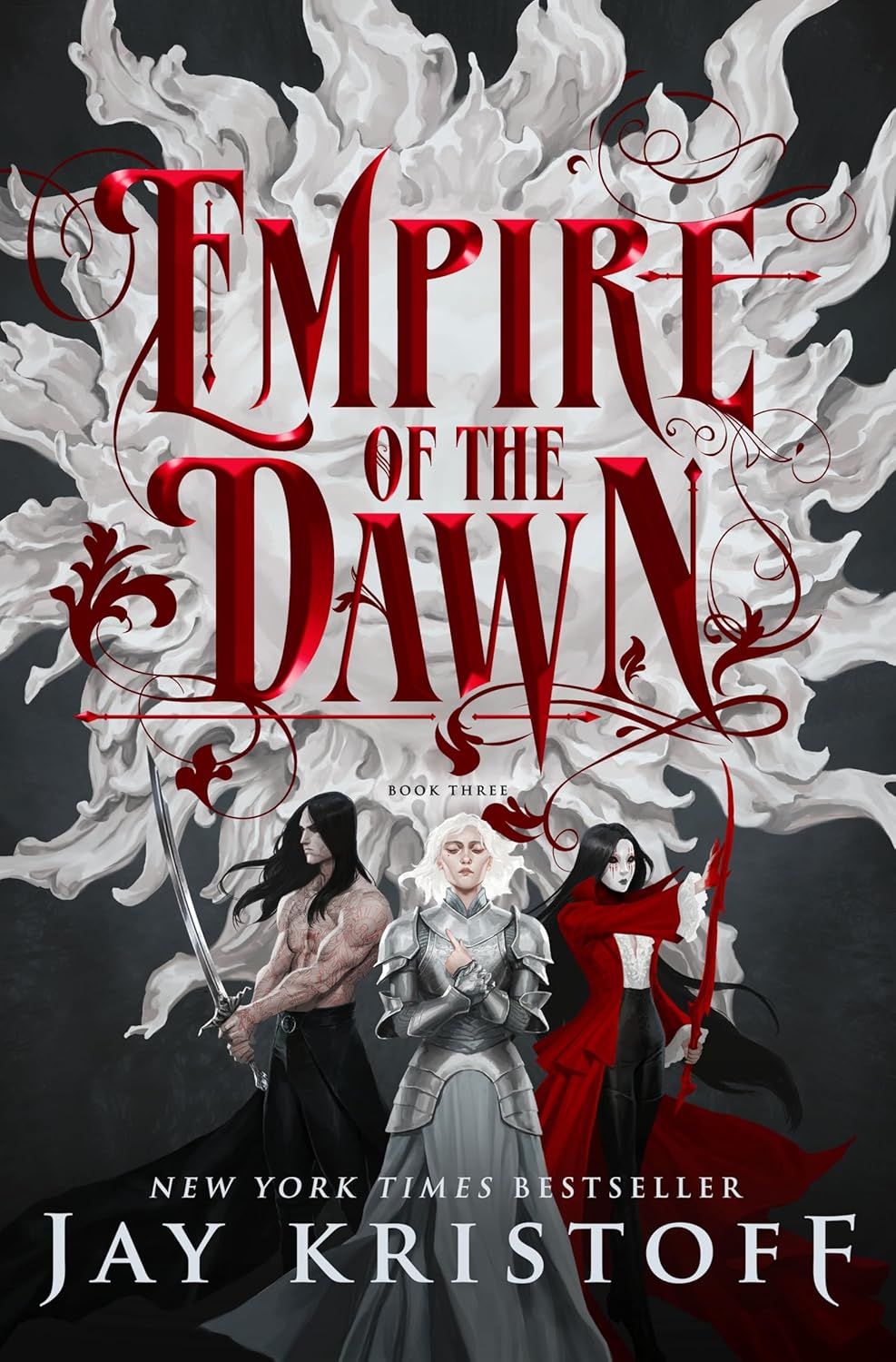
Gabriel de León's swan song arrives drenched in blood and vengeance, racing through 766 pages of vampire carnage as the Last Silversaint hunts the Forever King while his surrogate daughter Dior speeds toward certain doom ...

The transformation from maiden to monster happens on page 296 of this 336-page book. You read that right—Ayana Gray spends 260 pages on temple politics and teenage angst before Medusa finally gets her snake hair. ...
Goodreads Reception: Mixed reviews with ratings ranging from 3 to 5 stars. Many ARC readers praised atmosphere but criticized pacing and predictability. No confirmed placement on any bestseller lists yet (too recent for sales data).
Film Adaptation: Her Lunar Chronicles series is being adapted into animated feature by Warner Bros. Pictures Animation and Locksmith Animation, scheduled for theatrical release November 2028. No adaptation news for The House Saphir.
The numbers show Meyer has commercial clout and established fanbase, but “The House Saphir” specifically hasn’t broken out as a phenomenon despite the marketing push. It’s riding Meyer’s reputation rather than building its own legacy.
Verdict: Skip This Unless You’re A Completist
Look, Meyer’s proven she can write brilliant fairytale retellings—”Heartless” ripped hearts out, “Cinder” launched a phenomenon. But “The House Saphir” reads like she’s phoning it in between better projects. The 432 pages could’ve been 280 if she’d cut the repetitive middle section where Mallory wanders corridors having the same internal debates repeatedly.
Major Problems:
The pacing is genuinely atrocious. You’ll spend 200+ pages in the saggy middle waiting for plot developments you can see coming from chapters away. Meyer mistakes atmosphere for story—yes, the mansion is creepy, but describing creepy hallways doesn’t substitute for actual narrative momentum.
The worldbuilding is “Gilded” but make it French. Same Seven Gods system, same god-gifts concept, same types of monsters with different names. If you’ve read “Gilded,” this feels like budget cosplay of Meyer’s own work. The magic system gets explained through exposition dumps rather than organic discovery, making it feel academic rather than wondrous.
Characters act inconsistently whenever the plot needs them to be stupid or suspicious. Mallory goes from street-smart to making obviously terrible decisions. Armand’s personality shifts between “suspicious possible murderer” and “cinnamon roll plant daddy” without smooth transitions. Their romance develops because the genre requires it, not because their chemistry earns it.
The villain is embarrassingly weak. Le Bleu should be terrifying—he’s a serial wife-murderer! Instead he’s vague threatening vibes and convenient plot device. His motivations get muddled, his presence feels minimal, and the climactic confrontation resolves through deus ex machina rather than earned character growth.
Minor Positives (to be fair):
Fitcher and Constantino are genuinely entertaining when they appear. Triphine has occasional funny moments. Some atmospheric descriptions work well. The concept of con artists pretending to be witches had potential that never gets properly realized.
Who This Might Work For:
If you’re a Meyer completist who needs to read everything she publishes, you’ll get through this without rage-quitting. If you’ve never read Bluebeard and don’t care about honoring source material, the basic haunted house mystery might entertain you. If you’re 13-15 years old and new to romantasy, this provides safe entry point without challenging content.
Who Should Absolutely Skip:
Anyone who loved Meyer’s earlier work and expects that quality level. Readers seeking genuinely creepy gothic horror. Mystery fans who like clever plotting instead of telegraphed twists. Romance readers wanting electric chemistry. Anyone who appreciates tight pacing. People familiar with the Bluebeard tale who’ll be frustrated by how Meyer changes it without improving it.
The book isn’t offensively terrible—it’s just mediocre, which might be worse given Meyer’s proven capabilities. It’s readable but forgettable, the literary equivalent of eating plain toast when you were promised a feast. With so many brilliant books competing for your time, spending 432 pages on this feels like poor investment when you could read literally anything else.
Rating: 2.5 out of 5 stars (and that’s generous)
What’s your take? Have you suffered through this one, or are you wisely spending your reading time elsewhere? Drop your thoughts below—especially if you’ve read better Bluebeard retellings we should all check out instead.
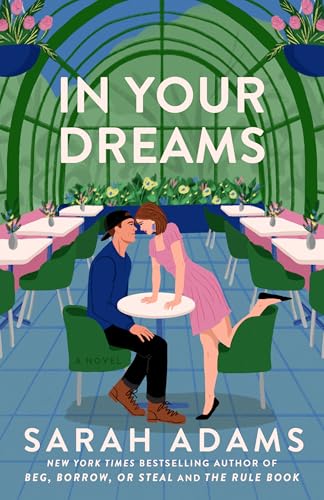
In Your Dreams is a small-town, friends-to-lovers, chef‑meets‑farmer romance set in Rome, Kentucky, where burned‑out chef Madison Walker returns home to open a farm‑to‑table restaurant with her brother’s best friend, James Huxley.[1][2] It’s ideal for ...
Gabriel de León's swan song arrives drenched in blood and vengeance, racing through 766 pages of vampire carnage as the Last Silversaint hunts the Forever King while his surrogate daughter Dior speeds toward certain doom ...