I, Medusa’s 336 Pages Hide 40 Pages | Book Review + Explained
The transformation from maiden to monster happens on page 296 of this 336-page book. You read that right—Ayana Gray spends 260 pages on temple politics and teenage angst before Medusa finally gets her snake hair. By then, you’ve endured enough acolyte training montages and schoolyard bullying to make Hogwarts look thrilling.
This adult debut reads younger than Gray’s actual YA trilogy, which is a spectacular achievement in the wrong direction.

Detailed Summary
Island Life and Impossible Naivety
The book opens with 17-year-old Medusa—”Meddy” to literally everyone because apparently that’s less monstrous—living on a desolate island with her immortal sisters Stheno and Euryale, plus her parents Ceto and Phorcys, washed-up sea gods who lost their power when the Olympians took over. Meddy spends her days feeling inferior to her gorgeous, immortal sisters and dreaming of adventure beyond the island’s shores.
Her mother is an alcoholic mess who resents her daughters, particularly Meddy. Her father is emotionally absent, barely acknowledging his children’s existence. The family dynamic is pure dysfunction wrapped in divine genetics, which would be interesting if Gray didn’t telegraph every emotional beat with the subtlety of a falling pyramid.
The inciting incident arrives when Euryale’s suitor—a demigod named Linos—shows up to court her eldest sister. Meddy immediately clocks him as abusive trash after witnessing him manhandle Euryale. When Linos tries forcing himself on Euryale one night, Meddy intervenes and accidentally kills him by shoving him off a cliff.
This murder attracts divine attention—specifically Athena’s. The goddess appears, impressed by Meddy’s “rage” and intelligence, and offers her a position training to become a priestess at the Parthenon in Athens. Meddy jumps at the chance despite her sisters’ protests, because apparently leaving your family after committing manslaughter to work for a notoriously petty goddess sounds like a brilliant career move.
Athens and the Endless Priestess Auditions
Meddy arrives in Athens and Gray dedicates roughly 150 pages to what basically amounts to magical girl academy filler content. The city is described in loving detail—markets, streets, the Acropolis—but it never feels authentically ancient Greek. It reads like a Renaissance faire with better budget.
At the temple, Meddy joins other acolyte candidates including Apollonia (who becomes her best friend), Kallisto (the mean girl stereotype in a chiton), and several forgettable girls who exist to populate training montages. They undergo trials and competitions to prove their worth to Athena and earn permanent priestess positions.
The trials are generic at best. Physical endurance tests, intellectual challenges, demonstrations of piety—none of which generate tension because you already know Meddy will succeed. She’s the protagonist and more importantly, the title character. Dramatic irony only works when the journey is compelling; here it’s just tedious.
Meanwhile, Meddy’s staggering naivety becomes the book’s most baffling character trait. She’s 17, the daughter of gods who literally created sea monsters, living in ancient Greece where sexuality was far more open than modern society, yet she doesn’t know what sex is. She walks in on Poseidon mid-coitus at a party and genuinely doesn’t understand what’s happening despite watching for several paragraphs.
The Grooming Arc Nobody Asked For But Got Anyway
Poseidon notices Meddy at various Athens social functions and begins his predatory campaign. Gray handles this with more skill than the rest of the book deserves—Poseidon is charming, attentive, makes Meddy feel special and seen in ways her neglectful parents never did. He’s patient, grooming her over months.
But here’s where the naivety problem becomes actively harmful to the narrative: Meddy has a schoolgirl crush on Poseidon from their first meeting. She doesn’t understand adult relationships or sex, yet she’s thrust into romantic situations with a god who’s thousands of years old. The power imbalance is obvious, but Gray hammers it so relentlessly that subtlety dies screaming.
The assault happens around page 250. Poseidon gets Meddy drunk at a feast, takes her to a private area of Athena’s temple (the irony isn’t lost on anyone), and rapes her. Gray doesn’t use that word—the book dances around it with Meddy’s confused internal monologue—but it’s unmistakably sexual assault.
Here’s the problem: the scene is written from the perspective of someone so naive she doesn’t understand what’s happening to her body. It’s meant to illustrate how young victims of grooming process trauma, but it reads like Gray wanted to include explicit assault without actually writing explicit assault. The emotional impact lands, but the execution is uncomfortable for all the wrong reasons.
Athena’s Spectacular Victim-Blaming
Athena discovers Meddy in her temple post-assault and immediately blames her. The goddess doesn’t care that Poseidon—her uncle, a fellow Olympian, someone with infinitely more power than a teenage demigod—committed the violation in Athena’s own sacred space. She only cares that her temple’s been “defiled” and her favorite acolyte “allowed” it to happen.
The punishment is swift and brutal: Athena transforms Meddy’s locs—which throughout the book have been symbols of her heritage, her connection to her sisters, her pride in her Black identity—into venomous serpents. Her sisters, guilty only by association and genetics, get the same treatment. All three become Gorgons, doomed to turn anyone who looks directly at them into stone.
This section is emotionally devastating and the book’s strongest sequence. Gray’s prose finally matches the gravity of the subject matter. The body horror of your hair becoming sentient, hissing, biting creatures that you can’t remove without hurting yourself is visceral and haunting. Meddy’s realization that she’s been punished for being victimized captures patriarchal injustice perfectly.
The Monster Gets 40 Pages
Then the book sprints toward its conclusion with the urgency of someone who just realized they’re 300 pages into a 336-page manuscript and haven’t actually delivered on the “monster” part of the monster origin story.
Meddy and her sisters return to their island. Men—explorers, colonizers, heroes—come seeking glory by slaying the famous Gorgons. Meddy kills them all, turning them to stone without remorse. She embraces her monstrosity, becoming the vigilante the book’s marketing promised.
But you only get glimpses. A paragraph here about men arriving. Two paragraphs about Meddy’s rage. A page about her sisters adjusting to their new existence. Gray speedruns character development that deserved full chapters, compressing what should be the entire second half of the book into 40 pages.
There’s a romantic subplot with Theo (a human man who somehow doesn’t turn to stone because plot convenience) that feels rushed and unearned. There’s Apollonia’s storyline wrapping up in a single scene. There’s political fallout from Meddy’s transformation mentioned in passing rather than explored.
The Non-Ending Ending
Perseus arrives. The book refuses to name him, which Gray explains in the author’s note as an attempt to deny the “hero” his glory. It’s a nice gesture that doesn’t work because everyone knows this story—we know who kills Medusa, we know why, we know what happens to her head afterward.
The fight is brief. Meddy sees his reflection, realizes she’s about to die, has a moment of acceptance, and then it’s over. The book ends with her death, which is mythologically accurate but narratively unsatisfying after spending 300 pages watching her train to fold temple linens.
Gray wants this to be a tragedy where Meddy reclaims her narrative by choosing how she’s remembered. But you can’t reclaim a narrative when you’ve barely told it. The monster, the myth, the vigilante—she exists for 40 pages. The victim, the acolyte, the naive teenager—she gets 260.
Characters plots
| Character | Role | Page Time | Actually Interesting? |
| Medusa/Meddy | Protagonist | Entire book | Only post-transformation |
| Stheno | Eldest sister | 30 pages total | Wasted potential |
| Euryale | Middle sister | 35 pages total | Slightly more present |
| Athena | Antagonist goddess | 60 pages scattered | Infuriatingly accurate |
| Poseidon | Predator god | 40 pages | Disturbingly well-written |
| Apollonia | Best friend | 80 pages | Deserved better |
| Ceto | Abusive mother | 20 pages | One-dimensional suffering |
| Phorcys | Absent father | 15 pages | Basically furniture |
| Kallisto | Mean girl | 45 pages | YA trope incarnate |
| Theo | Love interest | 25 pages | Appeared from nowhere |
Medusa/Meddy is frustrating because she contains two completely different characters. Pre-transformation Meddy is insufferably naive, prone to impulsive decisions that drive plot rather than character, and written younger than her 17 years. Post-transformation Medusa is fierce, decisive, tragic, and compelling—everything the first 260 pages promise but don’t deliver.
The naivety isn’t just a character flaw; it’s a structural problem. Gray needed Meddy innocent enough that Poseidon’s grooming would work and Athena’s punishment would feel extra cruel. But the execution makes Meddy seem cognitively delayed rather than sheltered. She doesn’t know what sex is, doesn’t understand romantic attraction, doesn’t grasp basic social cues—yet she’s expected to navigate temple politics and divine machinations.
Stheno and Euryale deserved their own chapters. They’re immortal Gorgons who’ve lived for centuries, yet they’re reduced to doting older sisters who exist to make Meddy feel inadequate and then share her punishment. Their individual personalities barely register. One’s slightly more protective, one’s slightly more adventurous—that’s the extent of their characterization despite being co-victims of Athena’s injustice.
Athena is the book’s best villain precisely because she’s not written as one. She’s a goddess who genuinely believes she’s righteous, who thinks protecting her temple’s sanctity matters more than protecting her priestesses’ bodies, who embodies every “cool girl” who sides with patriarchy to maintain her own power. Her victim-blaming is nauseating and historically accurate—gods in Greek mythology consistently punished women for being raped by other gods.
Gray’s decision to portray Athena as calculating and cold rather than sympathetic works perfectly. This isn’t a misunderstood goddess; she’s complicit in the system that harms women because she benefits from it. The author’s note mentions wanting to explore how women uphold patriarchy, and Athena delivers that thesis flawlessly.
Poseidon is disturbingly realistic as a predator. He’s not a one-dimensional monster—he’s charming, funny, seemingly kind. He makes Meddy feel special without overtly pressuring her. He builds trust slowly, positions himself as her confidant and protector, isolates her from support systems gradually. The grooming is textbook, and Gray clearly researched how powerful men exploit young women.
The problem is Meddy’s naivety makes Poseidon’s job too easy. There’s no real cat-and-mouse dynamic, no watching Meddy’s instincts war with her desire to trust him, because she doesn’t have the knowledge base to recognize warning signs. She’s a lamb wandering into a lion’s den while thinking it’s a petting zoo.
Apollonia is the heart of the book’s female friendships and gets criminally underused. She’s a fellow acolyte from a lower-class background, genuinely kind without being naive, loyal without being a doormat. Her own trauma—she’s raped by soldiers before joining the temple and subsequently blamed by Athena—should parallel Meddy’s story more directly. Instead, she’s background support for most of the book and then absent for the entire Gorgon section.
Ceto represents generational trauma and the cycle of abuse. She’s a goddess who lost her power and status, turned to alcohol, and takes her resentment out on her daughters. She’s particularly cruel to Meddy, the only mortal child, the one who reminds her most of her own lost mortality. It’s realistic; it’s also tedious because every scene with Ceto hits the same note—bitterness, resentment, neglect—without variation or development.
Phorcys barely exists as a character. He’s present physically but absent emotionally, a father who provides for his daughters materially but gives them nothing else. He’s meant to represent male complicity in family dysfunction, but he’s written so passively he becomes wallpaper.
Kallisto is every YA mean girl you’ve ever read, transplanted to ancient Athens without meaningful adaptation. She’s jealous of Meddy’s favor with Athena, spreads rumors, sabotages her during trials, makes catty comments about her hair and skin. She’s racist, classist, and entirely predictable. Her presence would work in a YA novel; in adult fiction, she reads juvenile.
Theo appears in the final 40 pages as a love interest who somehow can look at Medusa without turning to stone because—plot convenience? True love? Unclear. He’s gentle, respects her boundaries, treats her like a person rather than a monster. He’s perfect boyfriend material, which is exactly the problem—he’s not a character, he’s a wish fulfillment insert designed to give Meddy one positive romantic experience before Perseus kills her.
Compare With Other Works
Circe by Madeline Miller sets the standard for Greek mythology retellings featuring female protagonists reclaiming their narratives. Miller gives Circe an entire lifetime—centuries of development, relationships, mistakes, growth. Her transformation into the “witch of Aiaia” happens gradually, earned through experience and choice. Medusa gets 40 pages. The comparison is embarrassing for Gray.
Miller’s prose is lyrical without sacrificing clarity, ancient without feeling archaic. Gray’s prose mimics epic poetry’s cadence occasionally but mostly reads contemporary, which creates tonal whiplash. You’re in ancient Athens until someone uses modern psychological terminology or 21st-century moral frameworks appear fully formed.
Stone Blind by Natalie Haynes covers similar ground—Medusa’s story from her perspective, examining her victimization and monstrosity. Haynes gives substantial time to Medusa’s life as a Gorgon, exploring how she and her sisters navigate their existence as monsters. Gray rushes past it. Both books portray Athena as villain, but Haynes trusts readers to grasp the injustice without over-explaining every instance of victim-blaming.
The Silence of the Girls by Pat Barker reimagines the Trojan War from Briseis’ perspective, exploring how women become footnotes in men’s war stories. Like I, Medusa, it’s explicitly feminist, centering female experiences erased by traditional tellings. Unlike I, Medusa, Barker maintains historical authenticity—her ancient world feels ancient. Violence, sexuality, slavery, religion—all are portrayed with period-appropriate sensibilities rather than modern discomfort.
Ariadne by Jennifer Saint follows another mythological woman whose story is told primarily through the men around her. Saint’s pacing is better balanced—Ariadne’s relationship with Theseus, her time on Naxos, her life with Dionysus all receive appropriate narrative weight. Gray front-loads the book with Athens content and short-changes the actual monster origin.
The Penelopiad by Margaret Atwood proves you can retell Greek myths with contemporary feminist commentary without sacrificing the ancient setting’s authenticity. Atwood’s Penelope sounds modern in her sensibilities but exists clearly in her historical moment. Gray’s Meddy feels displaced, like a 21st-century teenager in cosplay rather than a 17-year-old demigod in ancient Greece.
A Song Below Water by Bethany C. Morrow is YA contemporary fantasy featuring Black sirens and Medusa descendants navigating modern America. Multiple Goodreads reviews compare it favorably to I, Medusa. Both center Black women reclaiming mythological narratives, but Morrow leans into the YA categorization rather than marketing adult fiction that reads young.
Achievement
| Metric | Numbers | Notes |
| Goodreads Rating | 4.27/5 stars | Based on 637 ratings, 500+ reviews |
| Pre-Publication Adds | 50,000+ | As of September 2025, 3 months before release |
| Page Count | 336 pages | Standard adult fantasy length |
| Publisher | Random House | Major publishing house backing |
| Territories Sold | Unknown for this title | Beasts of Prey sold to 16 territories |
| Special Editions | Limited special edition | Announced April 2025 |
| Previous Series Sales | 250,000+ | Beasts of Prey first printing alone |
| Series Performance | NYT Bestseller | Beasts of Prey hit list multiple weeks |
| Author’s Total Deal | Seven figures | For Beasts of Prey trilogy |
| Adaptation Rights | Netflix film | For Beasts of Prey series |
| Professional Reviews | Mixed | Kirkus called it “engaging but lacking subtlety” |
The book launched November 18, 2025, which means final sales data isn’t available yet in this October review period. However, pre-publication metrics suggest strong commercial performance ahead.
Gray’s Beasts of Prey debuted at #4 on the New York Times YA hardcover bestseller list in 2021 and remained there for multiple weeks. The first printing was 250,000 copies—extraordinary for a debut author—and translation rights sold to 16 territories globally. Netflix acquired film adaptation rights through Clubhouse Pictures, with Melody Cooper adapting the screenplay.
Her publishing deal for the Beasts of Prey trilogy was reportedly seven figures, establishing her as a commercially successful fantasy author before her adult debut. I, Medusa carries substantial expectations based on that track record.
The Goodreads rating of 4.27/5 stars with 500+ reviews from advance reader copies indicates strong reader response. However, ratings skew higher pre-publication when primarily enthusiastic fans request ARCs. Post-publication ratings typically drop 0.2-0.5 stars once general readership encounters the book.
The 50,000+ Goodreads adds three months before publication demonstrates significant reader anticipation. For comparison, major bestsellers typically accumulate 100,000+ adds before release, while mid-list titles average 10,000-20,000. Gray’s numbers position I, Medusa in the upper-mid-list range with potential to break into bestseller territory.
Random House’s commitment to a special edition run suggests publisher confidence in the title’s performance. Special editions are typically reserved for books expected to sell well enough that collectors will purchase multiple copies.
Kirkus Reviews gave it a mixed assessment—praising the imaginative narrative while criticizing the lack of subtlety and noting it “reads as though intended for a younger audience” despite adult marketing. This echoes many ARC reader complaints about the tonal inconsistency.
The Pacing Problem
This book’s structure is backwards. Origin stories should show you the character before transformation briefly, then focus on who they become. Gray gives you 260 pages of “before” and 40 pages of “after.” It’s like watching a superhero movie that’s 85% origin and 15% actual superhero activity—except Medusa isn’t a superhero, she’s a mythological monster, and the monster is the interesting part.
The Athens section needed to be 100 pages maximum. Cut the repetitive training sequences, condense the trials, streamline the temple politics. Spend that saved space on Medusa as a Gorgon—her relationship with her sisters as they adjust to monstrosity together, her moral evolution from victim to vigilante, her growing reputation that attracts heroes seeking glory.
What Actually Works
The hair symbolism is genuinely powerful. Gray’s exploration of Black women’s relationships with their locs—the care, the community bonding, the cultural significance—makes Athena’s punishment feel specifically cruel rather than generically magical. Transforming something sacred into something that harms you is devastating body horror with cultural weight.
When Gray writes post-transformation Medusa, she’s excellent. The brief glimpses of Medusa embracing her power, killing men without remorse, finding strength in monstrosity—those moments crackle with energy the first 260 pages desperately lack.
The feminist themes land effectively. Athena as complicit in patriarchy, Poseidon as charming predator, the way Meddy’s blamed for her assault—all of it accurately depicts how systems protect powerful men and punish vulnerable women.
Final Verdict
This needed a stronger editor willing to tell a bestselling author that spending 78% of your monster origin story on pre-monster content is a structural disaster. The bones of a great book exist here—they’re just buried under 220 pages of acolyte training nobody asked for.
Drop a comment below: Would you rather read 300 pages about Medusa killing colonizers or 300 pages about Medusa attending ancient Greek priestess academy? And be honest—did anyone actually want another “naive teenage girl learns the world is cruel” narrative when we clicked on a book literally called “I, Medusa”?
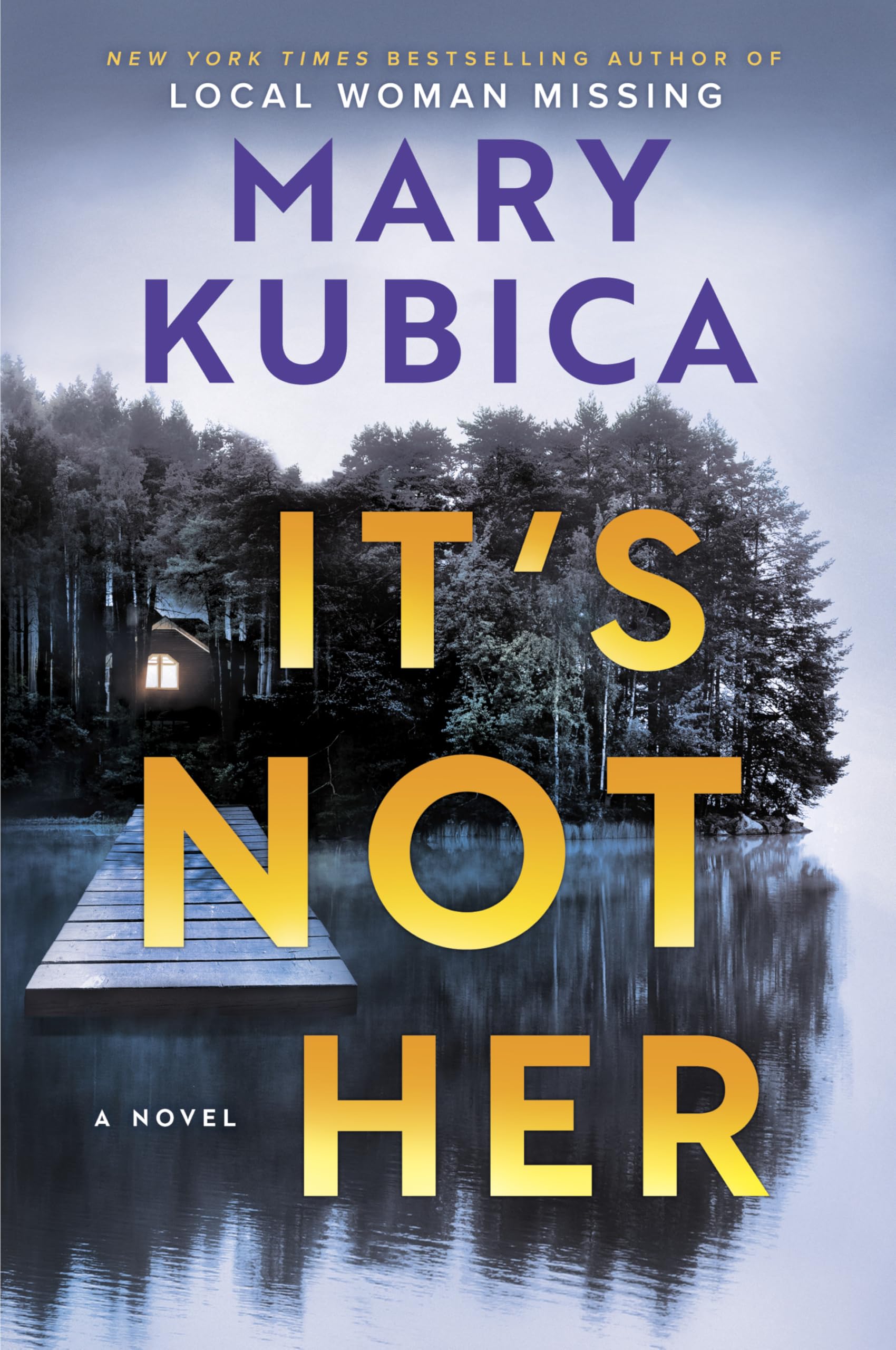
A double homicide rips through a quiet Wisconsin lake resort when Courtney Gray discovers her brother Nolan and sister-in-law Emily bludgeoned to death with a baseball bat. Their 17-year-old daughter Reese vanishes without a trace, ...

Vis gets cloned across three parallel dimensions after winning the Iudicium, and honestly? That's when this 736-page beast stops being clever and starts being exhausting. The ancient device beyond the Labyrinth rips him into three ...