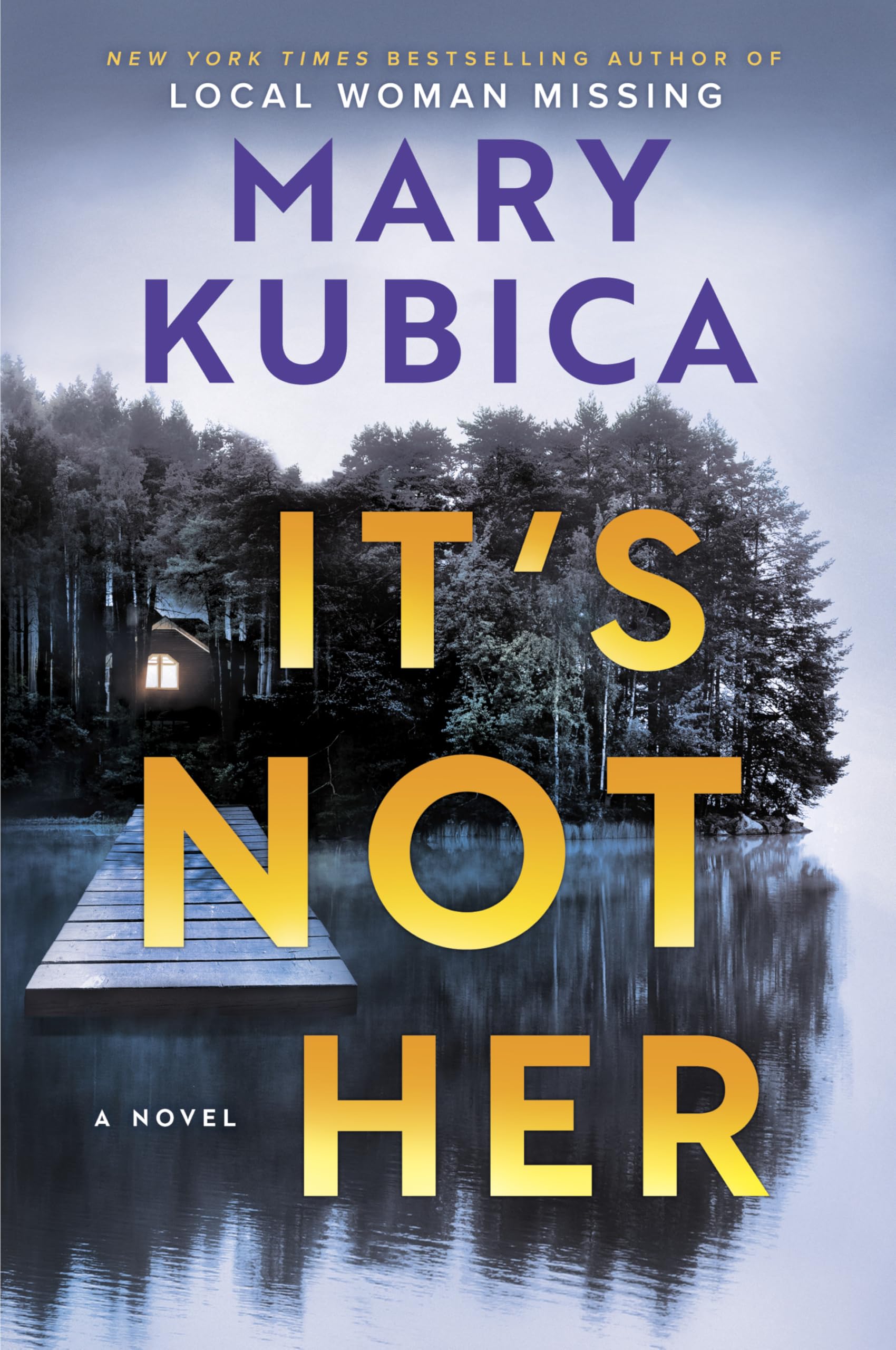
It’s Not Her Review: 2 Murders, 1 Missing Teen. Who’s Lying?
A double homicide rips through a quiet Wisconsin lake resort when Courtney Gray discovers her brother Nolan and sister-in-law Emily bludgeoned to death with a baseball bat. Their 17-year-old daughter Reese vanishes without a trace, while 14-year-old son Wyatt somehow sleeps through the carnage.
What starts as a straightforward investigation spirals into a twisted web of mistaken identity, corrupt cops, and a five-year-old cold case that won’t stay buried.
Key points:
How a grieving father’s delusion leads to double murder
Why Detective Evans’ snake tattoo connects to a dead girl from 2021
The jaw-dropping twist that makes you question every “good guy” in the story
Whether this thriller actually lives up to Kubica’s 5-million-copy legacy
Detailed Summary
Chapter 1-3: The Scream That Shatters Everything
Courtney Gray stands at the sink of her rented lakeside cottage in northern Wisconsin, washing dishes while her family vacations nearby. Her brother Nolan, sister-in-law Emily, and their three kids—Reese (17), Wyatt (14), and Mae (10)—occupy the cottage next door. Courtney’s husband Elliott and their daughter Cass round out this supposedly relaxing family getaway.
A blood-curdling scream from 10-year-old Mae pierces the morning air. Courtney races to the neighbouring cottage and stumbles into a horror show: Nolan and Emily lie brutally murdered, their skulls crushed by blunt force trauma. Blood spatters the walls. The murder weapon? Wyatt’s baseball bat.
Wyatt himself is found upstairs, allegedly asleep during the entire ordeal—a claim that stretches credibility to breaking point. Mae is hysterical but physically unharmed. Reese is nowhere to be found. The resort, initially peaceful, transforms into a crime scene crawling with investigators and yellow tape.
Detective Josh Evans arrives—a young bloke with red hair, freckles, and an earnest demeanour that screams “trust me.” He immediately focuses on the missing teenager angle while Courtney grapples with shock, grief, and the sudden responsibility of caring for three traumatised kids.
Chapter 4-6: Daniel Clarke and the Snake Tattoo
The investigation zeroes in on Daniel Clarke, a 24-year-old resort maintenance worker with a snake tattoo coiling up his arm. He’s got a dodgy reputation for pursuing teenage girls, and whispers around town suggest he’s been sniffing around Reese for months. Detective Evans presents this theory with conviction: Daniel groomed Reese, something went wrong, he killed the parents, and kidnapped the girl.
Courtney digs through Reese’s belongings and finds evidence of a secret relationship—texts, photos, the whole cliché teenage rebellion package. Reese had been sneaking out to meet Daniel despite her parents’ disapproval. The narrative seems straightforward: troubled girl, predatory older man, tragedy ensues.
But Elliott starts acting strange. Courtney notices blood spots on his shoes. He claims it’s from cutting himself while fishing, but the explanation feels rehearsed. She finds photos of Reese on his iPad—one particularly revealing shot shows her niece in a bikini wearing a distinctive gold beaded necklace.
Wyatt continues his sleepwalking episodes, violently lashing out when Courtney tries to guide him back to bed. He claims someone’s trying to drag him away. The kid’s either genuinely traumatised or putting on the performance of his life. Courtney can’t tell which, and that uncertainty eats at her.
Chapter 7-9: Reese’s POV—The Anger Issues
The narrative shifts to Reese’s perspective in the weeks before the murders. We learn she’s been diagnosed with intermittent explosive disorder—uncontrollable rages that cost her friendships after a school incident went viral. She resents her mother Emily’s constant criticism and her father’s passive enabling.
Reese meets Daniel at the resort, and despite the age gap screaming red flags, she’s drawn to him. He pays attention to her, makes her feel seen—all the classic grooming behaviours wrapped in a package that a lonely teenager interprets as romance.
The gold necklace becomes significant. It spells “daughter” in Morse code, though Reese doesn’t know its origin. Daniel gave it to her, claiming he bought it at a local shop. This detail will prove devastating later.
Wyatt discovers Reese’s relationship with Daniel and takes blackmail photos. Reese’s rage explodes—she physically attacks her younger brother, even contemplates using broken glass to stab him. The violence in her character feels authentic but uncomfortable. Kubica doesn’t soften Reese into a perfect victim, which adds complexity but also makes her harder to root for.
Chapter 10-12: The Matthews Family Connection
Sam and Joanna Matthews enter the story with the hollow-eyed grief of parents whose daughter Kylie vanished five years ago without a trace. They live in the area, and when news of Reese’s disappearance spreads, something clicks in Sam’s deteriorating mind.
He sees a Facebook post from Elliott’s account showing Reese wearing that beaded necklace—the one he’d custom-made for Kylie spelling “daughter” in Morse code. He notices physical similarities between Reese and Kylie. His grief-addled brain constructs an elaborate delusion: Nolan and Emily kidnapped Kylie five years ago, changed her identity to “Reese,” and raised her as their own.
Courtney visits the Matthews home and discovers their obsession. Photos of Kylie cover every surface. Sam shows her the necklace connection with manic intensity. Joanna, slightly more grounded in reality, still feeds her husband’s delusion because hope—even delusional hope—beats the alternative of accepting their daughter is likely dead.
Detective Evans listens to Sam’s theory with what appears to be professional courtesy but privately dismisses it as grief-induced paranoia. The reader, at this point, likely agrees. It seems too far-fetched, too convenient.
Chapter 13-15: Courtney’s Investigation Deepens
Courtney can’t shake her suspicions about Elliott. His behaviour grows increasingly erratic—he’s defensive, secretive, and those blood-spotted shoes remain unexplained. She discovers he lied about going to the store on the night of the murders. His timeline doesn’t add up.
She also learns that Wyatt lied about taking Benadryl the night of the murders. The kid who supposedly slept through his parents’ brutal slaying wasn’t medicated after all. This revelation should make Wyatt the prime suspect, but something doesn’t fit. He’s 14, scrawny, and showed genuine terror when the bodies were discovered.
Courtney visits Daniel Clarke’s apartment, which sits across the street from Kylie Matthews’ best friend Abby’s house. This geographic coincidence connects the current case to the five-year-old disappearance in ways that feel increasingly sinister.
The cemetery scenes reveal Reese’s morbid fascination with death—she visits an unmarked grave repeatedly in the weeks before the murders. Kubica layers these details to build atmosphere, though some feel like red herrings that pad the page count without meaningful payoff.
Chapter 16-18: The Mistaken Identity Massacre
The truth detonates like a bomb: Sam Matthews, consumed by five years of anguished searching and convinced that Nolan and Emily stole his daughter, broke into their cottage and murdered them both. He genuinely believed he was rescuing Kylie from kidnappers. The beaded necklace, the physical similarities, and his desperate need for closure created a deadly delusion.
Reese wasn’t kidnapped—she ran. She heard the commotion, saw the violence, and fled with Daniel because she thought he’d protect her. Wyatt actually did sleep through the attack, his heavy adolescent sleep aided by exhaustion rather than medication. Mae’s scream came when she discovered the bodies the next morning, not during the actual murders.
Sam Matthews isn’t a calculated killer; he’s a grief-destroyed father who snapped. Kubica presents this with uncomfortable sympathy—he’s simultaneously a murderer and a victim of his own unprocessed trauma. The wrong people died because one man couldn’t accept his daughter was gone.
Chapter 19-21: Detective Evans’ True Face
The final act reveals the most devastating twist: Detective Josh Evans, the seemingly compassionate investigator, killed Kylie Matthews five years ago. As teenagers, Evans and Daniel Clarke belonged to a gang, marking themselves with matching snake tattoos. During a confrontation when they were 19, Evans accidentally killed 13-year-old Kylie.
He’s spent five years living with that secret, becoming a cop perhaps to convince himself he’s “one of the good guys”—a phrase he repeats like a mantra throughout his perspective chapters. He’s been steering the investigation to protect himself, subtly pushing suspicion toward Daniel while appearing to conduct a thorough inquiry.
Evans isn’t a psychopath; he’s a coward who made a terrible mistake and chose self-preservation over justice. His internal monologue reveals someone desperately trying to reconcile his self-image with his actions. When confronted, he doesn’t become a ranting villain—he crumbles, pathetic and human.
The resolution feels rushed after the careful buildup. Reese returns safely, traumatised but alive. Evans faces consequences, though Kubica doesn’t detail his legal fate. Sam Matthews will likely spend life in prison for two murders that stemmed from manufactured evidence and psychological breakdown.
Chapter 22-Epilogue: The Aftermath Nobody Wanted
Courtney must now raise or help raise three deeply traumatised children. Mae witnessed carnage no 10-year-old should see. Wyatt carries guilt for sleeping through his parents’ murders. Reese faces the knowledge that her rebellious relationship with Daniel inadvertently triggered her parents’ deaths—not causally, but circumstantially through that damn necklace.
Elliott’s suspicious behaviour is explained mundanely: he was worried about being blamed, acted defensively out of fear rather than guilt. The blood on his shoes probably was from fishing. His iPad photos of Reese, while creepy to discover, were innocent family vacation shots blown out of proportion by Courtney’s paranoia.
The cottage, the resort, the entire Wisconsin vacation becomes a trauma site the family will never escape psychologically. Kubica doesn’t offer neat resolution or healing—just the grim reality that multiple lives shattered because three tragedies (Kylie’s death, Sam’s unprocessed grief, Reese’s poor judgment) collided at the worst possible moment.
Characters
Courtney Gray
The protagonist functions as every reader’s entry point—a regular mum thrust into extraordinary horror. She’s neither brilliant detective nor hopeless victim, occupying that frustrating middle ground of “trying her best but constantly wrong.”
Her suspicions about Elliott reveal more about her insecurity than his guilt. She jumps to conclusions, invades privacy, and demonstrates the paranoid thinking that trauma induces. Kubica writes this authentically, but it makes Courtney exhausting to follow for 300+ pages.
The character works best when protecting the kids—maternal instinct overriding her own emotional collapse. Her worst moments come when playing amateur detective, pursuing red herrings the reader spots a mile away.
| Strength | Weakness |
|---|---|
| Protective maternal instincts | Jumps to conclusions too quickly |
| Authentic trauma responses | Exhausting paranoid thinking |
| Relatable “normal person” perspective | Misses obvious clues repeatedly |
Reese Crane
The missing teenager proves to be Kubica’s most complex creation—a 17-year-old with legitimate anger management issues, poor judgment, and understandable resentment toward her mother. She’s neither perfect victim nor irredeemable brat.
Her intermittent explosive disorder is handled with more nuance than typical thriller “crazy teen” tropes. The viral school incident that destroyed her social life feels painfully contemporary. Her relationship with Daniel reads as genuine teenage stupidity rather than pure grooming, which complicates the moral landscape.
The threatening confrontation with Uncle Elliott over discovering her relationship shows her capacity for intimidation. Her contemplation of stabbing Wyatt with broken glass crosses into genuinely disturbing territory. She’s difficult to like, which might be the point—real victims aren’t always sympathetic.
Detective Josh Evans
Evans embodies the “good guy” who isn’t, and Kubica telegraphs this twist far too obviously. His earnest demeanour feels performative from his first appearance. The red hair and freckles—physical descriptions meant to suggest trustworthiness—instead scream “unreliable.”
His internal chapters reveal someone locked in cognitive dissonance. The “I’m one of the good guys” repetition shows a man desperately maintaining a false self-image. He became a cop to prove he’s not a killer, but that logic is circular and broken.
The character needed more development. Why did he accidentally kill Kylie? What were the exact circumstances? Kubica keeps this vague, which undermines the emotional impact. He’s more plot device than fully-realized person.
Wyatt Crane
The 14-year-old who supposedly slept through his parents’ murders spends most of the novel as a red herring. His sleepwalking episodes, blackmail photos of Reese, and suspicious behaviour point toward guilt that never materializes.
He’s largely undefined beyond “moody teen boy”—a wasted opportunity for character depth. His grief, guilt, and trauma get mentioned but not explored. By the end, he’s just another traumatised kid in need of serious therapy.

Twenty-four-year-old Prue sacrifices everything to care for her mum with early-onset Alzheimer's in small-town Ontario, writing poetry between shifts at the family servo. Then tattooed wanderer Milo rolls into town in his dodgy van, and ...

G'day, mates! Picture this: a lass trapped in a cursed Canadian town, chasing her bloke through monster-infested woods, only for the whole bloody thing to unravel into a mess of folklore gone wrong. Erin A. ...
Elliott Gray
Courtney’s husband exists primarily to generate false suspicion. The blood-spotted shoes, vague explanations, and suspicious timeline create artificial tension that deflates into nothing. He’s a normal bloke acting defensive because his wife suddenly suspects him of double murder.
The character reveals more about thriller genre conventions than actual personality. He’s the “is the husband guilty?” placeholder that padding out page counts without narrative purpose.
Sam Matthews
The grief-destroyed father who commits double murder based on delusional conclusions is simultaneously tragic and monstrous. Five years of unanswered questions about Kylie’s disappearance shattered his grip on reality.
Kubica asks readers to hold contradictory truths: Sam is a murderer AND a victim of circumstantial evidence that would convince any desperate parent. The beaded necklace, the physical similarities, the Facebook post—each piece of “evidence” seems damning in isolation.
His character works because Kubica doesn’t excuse the murders while acknowledging the psychological destruction of losing a child without closure. He’s pitiable and terrifying in equal measure.
Daniel Clarke
The 24-year-old with a snake tattoo and reputation for pursuing teenagers serves as the obvious suspect before fading into irrelevance. He’s skeezy—dating a 17-year-old at his age raises legitimate concerns—but not a murderer or kidnapper.
His connection to Evans through their teenage gang provides the plot’s central secret, yet he remains frustratingly underdeveloped. What’s his actual personality? What were his intentions with Reese? Kubica treats him as a plot point rather than a person.
| Character | Role | Development Quality |
|---|---|---|
| Courtney Gray | Protagonist/Investigator | Moderate – authentic but exhausting |
| Reese Crane | Missing teen/catalyst | Strong – complex and flawed |
| Josh Evans | Detective/secret killer | Weak – telegraphed and underdeveloped |
| Wyatt Crane | Red herring | Minimal – wasted potential |
| Elliott Gray | False suspect | Minimal – genre placeholder |
| Sam Matthews | True killer | Strong – tragic and terrifying |
| Daniel Clarke | Red herring | Weak – plot device |
Compare With Other Works
Gone Girl (Gillian Flynn) vs. It’s Not Her: Flynn’s domestic thriller revolutionized the genre with its unreliable narrators and marriage-from-hell dynamics. It’s Not Her attempts similar narrative trickery but lacks the psychological depth. Where Gone Girl made you hate both protagonists equally, Kubica’s characters inspire exhaustion rather than fascination.
Flynn sold millions because Amy Dunne was magnificently monstrous. Kubica’s characters are just regular traumatised people—more realistic but far less entertaining. The twist factor doesn’t compare: Gone Girl’s mid-book revelation changed everything; It’s Not Her telegraphs its “shocking” twists chapters in advance.
The Girl on the Train (Paula Hawkins) vs. It’s Not Her: Both feature women investigating crimes while battling their own unreliability. Hawkins’ Rachel was an alcoholic mess whose blackouts created genuine mystery. Courtney’s just paranoid and wrong repeatedly, which generates false tension rather than intrigue.
The Girl on the Train maintained ambiguity about Rachel’s involvement for most of the narrative. It’s Not Her shows its hand too early—Courtney obviously didn’t murder anyone, so her self-doubt feels manufactured rather than earned.
Local Woman Missing (Mary Kubica) vs. It’s Not Her: Kubica’s 2021 thriller sold over 1 million copies and represents her commercial peak. That book juggled multiple timelines and disappearances with genuine skill, delivering twists that felt earned rather than convenient.
It’s Not Her attempts similar structural complexity but fumbles the execution. The alternating perspectives between Courtney’s present and Reese’s past don’t reveal information strategically—they just delay obvious truths. Local Woman Missing was tighter, smarter, and more emotionally resonant. This feels like Kubica recycling her greatest hits without the same inspiration.
She’s Not Sorry (Mary Kubica) vs. It’s Not Her: Kubica’s 2024 New York Times bestseller demonstrated her ability to create unreliable narrators with genuine secrets. That protagonist actually committed terrible acts while maintaining reader sympathy—a difficult balance.
It’s Not Her lacks that moral complexity. The “villains” are either delusional (Sam Matthews) or cowardly (Josh Evans), but neither is compellingly monstrous. The book feels safer, more conventional, less willing to make readers uncomfortable in meaningful ways.
Achievement
Mary Kubica’s commercial success provides context for evaluating It’s Not Her against her established track record:
| Metric | Number | Source/Context |
|---|---|---|
| Total career sales | 5,000,000+ copies worldwide | Across all titles, translated into 30+ languages |
| Local Woman Missing sales | 1,000,000+ copies | Her bestselling single title |
| She’s Not Sorry status | New York Times Bestseller | Released February 2024 |
| Just the Nicest Couple status | New York Times Bestseller | Released 2023 |
| Languages translated | 30+ | International reach |
| Release date (It’s Not Her) | February 3, 2026 | Recent publication |
Early Goodreads reviews skew positive but lack the evangelical enthusiasm that greeted Local Woman Missing. Comments reference “took a long time to get to the twist” and “some things repeated over and over”—criticism suggesting bloated pacing rather than propulsive thriller dynamics.
The book will likely sell well based on Kubica’s name recognition alone, but it doesn’t represent a creative leap forward. It’s competent, commercial, and calculated—perfectly fine adjectives that would devastate any author aspiring to greatness.
Pacing Problems
The novel’s biggest flaw is its glacial middle section. Chapters 8-16 spin wheels endlessly, dropping red herrings that obvious genre readers spot immediately. Did we need five separate scenes of Courtney suspecting Elliott? Three would’ve sufficed.
Kubica repeats information constantly—Reese has anger issues, Wyatt supposedly slept through everything, Daniel has a snake tattoo. Yes, we remember. The book clocks in around 350 pages but could’ve been a tight 250 without losing anything essential.
The alternating timelines between Courtney (present) and Reese (past) don’t create mounting tension—they just delay reveals. This structural choice worked brilliantly in Local Woman Missing because each timeline contained independent mysteries. Here, Reese’s chapters exist solely to withhold information readers need from Courtney’s investigation.
The Twist Economy
Modern thrillers live and die on their twists, and It’s Not Her delivers three major reveals:
Sam Matthews killed Nolan and Emily (mistaken identity)
Detective Evans killed Kylie Matthews five years ago
Reese wasn’t kidnapped—she ran voluntarily
Number one lands with genuine impact because Kubica seeds Sam’s delusion carefully without telegraphing the conclusion. Number two gets foreshadowed so heavily that “reveal” feels generous—more like “confirmation of obvious.” Number three isn’t really a twist so much as clarification.
The problem with twist-dependent narratives is diminishing returns. Gone Girl worked because it had ONE massive mid-book twist that reconfigured everything. Piling on three semi-twists creates a sense that nothing is truly shocking—just mildly surprising.
Atmosphere Over Substance
Kubica excels at creating oppressive atmosphere—the isolated Wisconsin resort, the lake’s dark waters, the claustrophobic cottages where families vacation too close together. Her descriptive passages nail the mounting dread of vacation-gone-wrong.
But atmosphere can’t substitute for character depth and plot logic. The setting feels authentic; the people inhabiting it feel like thriller archetypes going through expected motions. You could transplant these characters into any domestic suspense novel and they’d function identically.
The Moral Muddle
The book’s most interesting aspect—Sam Matthews committing double murder based on grief-induced delusion—gets resolved too quickly. What are the ethical implications when someone kills based on genuinely believed (but false) evidence? Is Sam more or less culpable than a calculated killer?
Kubica raises these questions but doesn’t explore them. The epilogue rushes past the aftermath, denying readers the philosophical wrestling that could’ve elevated the material. Similarly, Evans’ five-year cover-up of accidentally killing a 13-year-old deserves more examination than it receives.
The book wants to be a meditation on how trauma distorts perception and creates tragic consequences, but it settles for being a competent thriller with some thematic window dressing.
Final
It’s Not Her delivers exactly what Mary Kubica’s established fanbase expects: a twisty domestic thriller with family secrets, a missing person, and multiple suspects. It’s professionally constructed, adequately paced (despite middle-section bloat), and commercially viable.
It’s also safe, predictable, and forgettable. Nothing here pushes genre boundaries or takes creative risks. Kubica has mastered the formula but seems trapped by it—her 5-million-copy success created expectations that prevent experimentation.
Read it if you’re a Kubica completist or need a beach thriller that requires minimal intellectual investment. Skip it if you want psychological depth, innovative structure, or twists that actually shock rather than mildly surprise.
The book earns a solid 3 out of 5 stars—competent mediocrity that will sell well, satisfy existing fans, and disappear from memory within weeks of finishing.
Drop a comment below: Did you guess the Detective Evans twist, or did it actually surprise you? And am I the only one exhausted by Courtney’s constant wrong suspicions? Let’s chat about whether Kubica’s still got it or if she’s coasting on past glory!
The Legacy Series finale crashes to a close with Tessalyn Ausra standing at the edge of salvation or total annihilation, her companions nursing fresh wounds from her chaos magic, and two love interests—Theon and Luka—who've ...

A girl with heavenly magic infiltrates an enemy academy, manipulates her own memory, and trains under cutthroat monks to avenge her slaughtered clan. Sounds epic? Not quite. Sarah Mughal Rana's adult fantasy debut promised a ...